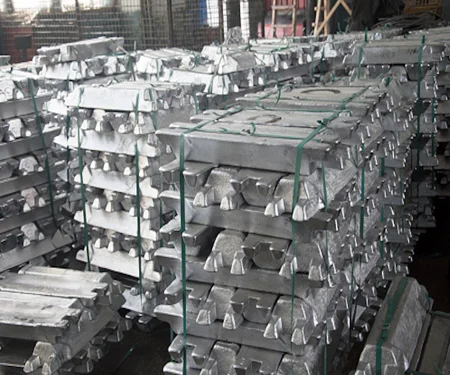
Taiwan is in trade surplus for aluminium plates, sheets and strips in 2016
Taiwan’s government expects the country’s GDP to expand 1.9% in 2017. With the growth in GDP, aluminium consumption is expected to increase at a faster speed. The country ranks second in per capita aluminium consumption with a rate of about 33.3 kg. The island country has seen significant demand growth for aluminium alloy products in the domestic market.
The country produces about 819,000 tonnes of aluminium domestically in four main categories: Secondary Aluminium Alloy, Casting, Rolling and Extrusion Industries. Taiwan imports substantial amount of aluminium alloys to make value added products. We are analysing Taiwan’s export and import data for Aluminium Plates, Sheets and Strips in 2016 and trying to figure out a trend in the current year below.
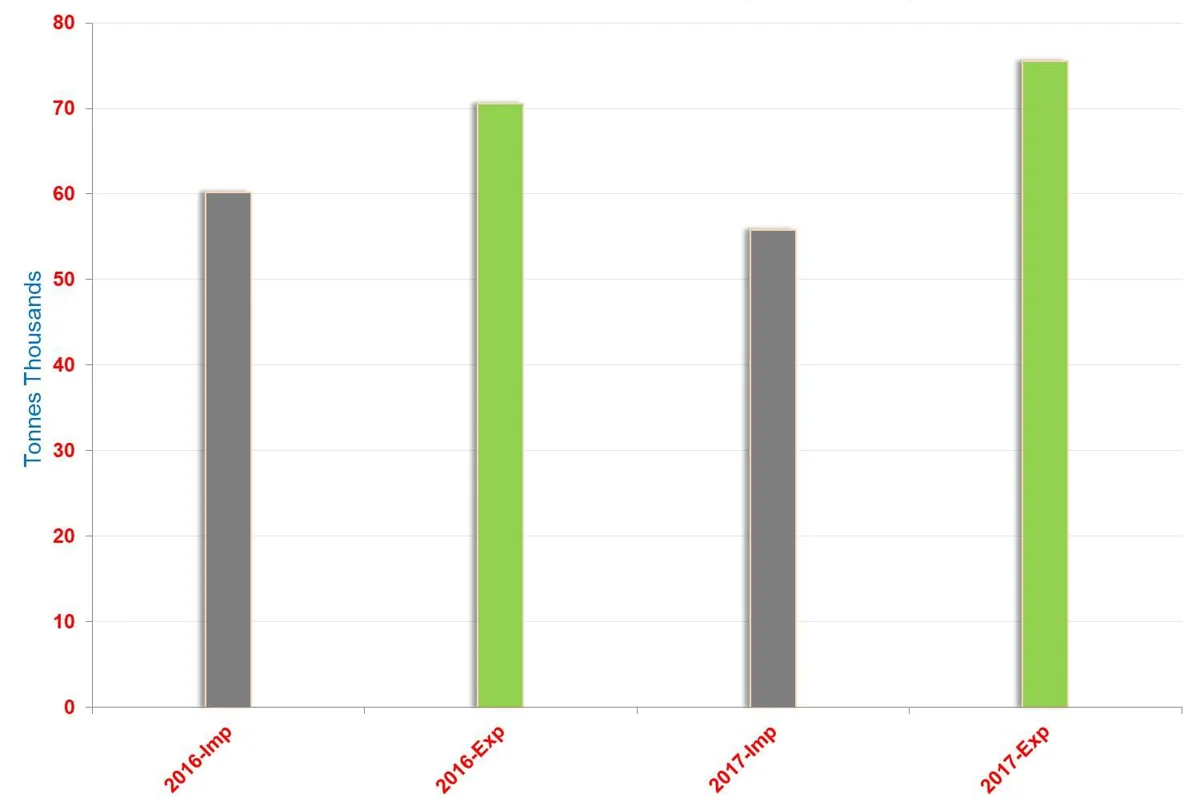
As shown by the recent data, Taiwan imported 60,209 tonnes of Aluminium Plates, Sheets and Strips in 2016. In the same year, the country exported 70,534 tonnes of Aluminium Plates, Sheets and Strips. Based on this statistics of the first six months, the total import of these products for 2017 is estimated to drop to 55,744 tonnes. On the other hand, exports of Aluminium Plates, Sheets and Strips are expected to increase to 75,514 tonnes in 2017.
The trend shows increasing focus on value added production and growing domestic production of aluminium products in Taiwan.
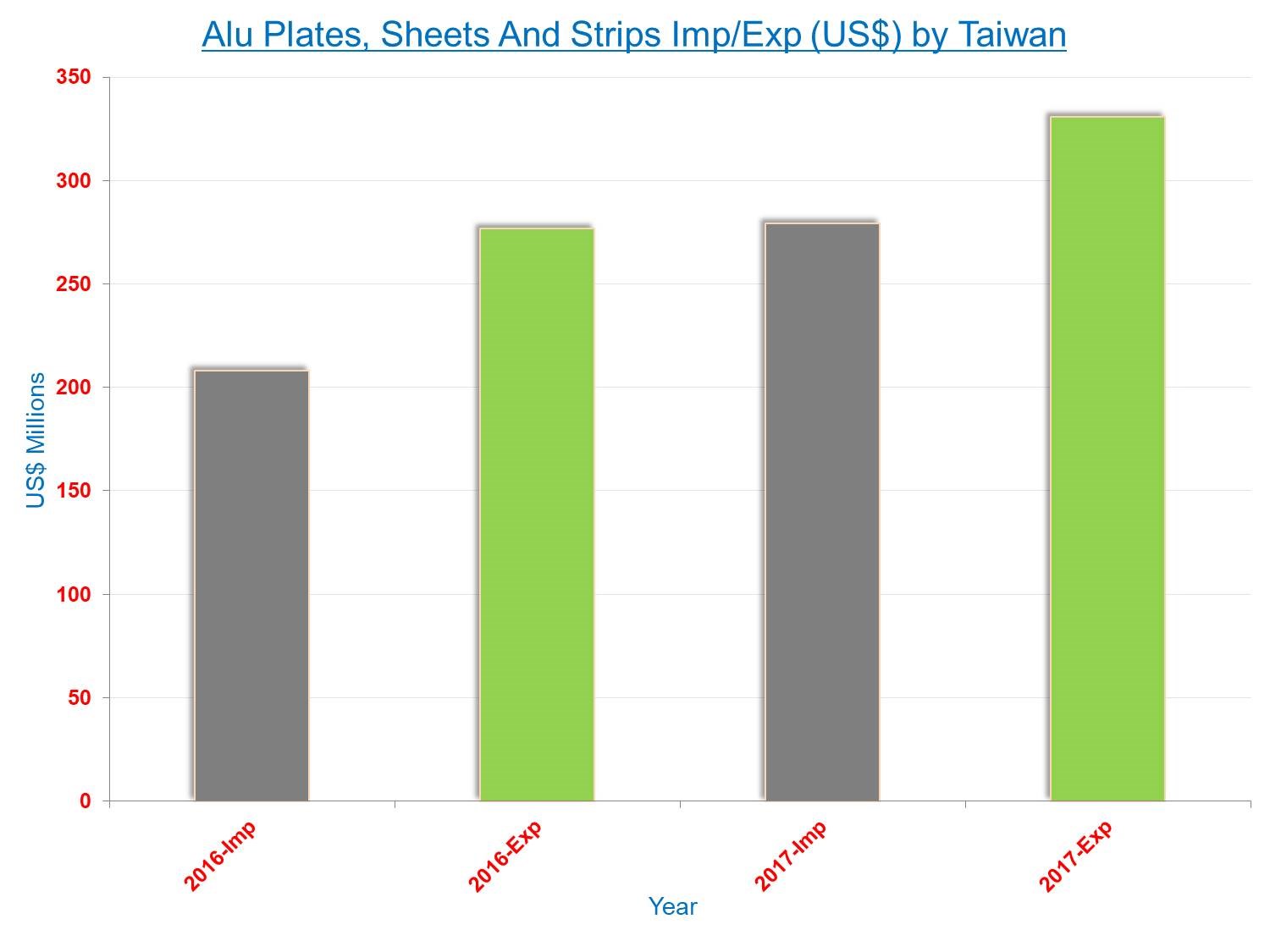
The cost and revenue from import and export of aluminium Plates, Sheets and Strips stand at USD 208 million and USD 276 million respectively for the year 2016. For the full year 2017, the cost and revenue from import and export of aluminium Plates, Sheets and Strips are estimated to stand at USD 279 million and USD 330 million respectively. The country was in trade surplus in 2016 and the trend is expected to continue in 2017.

The top exporter of aluminium Plates, Sheets and Strips are China and South Korea while Taiwan exports the major chunk of Aluminium Plates, Sheets and Strips to China and Japan.
Reliance Steel & Aluminum fully acquires Ferguson Perforating Company
Next articleU.S. Commerce Department defers anti-dumping decision on China aluminium foil
Grow with
AL Circle