Sweden’s scientist proposes to include aluminium as a maritime transport fuel
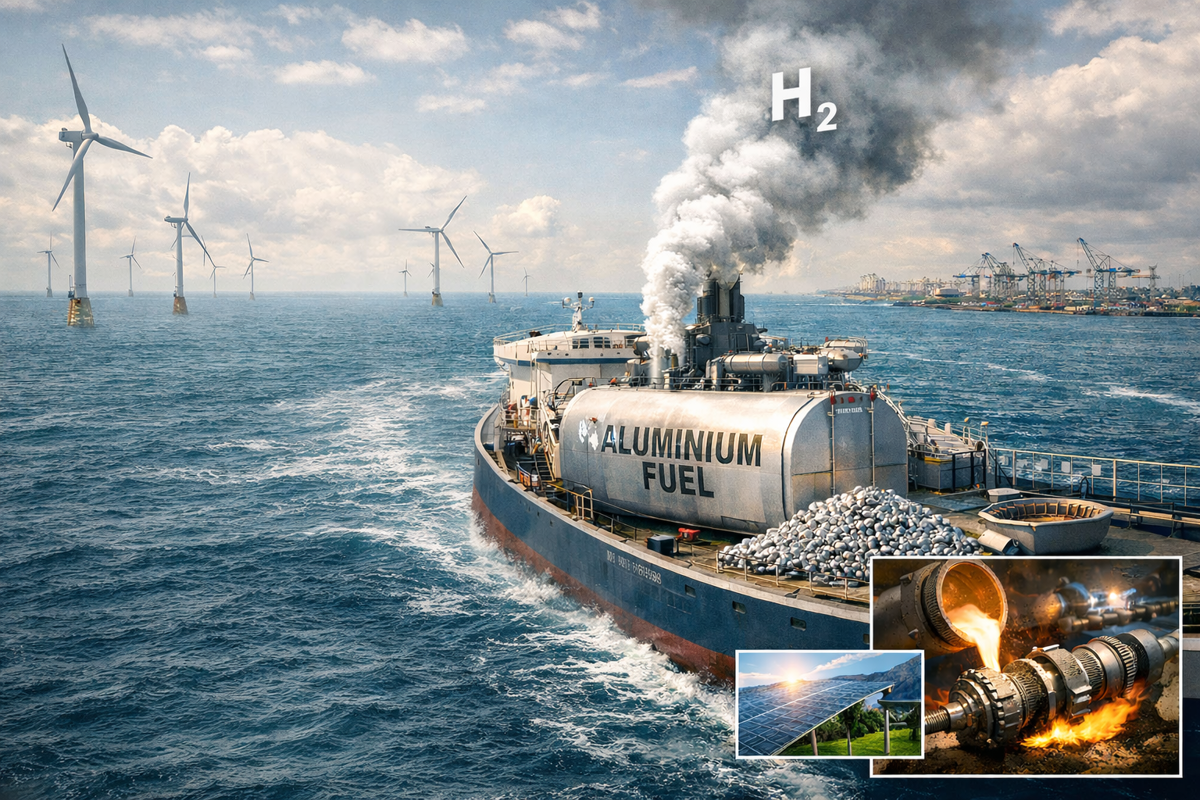
Joakim Haraldsson, a researcher at Lund University, suggested that aluminium can be a sustainable fuel for maritime transport. This might reduce the CO2 emission, evidently, after tackling prevailing technical and economic challenges.
Haraldsson suggests that renewable energy can be stored in the aluminium during its production. Later, when it is used on the ships, it can release that stored energy through oxidation either by burning or reacting with the water. It will produce heat and hydrogen, which can be used to power engines or turbines.
For the global aluminium value-chain 2026 outlook, book our exclusive report “Global ALuminium Industry Outlook 2026"
The only problem is that aluminium forms a thin oxide layer when exposed to air or water, which slows the reaction. This can be addressed by powdering the metal, adding chemical agents, or heating it. These by-products would be collected on ships and transported back to port, where they could be converted back into aluminium through electrolysis, exhibiting a closed cycle. But this system would require new port infrastructure.
The International Maritime Organisation (UN agency responsible for the safety, security and environmental performance of international shipping) aims to achieve the climate neutral shipping by 2050, and existing alternative fuels still have limitations.
Aluminium has a higher energy storage capacity than methanol and ammonia, but it is heavier than fuel oil. And replacing fuel oil in global shipping would require about 300 million tonnes of aluminium annually, whereas the current production is around 71 million tonnes. Increasing the aluminium production will lead to another 6000 TWh of electricity per year, which may be supplied by expanded renewable energy.
Don't miss out- Buyers are looking for your products on our B2B platform
About 2,560 TWh of fossil fuel energy is consumed annually in global shipping, and it also emits around 699 million tonnes of carbon dioxide (3 per cent of GHG emissions). The ship engines also release sulphur and nitrogen oxides, polluting the air in coastal areas. Haraldsson notes that this research is only an initial evaluation, and more studies are required before aluminium fuel can be used commercially in shipping.

Note: The image used in this article is generated with an AI tool and does not depict any real-time moment
Trivium Packaging takes home World Aluminium Aerosol Can Award 2025 for cans designed for Adidas
Next articleUS craft beer aluminium cans share hits 78%, leading growth to level off, Brewers Association says
Grow with
AL Circle