Sustainability Recap: Capral obtaines first ASI’s Chain of Custody-certified cargo from Alba

Sustainability initiatives are no longer an occasional phenomenon in the aluminium industry, as ESG goals have become a prime focus for all companies, big or small. This week the top news that caught our eyes were Capral’s first ASI’s Chain of Custody-certified cargo from Aluminium Bahrain (Alba), CRU’s newly launched protocols for sustainability and emissions service, and Ardagh Packaging won ASI Performance Standard Certification for material stewardship.
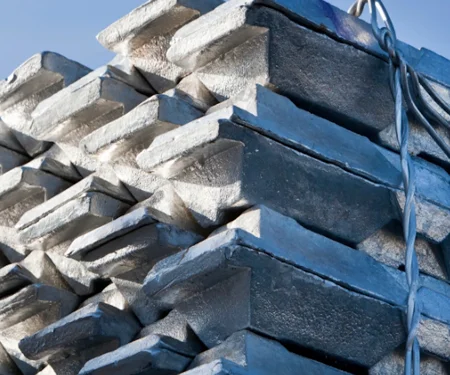
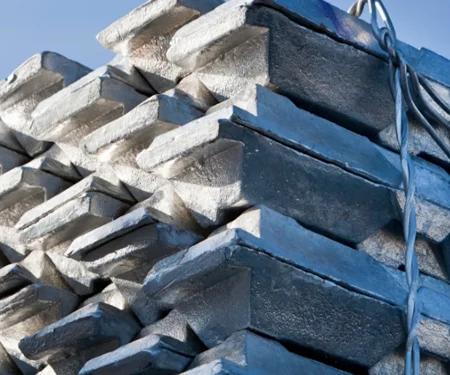
Capral Aluminium marked a significant milestone in sustainable sourcing this month with the receipt of the first Aluminium Stewardship Initiative (ASI) Chain of Custody (CoC)-certified cargo from Aluminium Bahrain (Alba). The accreditation ensures that the aluminium in its products is ethically sourced and processed by the highest environmental, social, and governance criteria.
To know more: bitly.ws/QdbW
CRU launched a new sustainability and emissions service that provides users with a comprehensive view of different commodities through a sustainable perspective. The service covers policy developments, carbon markets, decarbonisation, energy costs, and more, aiming to provide consistent decisions within informed business strategies.
CRU is known for its data excellence and trustworthy methodologies, and this expertise is now being applied through a sustainability lens. The service is available in two tiers: Classic and Premium.
To know more: bitly.ws/Qdch
Ardagh Metal Packaging (AMP), a leading global supplier of sustainable, infinitely recyclable metal beverage cans, acquired the Performance Standard V2 (2017) Certification from Aluminium Stewardship Initiative. The certification is for material stewardship for beverage can ends production at Manaus facility and centralised operational functions, global support functions, and quality assurance at regional central organization in Sao Paulo, Brazil.
To know more: bitly.ws/Qdcr
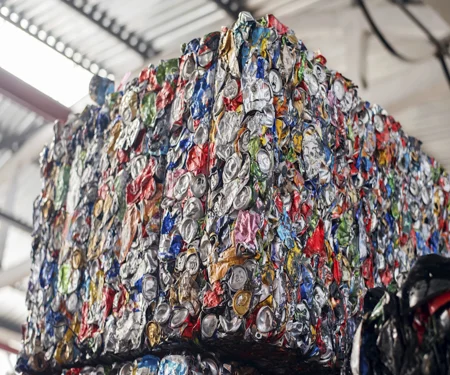
A recycling Facility at the Port of Los Angeles unlocked a sustainable milestone by shipping 5 million tonnes of scrap metals like aluminium using an all-electric, zero-emissions crane since its installation in 2017 at the port. According to the corporation, the organisation's ultimate objective is to achieve zero waste through recycling a broad range of items, including aluminium cans, vehicles, appliances, plumbing fixtures, electrical wiring, and other household recyclables.
To know more: bitly.ws/QdcR
ASI certified Alcomet's Shumen production facility in Bulgaria against the Performance Standard V2 (2017) Certification. The firm manufactures aluminium rolled and extruded products for use in the food and beverage, pharmaceutical, building and construction, and automotive sectors. Its facilities have a total annual output capacity of 100,000 tonnes.
To know more: bitly.ws/Qddc
TricorBraun, a leading global packaging company, released its first-ever Sustainability Report. The report outlines the company's progress in achieving its Environmental, Social, and Governance (ESG) goals. TricorBraun's President and CEO, Court Carruthers, expressed satisfaction in presenting the report, saying that the company is committed to sustainable and ethical practices. He added that TricorBraun's team strives to do things right, extending to environmental, social, and governance impacts.
To know more: bitly.ws/Qdds
GZ Industries Limited received ASI Performance Standard V2 (2017) Certification for its facilities in Aba and Agbara, Nigeria, and Wadeville, South Africa, for manufacturing aluminium beverage cans for the food and beverage market. The company's three factories have a combined yearly manufacturing capacity of more than 3 billion cans and can produce a variety of sizes and forms. The Aba and Agbara are Nigeria's first ASI-certified facilities.
To know more: bitly.ws/QddN

GenHydro, a US-based company specializing in technology, renewable energy production, and green hydrogen, collaborated with EREN Groupe this week, a private company focused on technological innovation to fight global warming and conserve natural resources. The two organizations aim to introduce innovative green hydrogen production systems and renewable energy technology in France and Germany, among other locations.
To achieve this objective, GenHydro's cutting-edge technology that transforms waste aluminium into valuable renewable products will be combined with EREN Groupe's project management and implementation capabilities. The partnership will concentrate on increasing green hydrogen production while simultaneously reducing costs, with the ultimate goal of expanding the green hydrogen economy and introducing a variety of renewable energy products to France and Germany.
To know more: bitly.ws/Qdep
The City of Greater Geelong launched an innovative end-to-end recycling program to divert blister packs from landfills. In collaboration with the Rotary Club of Geelong East and recycling business Pharmacycle, the Rotary Club of Highton installed 60 blister pack collection boxes in ten regional pharmacies.
Pharmacycle is the only program in Australia dedicated to responsibly recycling blister pack waste from local pharmacies. It collects discarded blister packs from registered pharmacies and puts them through mechanical recycling to separate the aluminium foil seal from the plastic blister. The process includes shredding, grinding, air-density separation, and electrostatic separation. The separated aluminium and plastic materials are kept in bulk bags and sent to end users.
To know more: bitly.ws/Qdfk
In a concerted effort to promote eco-friendliness and sustainability, the Austin Convention Center has partnered with Boomerang to introduce its state-of-the-art, eco-friendly bottling system to the center.
The Boomerang Bottling System, or BBS, is truly a remarkable innovation in its own right. Not only does it have the ability to clean, refill, and reseal used glass or aluminium bottles, it also propels a circular economy and diverts an enormous amount of waste from landfills.
To know more: bitly.ws/QdhQ
Boomerang's Bottling System keeps spreading sustainability all over Austin and Pennsylvania
Next articleAluminium Stewardship Initiative enrols Swiss extrusion specialist Alu Menziken
Grow with
AL Circle