eandt.theiet.org
Solar mirrors to help cut emissions in metal processing
Edited by : AL CIRCLE
2 min read

Large mirrors concentrating solar rays could not only power electricity-generating turbines but also melt metals, to help reduce carbon footprint of the metal processing industry.
The concept has been proposed by researchers from Germany and South Africa and will use South Africa’s large aluminium processing industry as a test bed.
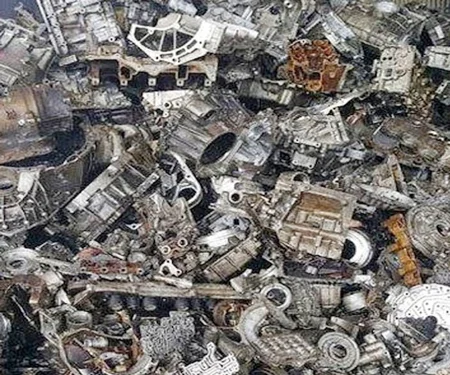
The researchers envision the solar mirrors would focus sun rays to achieve temperatures of around 700 °C to power a rotary solar kiln, a device resembling a washing machine drum, melting the aluminium ore as well as recycled aluminium objects.
The system will first be tested at the German Aerospace Centre’s (DLR) Institute of Solar Research in Jülich before being implemented in South Africa.
In addition to the system itself, the project partners will prepare a logistics concept, detailing how the molten aluminium can be transported from the central solar melting plant to the production facilities that will process the liquid metal.
"The aim of the project is to develop an energy and cost effective method that can be implemented across a variety of system sizes, depending on the requirements," said Martina Neises-von Puttkamer, project manager at DLR.
The method would allow metal processing companies to substantially reduce both, their energy consumption as well as the carbon footprint.
Currently, South African companies rely mostly on electricity from the country’s coal-fired power plants to power metal processing facilities. As a result South Africa is among the world's 15 largest greenhouse gas emitters.
Metal processing is by far the country’s largest industry.
South Africa’s Council for Scientific and Industrial Research (CSIR), as well as the National Foundry Technology Network (NFTN), the country’s largest utility company Eskom and the Department of Science and Technology (DST) are collaborating on the project with the DLR.
The, project, called SOLAM, is funded by Germany’s Federal Ministry of Education and Research and the International Partnerships for Sustainable Technologies and Services for Climate Protection and the Environment.
The concept has been proposed by researchers from Germany and South Africa and will use South Africa’s large aluminium processing industry as a test bed.
The researchers envision the solar mirrors would focus sun rays to achieve temperatures of around 700 °C to power a rotary solar kiln, a device resembling a washing machine drum, melting the aluminium ore as well as recycled aluminium objects.
The system will first be tested at the German Aerospace Centre’s (DLR) Institute of Solar Research in Jülich before being implemented in South Africa.
In addition to the system itself, the project partners will prepare a logistics concept, detailing how the molten aluminium can be transported from the central solar melting plant to the production facilities that will process the liquid metal.
"The aim of the project is to develop an energy and cost effective method that can be implemented across a variety of system sizes, depending on the requirements," said Martina Neises-von Puttkamer, project manager at DLR.
The method would allow metal processing companies to substantially reduce both, their energy consumption as well as the carbon footprint.
Currently, South African companies rely mostly on electricity from the country’s coal-fired power plants to power metal processing facilities. As a result South Africa is among the world's 15 largest greenhouse gas emitters.
Metal processing is by far the country’s largest industry.
South Africa’s Council for Scientific and Industrial Research (CSIR), as well as the National Foundry Technology Network (NFTN), the country’s largest utility company Eskom and the Department of Science and Technology (DST) are collaborating on the project with the DLR.
The, project, called SOLAM, is funded by Germany’s Federal Ministry of Education and Research and the International Partnerships for Sustainable Technologies and Services for Climate Protection and the Environment.
Unlock full access – sign up for FREE.
Key benefits
Find exclusive data-driven insights and in-depth analysis
Get our daily newsletter delivered straight to your inbox
Access real-time and historical price trends from global indices
Post and respond to latest business leads
Stay ahead with alerts on learning tools
...and so much more!SIGN UP / LOGIN
Previous article
Utah brewery switches from glass to aluminum
Next articleUS Aluminum Consumption up 8.1% YTD in April
Grow with
AL Circle