Siemens secures sustainable train delivery order from Niederbarnimer Railway

A private railway company operating regional train services in Berlin and Brandenburg, Niederbarnimer Railway (NEB) has placed a requirement plea for seven two-car Mireo Plus H trains from German Siemens Mobility for the Heidekrautbahn network (RB27). The trains will flaunt a lightweight aluminium body along with a fuel cell drive system and lithium-ion batteries that will reduce carbon emissions to a great extent.
Siemens Mobility claims that the Mireo Plus H train has the tiniest lifecycle cost in the market with a welded, self-sufficient and fundamental lightweight aluminium framework.
The train needs only fifteen minutes to be refilled with fuel since it is a second-generation vehicle powered by hydrogen with 1.7MW of traction power to reach an acceleration of 1.1m/s² and an ultimate speed of 160km/h.
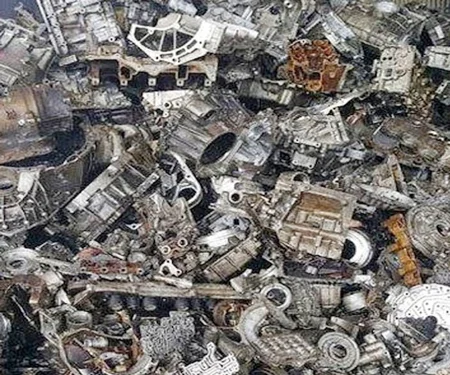
Aluminium is one of the most lightweight materials found, on the planet, with an endless lifecycle. The metal can be, recycled numerous times without losing the actual properties of the metal. Aluminium is used heavily in automotive industries for manufacturing car bodies and other auxiliary components for its malleability.
The trains with two bogies feature palatial interiors, with real-time passenger information stats, free Wi-Fi, a specialised family zone and two multipurpose areas with space for wheelchairs, buggies and almost 12 bicycles. The compartments have three doors on either side capacitating passengers in wheelchairs or buggies to perfectly board the train without any hassle.
The NEB’s deal with Siemens will include services and supply of spare parts for more than ten years to 2034. The drill will feature necessary maintenance, servicing and repairing activities while continuously enhancing the fleet's capability.
The launch of the hydrogen-powered trains along the Hiedekrautbahn line is part of a joint pilot project under the patronage of the federal government and the states of Berlin and Brandenburg. The project aims at initiating a sustainable hydrogen infrastructure featuring a hybrid power plant and a tank system.

In February, NEB and the states of Berlin and Brandenburg had signed an agreement to deploy hydrogen fuel cell trains in the capital area of Germany. The treaty gave access to hydrogen-fuel trains on the Berlin-Wilhelmsruh-Basdorf line and the services will be available to the public in 2024.
Loop Loop’s Magic Colour Machine allows easy customization of various aluminium components
Next articleWDS Component adds two new designs to its three spoke aluminium handwheels lineup
Grow with
AL Circle