In the global shift towards more sustainable packaging, aluminium beverage cans are often positioned as a near-ideal solution – infinitely recyclable, lightweight, and increasingly favoured by brands seeking both environmental credibility and shelf appeal.
In Africa, however, their growth tells a more complex story. Demand is rising, but unevenly, shaped by competing realities: aspiration and affordability, formal industry and informal systems, global ambition and local constraint. Demand for aluminium cans is growing across the continent, though not in the same way as in Europe or North America. Here, the transition remains uneven, unfolding against structural and economic limits.
Iris Arsic, the features editor of The Metal Packager, speaks with Chukwuma Ndigwe, recycling team lead at GZ Industries (GZI), Nigeria’s largest beverage can producer, about how aluminium cans are reshaping Africa’s beverage landscape and why their path to widespread adoption is promising, and full of potential.
Speaking of the main drivers behind the rise of beverage cans in Africa, Ndigwe says “It is the packaging itself. People like the appeal, the design, the colour, and the form.”
In many African markets, aluminium cans are more than functional packaging; they signal modernity. Bright branding, portability, and links to international products contribute to a perception of higher quality. At the same time, this positioning reinforces their status as a premium choice.
For the global aluminium value-chain 2026 outlook, book our exclusive report “Global ALuminium Industry Outlook 2026"
The economics are clear. In Nigeria, a canned drink costs considerably higher than its equivalent in glass or plastic. “A plastic bottle of Coke is currently 500 naira, while a canned Coke is 800 naira,” he explains. This creates a structural contradiction: the packaging format most closely aligned with circular economy goals is also, for many consumers, the least accessible.
In more mature markets, aluminium’s success is supported by scale: dense manufacturing networks, local raw material supply, and established recycling systems. Across much of Africa, those foundations are still developing. “There are very few can makers, very few smelters. A lot of those things are imported,” Ndigwe notes. The result is a cost structure that sustains aluminium’s premium positioning, even as demand grows.
These dynamics are reflected at the macroeconomic level. IMF projections suggest a gradual recovery in Nigeria’s GDP per capita – from around USD 940 this year to just over USD 1,000 by 2029. Currency devaluation continues to suppress dollar-denominated incomes despite projected GDP growth of 4.4 per cent. While Nigeria is on track to become Africa’s third-largest economy this year, per capita purchasing power remains limited, shaping everyday consumer choices, including packaging.
GZI’s footprint in Africa
For companies like GZI, this environment presents both challenge and opportunity. As the first local can manufacturer in West Africa, the company has played a central role in building the market.
GZI operates two plants in Nigeria, forming the backbone of a growing domestic supply chain. Its first facility opened in Agbara in 2010, producing the country’s first 33cl can. A second site followed in Aba, a major commercial hub in the southeast, in 2014, expanding the range to include 50cl and sleek formats. Last year, GZ Industries produced nearly 1.9 billion cans in Nigeria, a modest figure by global standards, but significant in an emerging market.
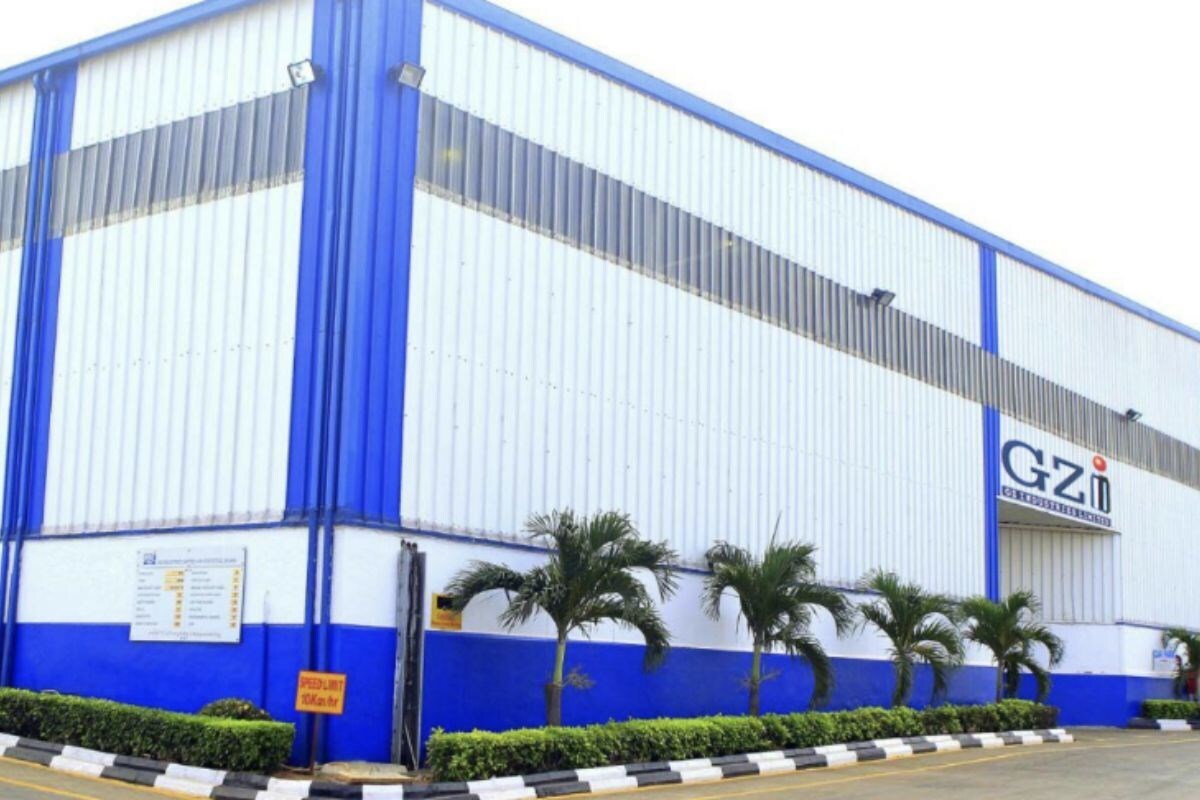 The GZI flagship can-making plant in Agbara, where the headquarters are located
That ambition extends beyond national borders. In 2019, it entered South Africa with a production site in Germiston, outside Johannesburg, and has since moved into East Africa with a can manufacturing plant in Kenya. In South Africa, where it holds the second-largest market share after Nampak, its output reached around 800 million cans in 2025.
“The African market is quite dynamic,” Ndigwe says. “What happens in Nigeria is very different from what happens in South Africa or Kenya.” Rather than a single trajectory, this points to a continent undergoing multiple transitions – some advanced, others only beginning.
From product to status symbol
Despite economic constraints, aluminium cans are steadily embedding themselves in consumer culture. Their association with quality is particularly visible in social settings. “When you go to high-end events and weddings, it’s the aluminium can,” Ndigwe observes.
Packaging here becomes part of the experience, a marker of occasion and status. Multi-packs of canned beverages are increasingly used as gifts, reinforcing their role beyond everyday consumption.
This shift is also demographic. Africa’s young population is highly responsive to branding, aesthetics, and global trends, all areas where aluminium packaging holds an advantage. Yet this cultural momentum continues to operate within clear economic limits. The question is not whether consumers prefer cans, but how often they can afford them.
Recycling and the vast informal network
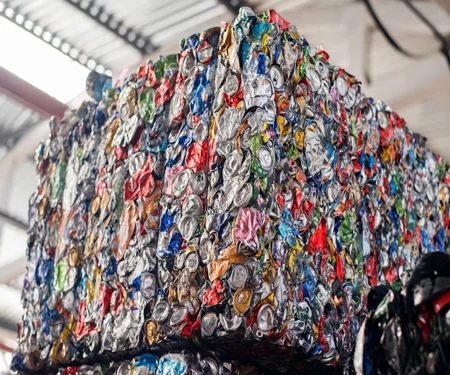
If consumption reflects aspiration, recycling reveals underlying system. On paper, recovery rates for aluminium cans in countries like Nigeria are high, driven less by policy than by value. Aluminium is simply too valuable to discard. “If you drop a can, someone has already picked it up,” Ndigwe says.
This efficiency is powered by a vast informal network: waste pickers, small-scale aggregators, and traders operating largely outside formal systems. It is a system that ensures collection, but not necessarily circularity. For some, collecting cans is a vital source of income and can mean the difference between eating and going without.
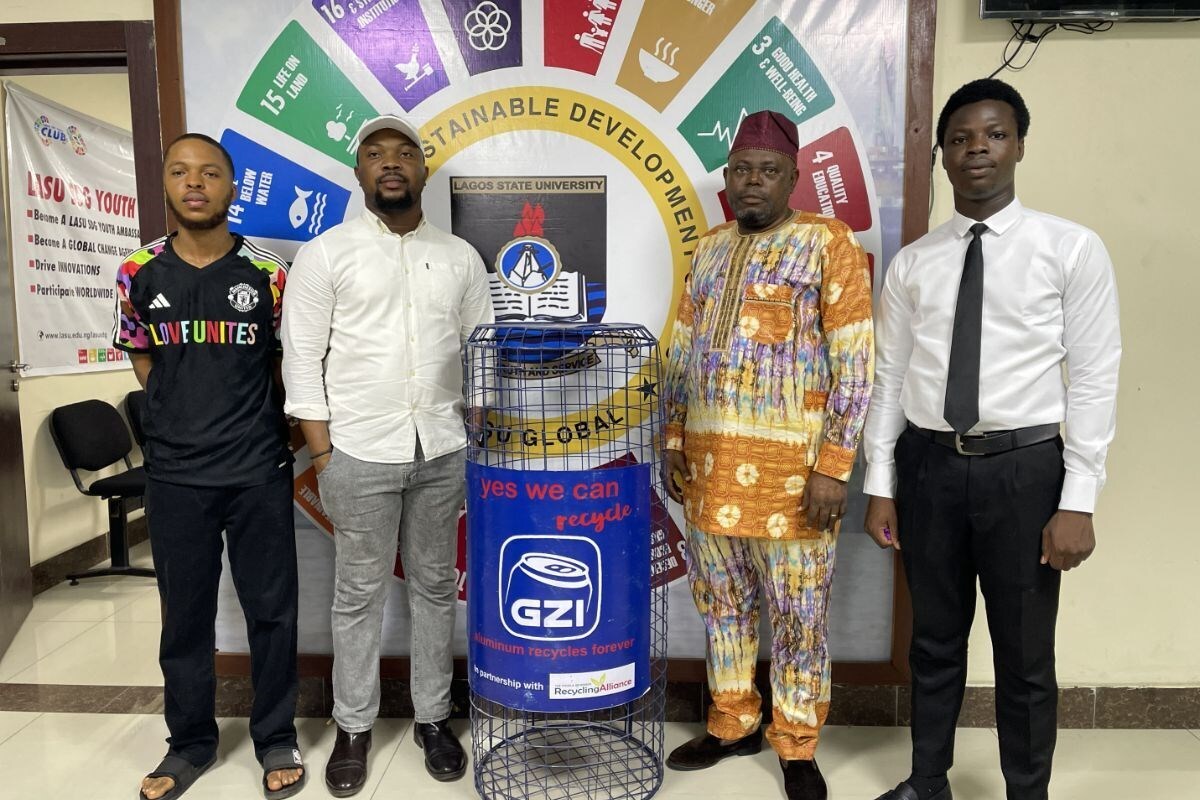
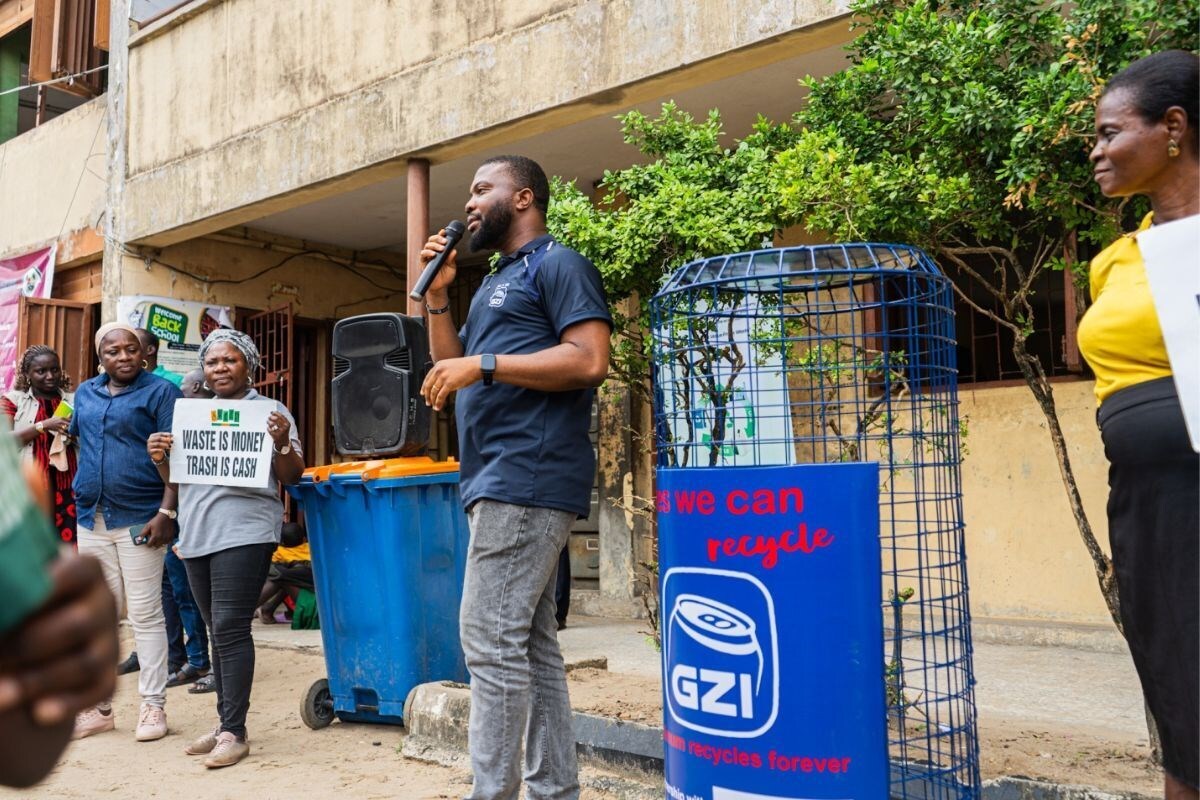 Chukwuma Ndigwe at the Lagos State University, where GZI has installed a can-shaped bin for aluminium can collection
Most recovered aluminium is diverted into products such as cookware, construction materials, and crafts, rather than being turned back into cans. “Our challenge is not collection. It is getting the cans back to become cans again,” he explains.
GZI is working to address this gap. Novelis is its global recycling partner for Nigeria, supporting aluminium recovery and reuse. Hulamin supplies can sheet as part of a regional circular partnership. Through this system, GZI’s production scrap and collected used cans are recycled locally in South Africa, helping to retain material within the regional loop.
The result is a paradox: a system that achieves high collection rates but remains fragmented, limiting the development of closed-loop recycling.
Efforts to formalise recycling are gaining traction. Industry alliances, such as the Food and Beverage Recycling Alliance (FBRA) in Nigeria, are working to strengthen education, infrastructure, and policy engagement, bringing together major beverage producers to support programmes, advocacy, and investment in recycling systems. “The beverage manufacturers themselves, the likes of Coca-Cola, Heineken, and Guinness, are all part of this alliance. We use this platform to drive change,” he says.
Iponri High School in Lagos, where GZI, in collaboration with the FBRA, has also installed a can-shaped bin
Targeted investment is also emerging. Nigeria’s USD 10 million Circular Economy Investment Fund (CEIF) aims to support up to 120 businesses through funding and technical assistance, focusing on waste management, recycling, and sustainable manufacturing.
To know the present consumer trends and market dynamics of aluminium in the global packaging industry, visit our report page "ALuminium in Packaging: Consumer Trends and Market Dynamics"
He went on to say: “What’s needed is stronger governance, along with measures such as waivers and tax breaks to support companies like ours that are driving progress in the sector.” Reverse vending machines – common in European deposit systems – are also being explored, though their deployment remains limited. At the same time, international partnerships and funding initiatives are beginning to support circular economy development across the continent. “The opportunities are definitely greater than the challenges,” Ndigwe says.
Yet policy alone cannot resolve the underlying economics. Even the most efficient system cannot fully compensate for a market where sustainable packaging remains financially out of reach for many consumers.
Perhaps the defining characteristic of Africa’s aluminium can market is not its constraints, but its resilience. Operating in volatile economic conditions – marked by inflation and currency fluctuations – requires a level of adaptability few industries elsewhere encounter. “Anybody that can do business in Nigeria can do business anywhere,” Ndigwe says.
Africa’s packaging transition is unlikely to follow the linear path seen in more developed markets. Instead, it will evolve through hybrid systems, where informal networks and formal industry develop in parallel, and premium formats gradually become more accessible. In that sense, aluminium’s future on the continent will depend less on ideal conditions than on how effectively these imperfect systems adapt – and how quickly aspiration can be brought within reach.
Don’t miss out- Buyers are looking for your products on our B2B platform
Note: This article has been issued by The Metal Packager and has been published by AL Circle with its original information without any modifications or edits to the core subject/data.












_md.webp)
_md.webp)
_md.webp)