Rio Tinto targets global aluminium expansion with AP60 low-carbon technology

Rio Tinto is increasing its focus on aluminium as part of a long-term strategy, driven by rising demand for low-carbon metals. The company is now looking beyond its long-established base in Canada to expand across Europe, Asia and Latin America.
Jérôme Pécresse, Chief Executive of Rio Tinto, said, “It was clear that aluminium was becoming more important for Rio Tinto and there was more willingness to put capital in the business.”
For the global aluminium value-chain 2026 outlook, book our exclusive report “Global ALuminium Industry Outlook 2026"
A key part of this strategy is the AP60 smelter technology. It is more energy efficient and produces lower emissions. When used with hydropower in Canada, it generates about one-seventh of the industry’s average emissions per tonne of aluminium, and about half compared to older technology used at the Arvida smelter.
New projects take shape across regions
Rio Tinto is expanding beyond Canada, Australia and New Zealand. It wants a wider global presence and aims to reduce risks from supply disruptions and geopolitical issues.
There is a growing demand for local aluminium production in regions like Europe. In Pécresse’s words, “Europe will want more local production of aluminium, and global flows cannot be secure, such as we see today in the Middle East. So, there is an incentive for us to develop a more global position in smelting.”
In Finland, the company is studying a new low-carbon aluminium project in Kokkola. If approved, it would be the first primary aluminium plant in continental Europe in more than 30 years and the first AP60 smelter outside Canada.
In India, Rio Tinto is exploring a large integrated smelter project mainly for export markets. The plan depends on securing renewable energy, including hydro power, to ensure stable and low-cost production. The proposed capacity could reach 1 million tonnes per year of aluminium and 2 million tonnes of alumina.
Trading aluminium across borders? Find out the exact cost you need to bear for the embedded carbon in the product by using this CBAM calculator.
In Brazil, Rio Tinto and Aluminum Corp of China Ltd (Chalco) are advancing a joint acquisition of Votorantim’s controlling stake in Companhia Brasileira de Alumínio (CBA), a secondary aluminium producer. This would give the company a strong position in the regional market. Announced in January 2026, the deal would give Rio Tinto a 33 per cent stake and Chalco 67 per cent, subject to approvals.
Recycling emerges as a parallel growth pillar
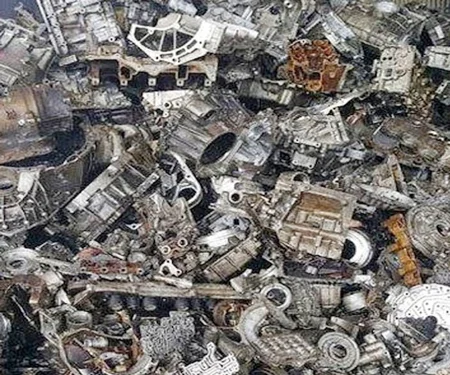
Alongside primary aluminium, Rio Tinto is increasing its focus on secondary aluminium production. CBA’s recycling operations already contribute to this shift, and the company is looking to expand further in this space.
In December 2023, Rio Tinto acquired a 50 per cent stake in Giampaolo Group’s Matalco business, which operates six remelting and casting facilities in the United States and one in Canada, with a combined capacity of about 900,000 tonnes per year of recycled aluminium.
Don't miss out- Buyers are looking for your products on our B2B platform
Pécresse said. “Wherever we have significant primary aluminium, we will aim to complement it with secondary aluminium…to get smarter on scrap, we need to be better at collecting it, and that requires governments to recognise that aluminium scrap is a strategic resource.”

India’s power pivot: 520 GW today, 900 GW ambition tomorrow. Here's where aluminium quietly fits in!
Next articleGränges advances sustainability goals with $64M green bonds
Grow with
AL Circle