RHB keeps Buy on Press Metal as aluminium prices support earnings outlook

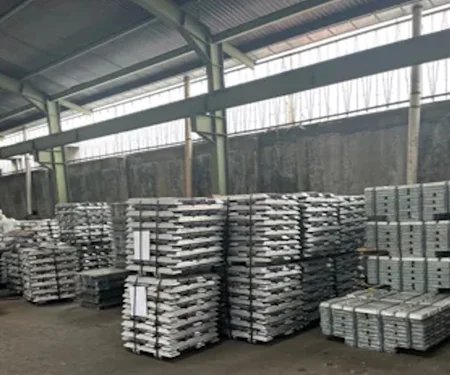
Stock image for referential purposes only
Press Metal Aluminium Holdings is expected to enter a stronger earnings phase as higher aluminium prices and easing raw material costs support profit growth in the coming quarters, according to RHB Research.
RHB maintained its “Buy” recommendation on Press Metal with an unchanged target price of RM10.50 (USD 2.66), implying about 18 per cent upside from current levels.
The brokerage said the company is benefiting from stronger aluminium prices and softer alumina costs, which could support earnings through FY2026.
Press Metal Aluminium Holdings is scheduled to announce first-quarter FY2026 results on May 28. Analysts expect net profit in the range of RM650 million to RM720 million (USD 164.45 million to USD 182.15 million). That would represent a 5 to 15 per cent increase from the previous quarter and a 47 to 61 per cent rise compared with the same period last year.
To know the long-term bauxite market forecast, book our report: “Global Bauxite & Alumina Market Forecast to 2036: Supply–Demand, Trade Flows & Price Outlook”
The expected growth is mainly linked to stronger aluminium prices. On the London Metal Exchange, aluminium averaged USD 3,192 per tonne during the quarter, up 13 per cent from the previous quarter and 22 per cent higher year-on-year. The Main Japanese Port premium also rose sharply to USD 185 per tonne, more than double the previous quarter.
At the same time, alumina prices remained relatively stable at around USD 317 per tonne. That kept the alumina-to-aluminium cost ratio close to 10 per cent, compared with 11 per cent in the prior quarter.
Management had earlier guided for an alumina cost ratio of around 13 to 14 per cent for FY2026 because about 40 per cent of alumina requirements are covered through hedging arrangements. Analysts said current market conditions remain supportive for margins.
RHB also pointed to supply disruptions linked to tensions in the Middle East as a factor supporting aluminium prices. The brokerage estimates that around three million tonnes of aluminium smelting capacity in the region has been affected. The Middle East accounts for roughly 8-9 per cent of global aluminium supply and around 20 per cent of production outside China.
The report noted that nearly 75 per cent of smelting capacity in the Persian Gulf depends on imported alumina and bauxite moving through the Strait of Hormuz, making the region vulnerable to continued shipping disruptions.
Because of that, RHB expects the global aluminium deficit to widen to between 2 million and 3 million tonnes in 2026, compared with an earlier estimate of about 600,000 tonnes before the conflict escalated.
The supply tightness is expected to support prices further. Quarter-to-date aluminium prices on the London Metal Exchange have averaged around US$3,610 per tonne, while Main Japanese Port premiums have increased to about US$292 per tonne.
Participate in our upcoming e-Magazine "Mine to Market: ALuminium Producers & Manufacturers 2026"
RHB said demand remains relatively stable despite higher prices because aluminium continues to be important for manufacturing, infrastructure and energy transition industries, with few practical substitutes.
The brokerage added that reopening shipping routes through the Strait of Hormuz could lead to short-term price weakness, although restocking demand may offset some of that pressure.
RHB maintained its earnings forecasts, noting that its FY2026 aluminium price assumption of USD 3,250 per tonne remains below the current year-to-date average of USD 3,329 per tonne.
The brokerage said the main risks to the outlook remain a sharp fall in aluminium prices or a broader slowdown in global economic activity.

MMP Industries posts 64% jump in Q4 FY26 net profit, announces maiden dividend
Next articleHindalco sees rise in aluminium exports to Japan, Korea and Taiwan after West Asia supply disruptions
Grow with
AL Circle