An internal combustion engine (ICE) vehicle generally has engine blocks, transmission housings, wheels, suspension systems, body panels, interior trim, headlights, and taillights made to some extent of aluminium. Meanwhile, in electric vehicles (EVs), the battery pack, the majority of the chassis, battery enclosures, and charging stations have aluminium as the primary building material.
Despite being lighter, the metal holds high durability and can resist extreme forces thus making aluminium a superior preference for structural pieces of EVs. Adverse environmental conditions such as contact with salt water and road salt are likely to cause corrosion in such automobiles, making it necessary to apply resistant materials. Aluminium is known for its corrosion-defying features, making it an ideal solution to help prolong the lifespan of electric vehicles.
And when the time comes, aluminium pays off with higher recycling value than many realise.
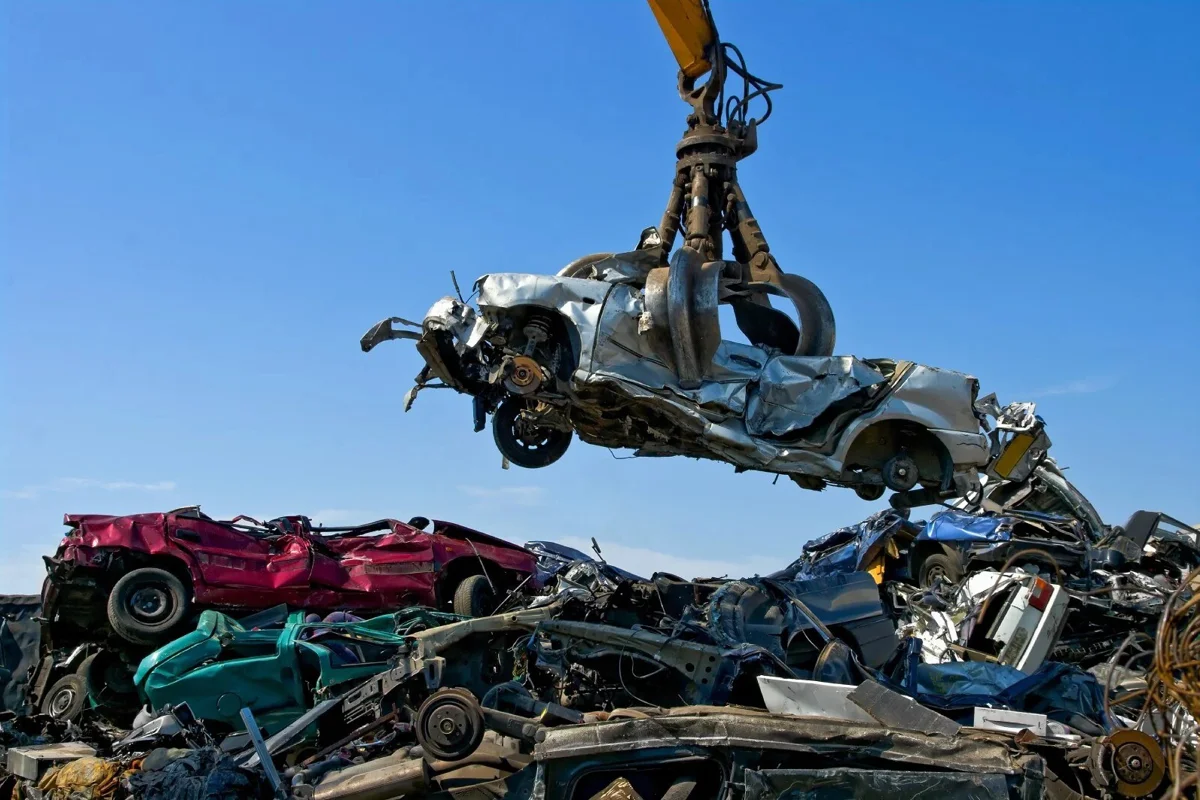
How is the metal from disposed of vehicles recycled?
According to the International Aluminium Institute, over 30 million tonnes of aluminium is recycled worldwide yearly. As EVs have seen a noticeable increase in sales since 2017, there is still little time to witness recycling them in a countable number. However, being prepared never hurts.
Different vehicle parts are built with varied aluminium alloys. Additives are included in the metal, giving it the specific properties mandated in the end product. For example, steering rods must remain strong as the engine warms around them. Fenders must be hardy and lax enough to absorb collisions sufficiently.
So, if all the aluminium from a car is melted in one pool, the derived mixture will result in having no specific properties that the previous individual alloys retained.
Piotr Chmielewski – Head of Automotive, Europe, at Hydro Extrusions, adds, "We should bear in mind that by 2030, only around 65% of the cars produced will be electric. Combustion engines will power the remaining 35%. Over the following five years, from 2030 to 2035, we will move to 100% of production being electric cars, which signals that the aluminium market will need more specialist players." Thus, the focus on the process and efficiency is of utmost importance for any recycler.
Today, recycling the aluminium content of end-of-life vehicles (ELVs) is based on dilution with primary metal and downcycling to cast engine blocks. However, vehicle electrification is expected to lessen the latter's importance. In an article by Science Direct, it is posited that altering the common classification of aluminium alloys may make it viable to reutilise ELV scrap as a direct source for upcycling into new wrought alloys. It can be demonstrated by scrutinising the possible compositions of an average EU car, a pickup truck, and an electric car, as well as the corresponding dismantling techniques. The results indicate that alloys with favourable possessions like adequate rollability, yield resilience and elongations equivalent to common automotive sheet alloys can be produced straight from ELV scrap to accommodate both the increasing importance of wrought alloys and the passing of cast engine blocks as a sink.
Why is segregation crucial in the process?
In an interview by Waste Management World with James White, Recycling Product Manager at Eriez Magnetics Europe, the following information was unveiled. James said, "The rise in use of EVs will bring its own challenges and opportunities. Of course, EV battery recycling will become a necessity as battery service life can be around 8 – 12 years for vehicles in regular use. The recovery and purification of lithium, cobalt, nickel, and other precious metals from EV batteries that have reached the end of their service life is essential, given the limited resources available around the globe."
"EV chassis and body panels contain substantial quantities of Aluminium, Stainless Steel, Mild Steel and Copper, all of which can be recycled if prepared and processed effectively. Eriez offers separation solutions for both EV battery and EV chassis recycling. With the growing quantity of EVs on the road today, I believe manufacturers should work closely with recyclers to ease the separation and recycling of end-of-life vehicles, as there is room for improvement," he added, "I believe that car recyclers are becoming more conscious of the effect that good-quality pre-shred sorting, preparation and disassembly has on the produced scrap. The reduction of contaminants such as copper and chrome is becoming increasingly important. New separation methods are being developed and utilised to further improve the recycling process of ELVs."
The challenges which are to be effectively overcome in aluminium recycling from vehicles are three-fold:
- Minute segregation of all aluminium pieces, then removal of any impurities in the metal as efficiently as possible.
- Identification of impurities that have not been removed and finding out how to prevent these from inducing difficulties when the metal is recycled to produce new products.
- Exploration of every scrap available for developing high-quality alloys, which in turn demands measures to balance quality and any shortcomings rendered by the additives in the scrapped alloys.
Conclusive summary
Aluminium is a premium choice for decreasing the weight of a vehicle, as it weighs less compared to steel. Aluminium can make cars lighter, stimulating fuel efficiency and augmenting their range.
Additionally, aluminium is 100% recyclable, which makes it an environmentally sustainable element for electric vehicles. Automakers who wish to reduce their environmental impact should take note of this.













_md.webp)
_md.webp)







