1. Macro perspective The US-Iran conflict entered its second week. After the escort coalition intervened, traffic through the Strait of Hormuz partially recovered, but war risk insurance rates remained elevated. Brent crude pulled back from a high of USD 101 to consolidate around USD 95, with energy cost support weakening from earlier levels but not yet fading. The US Fed delivered a 25bp rate hike at its September FOMC meeting, and the dot plot indicated one more hike may still occur this year. Chair Warsh struck a hawkish tone in his post-meeting remarks, and the US dollar index held at a 13-month high. Next week, attention turns to China's official PMI on September 30, as well as US PCE and non-farm payrolls data during the National Day holiday—with China's market closed for seven days...
According to data released by the General Administration of Customs of the People's Republic of China (GACC), China's total primary aluminium imports reached 185,500 tonnes in August 2026, down 14.65 per cent year-on-year but up 0.16 per cent month-on-month. Total imports for January-August amounted to 1.66 million tonnes, a decrease of 3.41 per cent year-on-year. The 14.65 per cent year-on-year decline in August imports, coupled with a nearly flat month-on-month performance, indicates that imports have not collapsed but rather maintained a steady inflow. In August, China's total primary aluminium exports stood at 21,900 tonnes, down 14.53 per cent year-on-year and 30.48 per cent month-on-month. Cumulative exports for January-August totalled 167,500 tonnes, up 9.26 per cent year-on-year....
Grow with
AL Circle

Metal Bulletin’s 33rd International Aluminium Conference in the German capital of Berlin that begins today, September 12 will unveil the “mating season” for the aluminium industry, where negotiations are settled on the quantities and premiums paid above the LME aluminium price. Reuters reported that European customers will avoid deals with sanctioned aluminium producer Rusal during the mating season. The industry players were expecting that the sanctions would be lifted in October, but they are still not sure about sealing a deal with Rusal. “We can’t agree a deal with Rusal on the basis that sanctions will be lifted by Oct. 23,” a Rusal customer in Europe said. “Anyone that has a relationship with Rusal will be preparing for the sanctions to remain in place for now.” Aluminum prices...

The state mining holding company Indonesia Asahan Aluminium (Inalum) has released today, on September 12, its metals output and sales data for the period January-August 2018. Against the expected production of 248,426 tonnes in the entire year of 2018, the company’s output from January to August is standing at 161,217 tonnes, reported Reuters. Out of the total aluminium production of 161,217 tonnes from January-August 2018, Inalum exported around 10,000 tonnes. The company's expected export amount of aluminium in 2018 is 40,000 tonnes in total. The bauxite ore output by the company during January-August stood at 663,455 tonnes, against its expected production volume in the entire year at 1,169,722 tonnes. The export sales of the ore were seen at 583,711 tonnes in the said period of time,...

According to the latest update from Shanghai Metals Market on September 12, the A00 aluminium ingot price has dipped by RMB 120 per tonne to stand at RMB 14500 per tonne. As per the data found by SMM, the average expected price today is likely to range between RMB 14480 per tonne and RMB 14520 per tonne, with spot discounts to settle at RMB 20 per tonne, up by RMB 20 per tonne from the previous day. In the east, the ingot price has registered a slump by RMB 110 per tonne to conclude at RMB 14505 per tonne while in the south and north, the prices are standing at RMB 14640 per tonne and RMB 14530 per tonne after dropping by RMB 130 per tonne and RMB 105 per tonne, respectively. This dip in aluminium ingot price could be attributed to the weakened input cost as the average alumina price has...

The US dollar fell against the Canadian dollar, which was buoyed by a resumed North American Free Trade Agreement (NAFTA) negotiation between the two counties on Tuesday. The US dollar inched down 0.08% to settle at 95.07. LME aluminium recovered from Monday’s low run and settled at US$ 2035 per tonne on Tuesday September 12. It started gaining overnight with rising dollar but slumped to a low of US$2,042 per tonne amid falling base metals contracts during the European trading session. It closed at US$2,050 per tonne. Limited downward room is expected as costs of raw materials are high. Its trading range is set at US$2,040-2,065 per t today. As on September 11, LME aluminium cash (bid) price stands at US$ 2034 per tonne, LME official settlement price stands at US$ 2035 per tonne; 3-months...

Aluminum Association president & CEO Heidi Brock urged the Trump administration to provide quota-free exemptions on aluminium tariffs for Canada and Mexico as negotiations are concluded on the revised North American Free Trade Agreement (NAFTA). Brock requested to “use this negotiation process to address any national security questions specific to Canada and Mexico raised in the Commerce Department’s Section 232 report” in a letter to U.S. Trade Representative (USTR) Robert Lighthizer. She requested the trade representative to recommend a full exemption – without quotas – for aluminium imported from Canada and Mexico. Earlier, Commerce Secretary Wilbur Ross echoed this sentiment while he said, “Our objective is to have them revitalize NAFTA, a NAFTA that helps America. And as part of...
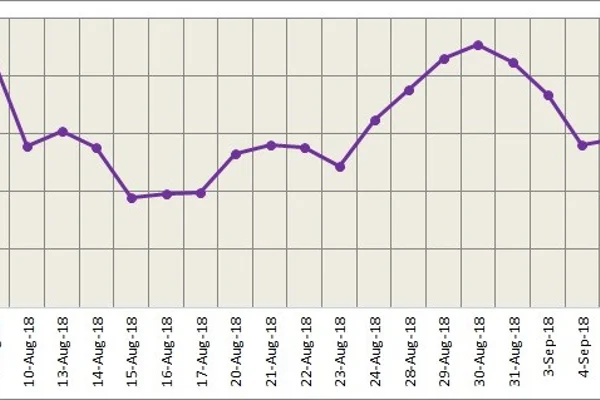
The US dollar weakened against the pound, which was buoyed by hopes that a Brexit deal could be reached in six to eight weeks. Base metals closed mixed. LME aluminium grew 0.68% overnight after closing at US$ 2000 per tonne yesterday. The contract broke resistance at all moving averages and soared to a high of US$2,109 per tonne, on market talk that Rusal is likely to cut production this month. A downbeat macroeconomic sentiment closed LME aluminium around the 20-day moving average, at US$2,077 per tonne. LME aluminium is expected to trade at $2,080-2,110/mt. As on September 10, LME aluminium cash (bid) price stands at US$ 1998 per tonne, LME official settlement price stands at US$ 2000 per tonne; 3-months bid price stands at US$ 2036 per tonne, 3-months offer price is US$ 2036.50 per...

Russia’s power company Rushydro would reconsider joining a new aluminium smelter project that Rusal plans to build in Siberia. Rushydro’s head Nikolai Shulginov said on Monday that the deal has been complicated by international sanctions. Rusal started working on the Taishet project in 2006. The project was stalled in 2009 due to weak aluminium prices. Rusal announced restarting of the smelter last year after the recovery of aluminium prices. In April, Rushydro’s board approved the move to join the project with an investment of around US$1 billion. The project was designed to produce 428,500 tonnes of aluminium annually. The United States imposed sanctions Rusal and its former president Oleg Deripaska, and the 12 companies they have shares in April. “The thing is that the situation has...

The US dollar rose last Friday against all major currencies and closed 0.33% higher at 95.43. Base metals closed mixed. LME aluminium rose to a high of US$2,080 per tonne after settling flat on Friday as workers extended their strike at Alcoa's alumina operations in Western Australia. With pressure at the five- 40- and 60-day moving averages, it closed at US$2,063 per tonne overnight, and may trade at US$2,055-2,080 per tonne today. As on September 7, LME aluminium cash (bid) price stands at US$ 2028 per tonne, LME official settlement price stands at US$ 2030 per tonne; 3-months bid price stands at US$ 2065 per tonne, 3-months offer price is US$ 2065.50 per tonne; Dec 19 bid price stands at US$ 2103 per tonne, and Dec 19 offer price stands at US$ 2108 per tonne. The LME aluminium opening...

According to the latest update by Shanghai Metals Market, primary aluminium inventories across eight consumption areas in China, including SHFE warrants, fell by some 31,000 tonnes from last Thursday September 6 to stand at 1.683 million tonnes as of Monday September 10. There were limited deliveries that arrived at social warehouses over the weekend, and this lowered stocks across those consumption areas, SMM found. In Wuxi and Jiangsu, the inventory dropped from 718,000 tonnes, as of September 6, to 708,000 tonnes on September 10; in Shanghai, the inventory dropped from 381,000 tonnes, to 378,000 tonnes; in Nanhai and Guangdong, the inventory dropped from 232,000 tonnes, to 223,000 tonnes; in Hangzhou and Zhejiang, the inventory stood at 98,000 tonnes on September 10, from 105,000...

Aluminium imports climbed by a fifth in the first quarter to more than half a million tonnes after the imposition of US tariffs, with more such shipments likely, triggering a demand from local producers for protective levies. The industry also wants preference for local aluminium in all government and Make in India projects, as with steel. Indian aluminium production climbed 19% in Q1 of FY19 while consumption rose 11%. Yet share of imports in aluminium consumption has been increasing continuously. In Q1, imports constituted a staggering 60% of domestic consumption, according to industry data. Its wide use in sensitive applications such as consumer durables and utensils can pose serious risk to the environment and health. The industry wants parity in taxes on scrap and primary aluminium.

The US dollar index fell below 95, against a basket of six major currencies. Base metals saw mixed trades. LME aluminium contract fell and closed the day’s trading at US$ 2030.5 per tonne yesterday. The metal fell sharply to a low of US$2,035 per tonne, and closed at US$2,046 per tonne after Alunorte signed agreements to resume normal operations at the alumina refinery in Brazil. It is expected to slow its decline and trade at US$2,035-2,060 per tonne today. As on September 6, LME aluminium cash (bid) price stands at US$ 2030 per tonne, LME official settlement price stands at US$ 2030.50 per tonne; 3-months bid price stands at US$ 2062 per tonne, 3-months offer price is US$ 2062.50 per tonne; Dec 19 bid price stands at US$ 2095 per tonne, and Dec 19 offer price stands at US$ 2100 per...

According to the data from Shanghai Metals Market, China in the month of August produced 3.11 million tonnes of primary aluminium, up 1.5 per cent from 3.063 million tonnes in the corresponding period last year. But the overall output during January-August still remained down by 1.8 per cent to 24.05 million tonnes from 24.48 million tonnes year-on-year. Until the end of August, the primary aluminium capacity in operation across China was about 37.36 million tonnes while about 4.54 million tonnes remained idle. Operating rates in August came in at 89.2 per cent, down 0.3 percentage point from July as costs and losses grew. Some capacities with high costs in Gansu, Shaanxi, and Henan provinces were shut permanently during the period which further bolstered the shrink of operating volumes....

The US dollar index edged down 0.31% to close at 95.1 as the pound jumped after it was reported that Germany was prepared to make a major compromise on Brexit. Base metals closed mixed. LME aluminium contract gained after three consecutive falls and closed the day’s trading at US$ 2045 per tonne yesterday. With support from high costs of alumina, LME aluminium jumped to a high of US$2,087 per tonne and closed at US$2,060 per tonne overnight. It is likely to consolidate at US$2,050-2,080 per tonne with limited downward room. As on September 5, LME aluminium cash (bid) price stands at US$ 2045.50per tonne, LME official settlement price stands at US$ 2045 per tonne; 3-months bid price stands at US$ 2076 per tonne, 3-months offer price is US$ 2077 per tonne; Dec 19 bid price stands at US$...

According to the latest update by Shanghai Metals Market, primary aluminium inventories across major consumption areas in China shrank over the week as downstream consumers increased purchases to restock on lowered spot prices. As of Thursday, September 6, stocks across eight consumption areas, including SHFE warrants, fell by some 33,000 tonnes from last Thursday to stand at 1.714 million tonnes. In Wuxi, Jiangsu, the inventory dropped by 9000 tonnes from Monday, September 3, to stand at 718,000 tonnes; in Shanghai, it dipped 5000 tonnes to clock at 381,000 tonnes. However, in Linyi, Shandong and Chongqing, the inventories showed no change and still hovering at 27,000 tonnes. For more details, refer to the chart below: In this background, today, on September 6, the A00 aluminium ingot...

According to the aluminium trading data, Japan ranked as the fourth largest aluminium importing country in 2017 after the United State, Germany, and Netherlands, accounting for 8.3 percent of the world’s total share of aluminium imports. The world total aluminium imports in the same year had totalled at US$176.2 billion. {newsStudioGallery} The global export-import data found that in 2016 and 2017, Japan had imported a total amount of 2.5 million tonnes and 2.8 million tonnes of aluminium including alloy and non-alloy, respectively. This shows the import volume grew by almost 12 per cent in 2017. Well, it does not stop there because according to the prediction by the international export-import data, Japan would likely import more this year, totalling at 3 million tonnes, 20 per cent up...

The Gulf Aluminium Council or GAC is a coordinating body that represents, promotes and protects the interests of the aluminium industry within the Gulf region. GAC, for a while has been organizing a series of special industry focused seminars for the members in the Gulf. Recently, the organization has decided to open the seminars to a global audience considering the relevance of the global topics that concern the aluminium industry as a whole. The GAC seminars will provide an excellent opportunity to share global knowledge from professionals and practical applications of the subject matter, among the GCC smelters. The objective of the seminar is to facilitate the participants a platform to gain a boarder perspective from these informative seminars, which they can apply in their own work...
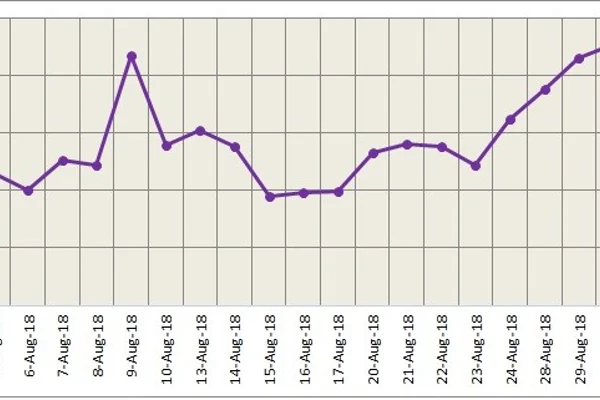
The US dollar index rallied to the highest since August 21 last night at 95.73, and closed at 95.41. Concerns over an escalating trade conflict between the US and China battered emerging market currencies and prompted investors to seek safe harbour of the dollar. Base metals, except for SHFE tin, fell across the board. LME aluminium inched up to a high of US$2,105 per tonne during the Asian trading session, but a robust US dollar lowered it to a low of US$2,056 per tonne. It closed the day’s trading at US$ 2040 per tonne and regained little to close at US$2,063 per tonne overnight. The contract may consolidate at US$2,055-2,080 per tonne today. As on September 4, LME aluminium cash (bid) price stands at US$ 2039.50 per tonne, LME official settlement price stands at US$ 2040 per tonne;...
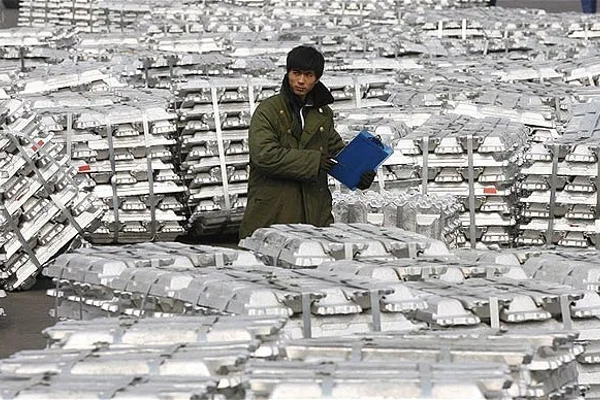
The price spread of primary aluminium between Henan province and Shanghai narrowed to RMB 90 per tonne on Wednesday, September 5, from RMB 140 per tonne at the end of August. The followed after aluminium processing plants in Gongyi, Henan resumed production from environmental curbs during July-August. Higher demand also served as a primary reason for the decreased prices in the province. However, as of today, September, the A00 aluminium ingot price grew over RMB 100 per tonne from late August to RMB 14590 per tonne to stand at RMB 14610 per tonne, SMM learned. Orders for September dropped year-on-year across most aluminium processors even as environmental restrictions eased. Downstream demand may underperform relative to expectations in the traditional high season of September-October,...