China Oct alumina imports rebound 95% m/m; exports rebalance to Middle East as Russia flows ease
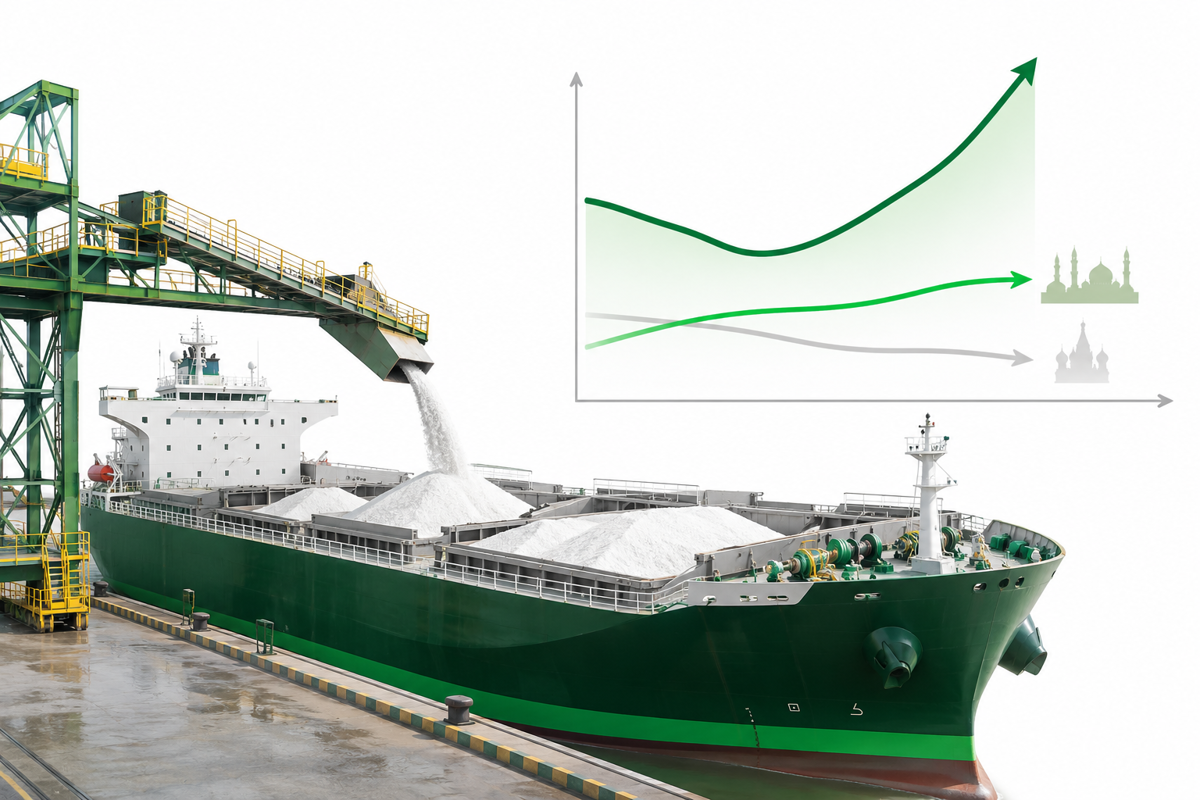
The image used in this article is generated with an AI tool and does not depict any real-time moment
According to data released by the General Administration of Customs of the People's Republic of China (GACC), China's alumina imports stood at 136,900 tonnes in October 2026, up 96.24 per cent month on month but down 27.69 per cent year on year. Exports reached 245,700 tonnes, up 3.33 per cent month on month and 39.85 per cent year on year. Net exports were 108,800 tonnes, down 35.24 per cent month on month.
Over January to October 2026, cumulative imports reached 3.2 million tonnes, up 333.67 per cent year on year. Cumulative exports stood at 2.82 million tonnes, up 29.74 per cent year on year. Cumulative net imports for the first ten months were 377,900 tonnes, up 126.29 per cent year on year.
On the import side, October shipments rebounded sharply from September but remained lower than a year earlier. The absolute volume also stayed well below the year-to-date monthly average, indicating that imports have not yet staged a meaningful recovery.
By country of origin, Australia remained the dominant source. The recovery in Australian shipment schedules was the only supporting factor, while Indonesian supply has largely exited the China market to meet growing domestic and Southeast Asian primary aluminium demand. This has further increased import concentration. With overseas prices trending higher and the domestic-foreign price gap deeply inverted, the import arbitrage window remains closed, leaving traders reluctant to purchase spot cargoes.
On the export side, October alumina shipments went to Russia, Oman, Vietnam and other destinations. Russia remained the largest export market, but volumes to Russia eased. Exports to Oman picked up notably, driving a broader recovery in Middle East demand. Shipments to Bahrain, Saudi Arabia and other regional destinations also increased.
Export flows are shifting from a Russia-centric pattern to a more diversified footprint across Russia and the Middle East. Supported by domestic supply fundamentals and relatively low spot prices, exports are expected to serve as a key outlet for surplus supply ahead.
Note: This article has been shared by Mysteel and has been published by AL Circle with its original information without any modifications or edits to the core subject/data.
Oceania alumina production falls to 12.74 million tonnes in January–September 2026
Next articleUS aluminium trihydrate prices rise 0.89% in October as freight costs jump on Santos-Houston route
Grow with
AL Circle













_md.webp)
_md.webp)