China aluminium rod margins squeezed by capacity ramp-up, flat orders
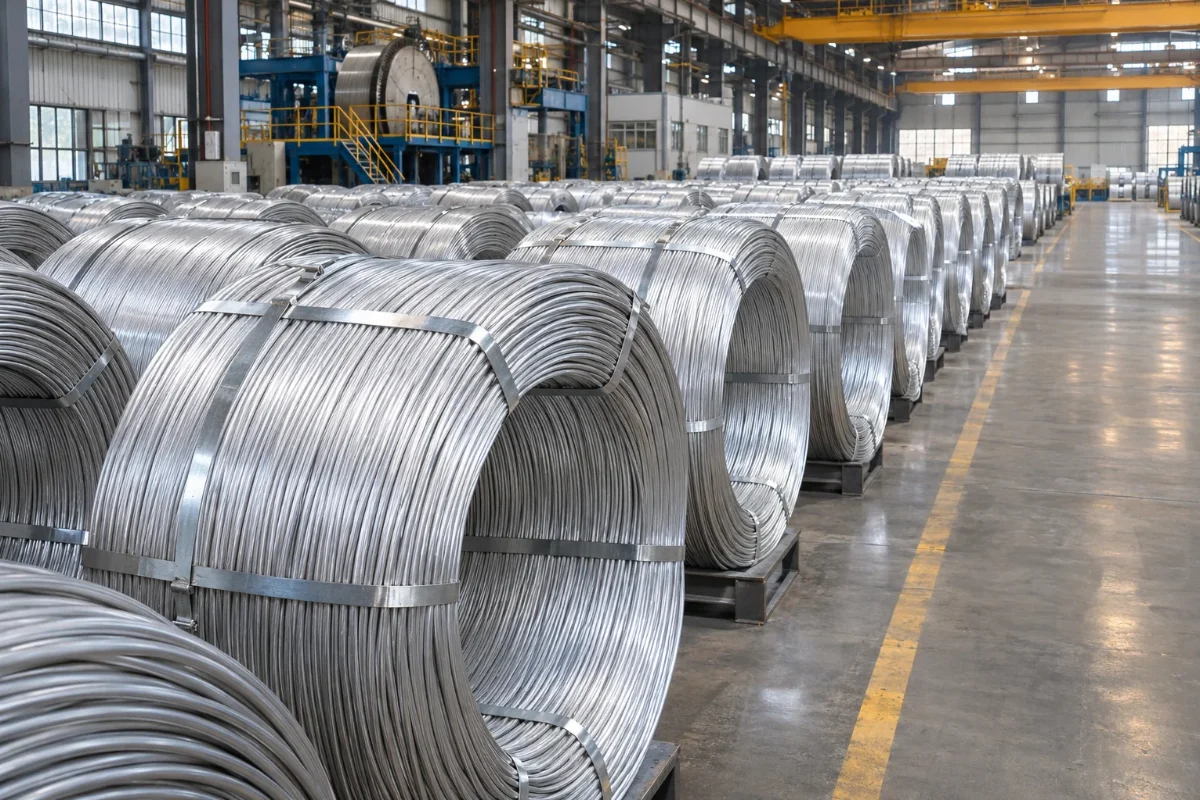
The image used in this article is generated with an AI tool and does not depict any real-time moment
Recently, as new capacity for aluminium rod continues to ramp up and supply growth accelerates, both domestic and export demand have struggled to keep pace. The mismatch between rising output and flat uptake has left the sector grappling with supply-demand imbalances, keeping processing fees for standard aluminium rods under sustained pressure. How the market will evolve has become a key focus for the industry.
On the supply side, overall aluminium rod output has kept rising. In mid-July, weekly output briefly exceeded 100,000 tonnes to hit a year-to-date high. Strong sector momentum in the second quarter drove concentrated production scheduling, while a batch of new projects gradually came online. After a temporary pullback in the third quarter, output has recently picked up again, with new capacity remaining the core driver of higher production.
According to incomplete Mysteel statistics, more than 300,000 tonnes of new aluminium rod capacity has been commissioned since the second half of this year. The launch of these new projects has pushed output steadily higher and further intensified market competition.
Producers generally report that while orders are still available, competition is fierce and processing fees lack upward momentum, prompting the market to gradually shift toward a sell-to-produce model. After the weekly output surpassed 100,000 tonnes in mid-July to reach a yearly peak, it fell back toward 90,000 tonnes as downstream orders weakened, but the ramp-up of new capacity has driven a fresh recovery in recent output.
On the demand side, domestic and export demand have failed to pick up the slack as expected. Exports weakened first, and domestic demand has struggled to fill the gap. Aluminium wire and cable exports fell for three consecutive months from July, with September exports at 70,100 tonnes, down 9.4 per cent month on month. Overseas deliveries have gradually normalized from previous highs, and the backlog of arbitrage orders that were concentrated for delivery has largely been digested. Narrower export margins have led to a sharp drop in overseas inquiries and new order signings.
Looking at global primary aluminium supply, the market expects overseas aluminium capacity to see a new round of concentrated expansion next year. Once new overseas capacity comes online and local output rises, it will weigh on LME aluminium prices. If overseas prices soften and the SHFE-LME ratio recovers or even inverts, the export premium for domestic aluminium strand will narrow further, export margins will keep compressing, traders' willingness to take orders will decline, and domestic aluminium strand exports will contract further, leaving overall exports below expectations.
On the domestic front, Mysteel research shows that downstream wire and cable orders were generally weak in the fourth quarter, falling from the same period in previous years, with clear divergence across the market. Leading cable makers and power grid supporting projects maintained resilient orders and relatively stable operating rates, while smaller cable companies faced sluggish new orders and limited incremental demand, dragging on overall fourth-quarter demand.
Over the medium to long term, projects under the 15th Five-Year Plan, including ultra-high-voltage transmission, renewable energy supporting facilities, distribution network upgrades and large-scale wind and solar bases, will continue to support aluminium rod demand, but demand structure divergence remains stark.
By product category, the centre of demand growth has shifted, with incremental demand concentrated in high-performance alloy rods and high-conductivity rods. Demand for traditional standard rods is largely flat, and standard rods are unlikely to benefit much from incremental demand tied to power grid and renewable energy projects.
Processing fees for aluminium rods have traded sideways at low levels. As of November 2, quoted processing fees for standard rods in major regions were RMB 100-150 per tonne in Shandong, Yuan 50-100/tonne in Inner Mongolia, RMB 250-350 per tonne in Henan, and RMB 50-150 per tonne in Guangxi. Since export orders contracted, processing fees have tumbled sharply, with fees for export strand dropping in tandem to RMB 900-1,000 per tonne.
Current orders rely mainly on domestic demand, export orders have returned to normal levels, and the boost from exports to processing fees has clearly faded. In some regions, fees are approaching breakeven, and a few producers are even taking orders at thin or slight losses, passively chasing volumes to prop up prices.
In summary, sustained capacity expansion, together with expectations of overseas aluminium supply growth weighing on overseas prices and overall weaker-than-expected exports, points to limited domestic demand growth and persistent homogeneous competition. Processing fees for standard rods are unlikely to see a trend-wise recovery in the near term. The market should closely track the delivery pace of power grid and renewable energy projects, whether internal and external price ratios can reopen the export window, and the actual progress of overseas aluminium capacity ramp-ups.
Note: This news is published under a content and exchange agreement with Mysteel
KAP Minerals and Cymat sign MoU to develop Canadian scandium-aluminium alloy supply chain
Next articleGermany-France aluminium FRP trade 2026 at $692m: Two-way exchange of coil, sheet, foil and high-value products
Grow with
AL Circle