One can, many lives: How aluminium is powering Red Bull’s circular future
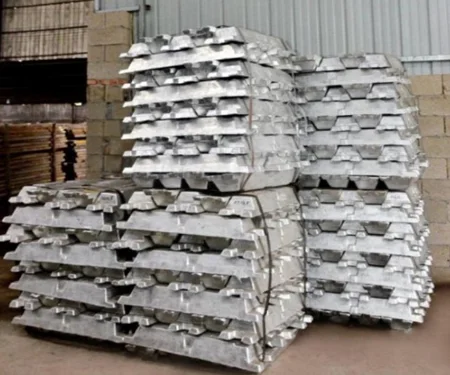
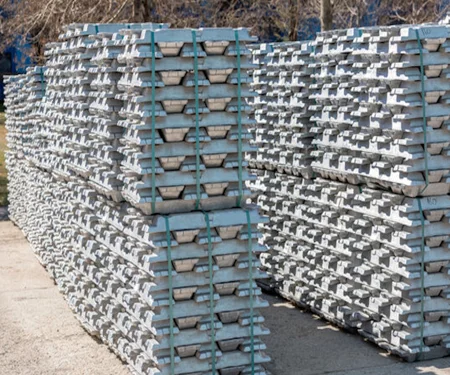
Stock image for referential purposes only
Germany-based energy drink producer Red Bull is reinforcing its sustainability agenda by prioritising aluminium packaging, expanding support for circular economy initiatives and pursuing long-term emissions reduction targets across its operations and supply chain.
Manufacturing over 12 billion cans annually across more than 175 countries, packaging inevitably sits at the centre of its environmental footprint. Concurrently, over the years, Red Bull has increasingly positioned aluminium not merely as a container for its beverages but as a strategic material anchoring its long-term sustainability ambitions.
Delve deeper into the recycled aluminium and secondary aluminium market with our World Recycled ALuminium Market Analysis Industry forecast to 2032
Red Bull’s mantra: “Circularity is the key”
The context is rooted in circularity. Aluminium, or the "permanent material" can be recycled indefinitely without losing its original properties, making it one of the few packaging materials capable of remaining in continuous use.
This characteristic enables efficient closed-loop systems, where used beverage cans can be collected, processed and returned to store shelves as new cans within a span of 60 days.
According to Red Bull, above 70 per cent of aluminium beverage cans worldwide are recycled, re-entering the production cycle and being converted into new products, while roughly 75 per cent of all aluminium ever produced remains in circulation today.
Red Bull noted that increased aluminium recycling can reduce reliance on primary raw materials while lowering energy and water consumption associated with metal production.
The company has also strengthened its responsible sourcing efforts through membership in the Aluminium Stewardship Initiative (ASI). Since 2025, all aluminium used in its beverage cans has been sourced from ASI-certified suppliers.
Recycling to play a larger role
As the global aluminium industry advances toward greater circularity, Red Bull highlighted projections indicating that recycled sources could account for approximately 42 per cent of aluminium supply worldwide by 2030. The company believes higher recycling rates will help curb demand for primary aluminium production while supporting broader sustainability objectives.
Thus, emphasising that “Each of our aluminium cans is forever recyclable”, Red Bull maintains a “wall-to-wall production” system, manufacturing the cans in a “resource-conserving manner”.
Since the brand has adopted this innovative practice, its main production sites are concentrated in Austria, Switzerland and the US.
Red Bull elaborates, “In this innovative process, the production of the beverage and the can, as well as the filling, are carried out on site. After filling, we transport the majority of the cans by rail to various conveniently located ports and then by ship all over the world.”
Its product consistency and sustainability efforts are attributed to a blend of standardised production, locally sourced primary ingredients and the rapid adoption of new technologies that help conserve natural resources.
To improve collection rates, Red Bull continues to support Deposit Return Schemes (DRS) and other initiatives designed to increase the recovery of used beverage cans. Such systems help retain aluminium within the recycling loop and strengthen circular material flows.
Net-zero target set for 2040
However, Red Bull's sustainability efforts extend beyond material sourcing. The company has prepared a broader climate and resource-efficiency framework covering packaging, manufacturing, logistics and energy consumption.
One of its pillars has been emissions reduction. Alongside its circular packaging strategy, Red Bull is committed to achieving net-zero greenhouse gas (GHG) emissions by 2040 in line with the Science-Based Targets initiative (SBTi).
The company has developed a roadmap aligned with the Paris Agreement that includes GHG emissions reduction targets. Keeping 2021 as the baseline year, Red Bull aims to achieve an absolute Scope 1 and 2 GHG emissions reduction rate of 42 per cent by 2030. Longer-term actions are aimed at reducing absolute GHG emissions across all the scopes of 1, 2 and 3 by 2040 in both its own operations and wider supply chain.
The company follows a 1.5°C emissions reduction pathway, indicating its commitment to curbing global warming. It is involved in the Business Ambition for 1.5°C campaign, further extending its support for science-based climate action and long-term decarbonisation goals.
Moreover, Red Bull emphasises, “We save energy – even with our coolers.” 95 per cent of the company’s coolers are already ECO Coolers, which save 35 per cent of energy, as “3 ECO Coolers use the same amount of energy as one common Laptop.”
Through a combination of circular packaging solutions, responsible aluminium sourcing and emissions reduction measures, Red Bull is positioning aluminium as a key component of its broader environmental strategy.
Explore the position of aluminium at the intersection of sustainability and strategy in Sustainability & Recycling: Aluminium's Dual Commitment

Waaree Renewable lands a solar project order from a subsidiary
Next articleASI certifies Independent Extrusions Ltd against Performance Standard V3.1
Grow with
AL Circle