Oil price rebounds after a drop below $100 as Iran accuses US of breaching ceasefire deal

Global oil prices have fallen sharply and stock markets jumped after the US and Iran agreed to a conditional two-week ceasefire deal that includes the reopening of the Strait of Hormuz. The announcement triggered an immediate sell-off in oil markets, with prices slipping below USD 100 per barrel as concerns over prolonged supply disruptions eased.
The global benchmark fell as much as 15 per cent to just under USD 92 per barrel before recovering slightly, while US-traded oil dropped to around USD 96 per barrel. Brent crude declined by as much as 16 per cent before stabilising near USD 94 per barrel, and WTI recorded its steepest fall in nearly six years.
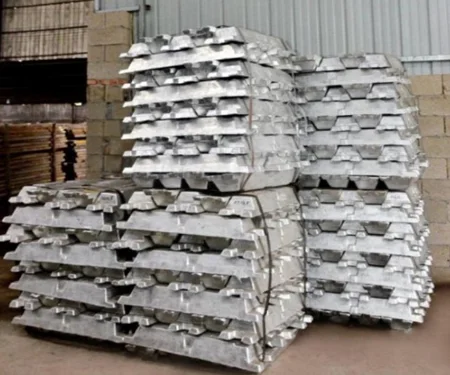
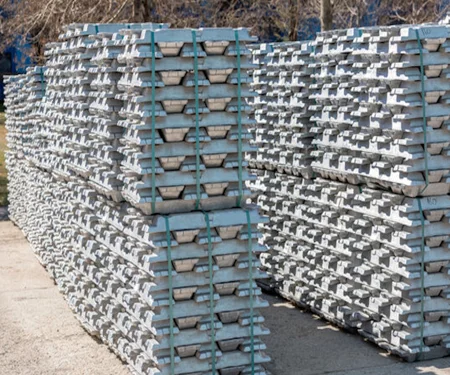
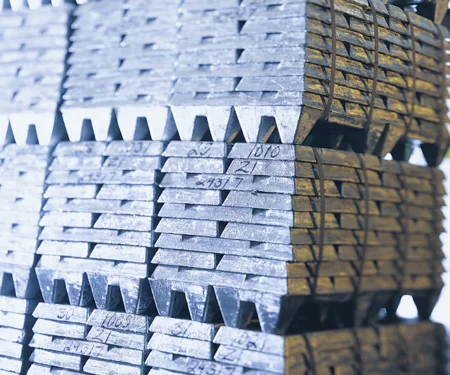
Lower oil prices also weighed on aluminium, with LME cash bid prices falling 2.24 per cent to USD 3,519 per tonne and offer prices down 2.22 per cent to USD 3,520 per tonne.
This reflects aluminium’s link to oil through the Hall–Héroult process, where carbon anodes-made largely from petroleum coke, a by-product of crude oil refining-are consumed during smelting. Typically, 0.4-0.5 tonnes of petroleum coke are required per tonne of aluminium, linking production costs to oil markets.
Easing in oil and aluminium prices was accompanied by a broader market rally, with US equities climbing after gains across Europe and Asia. Investors welcomed the ceasefire, expecting it to halt the US-Israeli military campaign and resume oil flows through the Strait of Hormuz, which carries about 20 per cent of global supply, with Iran and Oman set to levy transit fees.
However, the relief proved short-lived. Oil prices moved higher again after Iran accused the United States of violating elements of the ceasefire, casting doubt over the durability of the agreement. Iranian parliamentary speaker Mohammad Bagher Ghalibaf said three parts of Tehran’s 10-point proposal had been breached, citing continued Israeli strikes in Lebanon, a drone entering Iranian airspace, and disputes over Iran’s uranium enrichment rights.
On Thursday, prices rebounded after the previous session’s sharp losses. Brent rose by USD 2.6, or 2.74 per cent, to USD 97.35 a barrel, while WTI gained USD 3.02, or 3.2 per cent, to USD 97.43 a barrel.
For 2026 aluminium market outlook, download our report TOC: Global Aluminium Industry Outlook 2026
Supply risks and attacks keep market on edge
The intermediate price decline could not match the pre-war level of around USD 70 per barrel, keeping pressure on the global market. Supplies from the Middle East were disrupted after Iran threatened to target vessels transiting the Strait of Hormuz in response to US and Israeli airstrikes.
Risks to infrastructure have continued even after the ceasefire announcement. Iran reportedly targeted sites in neighbouring countries, including a pipeline in Saudi Arabia that serves as an alternative to the strait. Kuwait, Bahrain and the UAE also reported missile and drone attacks, while ongoing Israeli actions against Hezbollah in Lebanon have further clouded the outlook.
Refined product markets followed crude lower during the initial sell-off. European diesel futures dropped as much as 23 per cent, marking their steepest decline in more than four years, while futures linked to Abu Dhabi’s Murban crude fell 19 per cent, the sharpest fall since the contract’s launch in 2021.
US inventories and OPEC output add pressure
US inventory data added to the bearish tone. The American Petroleum Institute reported a 3.7 million barrels build in crude stocks last week, far exceeding expectations for a 0.78 million barrels increase. In contrast, gasoline and distillate inventories declined by 4.0 million barrels and 0.6 million barrels respectively, offering some support to refined products.
On the supply side, OPEC output fell sharply in March, dropping by around 7.6 million barrels per day month-on-month to 22.1 million barrels per day, a multi-decade low driven by war-related disruptions and reduced exports through the Strait of Hormuz.
Iraq recorded the largest decline, with production down by 2.8 million barrels per day to 1.6 million barrels per day. Saudi Arabia’s output fell by 2.1 million barrels per day to 8.4 million barrels per day, while UAE production declined by 1.4 million barrels per day to 2.2 million barrels per day, partly supported by pipeline routes bypassing the strait.
2026 outlook adds uncertainty
Looking ahead, the US Energy Information Administration has slightly lowered its 2026 crude production forecast to 13.51 million barrels per day from 13.61 million barrels per day previously, but expects output to rise to 13.95 million barrels per day in 2027 amid a stronger price environment and continued Middle East disruptions.
US petroleum consumption is projected to remain broadly steady at around 20.6 million barrels per day this year and 20.7 million barrels per day in 2027.
While the reopening of the Strait of Hormuz could allow some lost supply to return in the coming weeks, a full normalisation is expected to be gradual. For now, oil markets remain highly sensitive to developments around the ceasefire, with volatility likely to persist as negotiations continue.
Don’t miss out- Buyers are looking for your products on our B2B platform

Pioneer Minerals advances US tungsten capability with Mineral Technologies Springfield MOU
Next articleBreakthrough in raw material extraction from incinerator bottom ash
Grow with
AL Circle