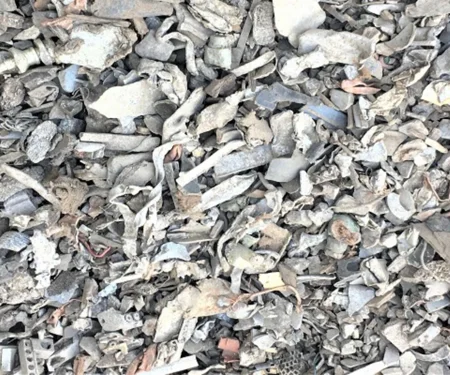
Meyer Burger and LuxChemtech form aluminium recycling partnership for strategic interventions

Aluminium recycling is one of the most critical processes in the solar module production industry. With the increasing demand for solar panels and the rapid expansion of the industry, the importance of aluminium recycling has grown significantly. Several companies, including Meyer Burger and LuxChemtech, have entered into partnerships to address this challenge.
Together, they aim to establish an industrial-scale recycling process for solar modules that will enable the recovery of valuable raw materials such as aluminium, silicon, silver, and glass. Recycling of aluminium from solar modules not only reduces waste but also conserves energy and natural resources.
The Chief Sustainability Officer (CSO) at Meyer Burger, Katja Tavernaro, remarked: "Meyer Burger is committed to sustainable entrepreneurship and has high goals towards a fully circular economy."
"For us, it goes without saying that we not only focus on innovation and efficiency in our solar products themselves but also take a look at the entire value chain and think about material recycling from the very beginning. With LuxChemtech, we have found a reliable partner for the future in Saxony and Saxony-Anhalt," Tavernaro added.
One of the key challenges in aluminium recycling is the presence of impurities that can significantly reduce the quality of the recycled metal. Therefore, it is essential to develop technology that can effectively remove these impurities and produce high-quality recycled aluminium.
Meyer Burger provides residues from PV production, such as glass, foils, aluminium, and cell fractures. LuxChemtech processes these residues and recovers valuable materials such as silicon and silver. These materials are then reintroduced into the economic cycle. The technology employed by LuxChemtech ensures that impurities are removed and high-quality recycled aluminium is produced.
The CEO and co-founder of LuxChemtech, Dr Ingo Röver, announced: "If I want to produce high-tech, I also need the right ingredients."
"In Germany, we have hardly any raw materials worth mentioning for this and therefore have to import. This is where our Recycling 4.0 is needed - with sophisticated technology; we want to save the precious raw materials from solar products, such as silicon and silver and ideally recycle them," Röver concluded.
The partnership between Meyer Burger and LuxChemtech is a significant step towards achieving a circular economy in the solar module production industry. The two companies are investing in innovation, research, and new solutions to develop technology that can effectively remove impurities and produce high-quality recycled aluminium.
In conclusion, aluminium recycling is critical to the success of the solar module production industry. Partnerships such as the one between Meyer Burger and LuxChemtech are essential in developing technology that can effectively remove impurities and produce high-quality recycled aluminium. Together, the industry can work towards achieving a circular economy that conserves natural resources, reduces waste, and benefits the environment.
"Producing solar modules and being able to recycle them makes sense from many perspectives. Here, we are always looking for new solutions, and step by step, we are building up an end-of-life module recycling. To do this, we need strong production partners like Meyer Burger," Dr Ingo Röver praised the newfound partnership as the PV firm has been running a solar panel manufacturing unit in Freiberg since 2021.
Norsk Hydro plans investing £35 million to increase aluminium recycling in Wrexham plant
Next articleCanada relies on imported aluminium as its manufacturing PMI drops; scrap imports surge by 57% in Aug’23
Grow with
AL Circle