Macro sentiment in a tug-of-war between longs and shorts, destocking slowdown, aluminium prices consolidate
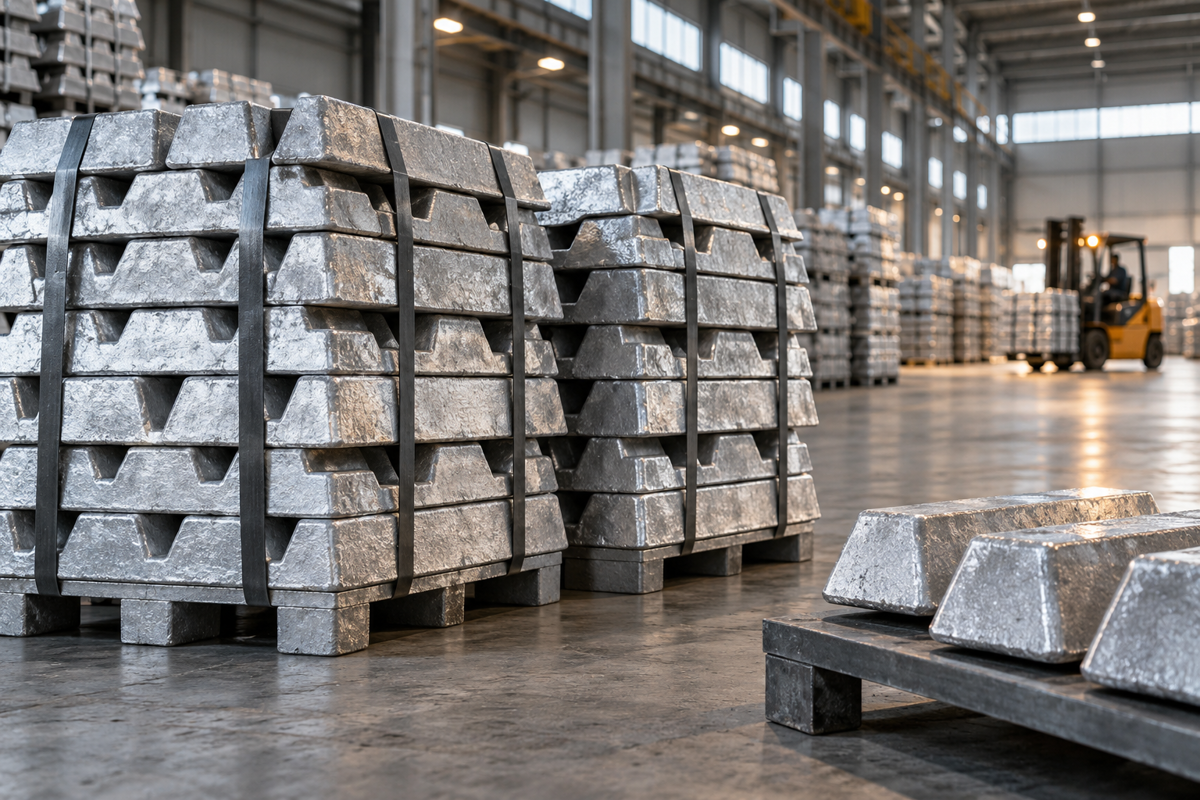
The image used in this article is generated with an AI tool and does not depict any real-time moment
The most-traded SHFE aluminium 2612 contract closed at RMB 23,280 per tonne, down RMB 85 or 0.36 per cent from the previous trading day's settlement price. It opened at RMB 23,375 per tonne during the day and fluctuated within a range of RMB 23,250-23,445 per tonne. Prices traded below the MA5 (23,386.00), MA10 (23,300.00), MA30 (23,570.00), and MA60 (23,778.00) moving averages, weakening again after a rebound and showing a consolidating-on-a-subdued-note structure, with the moving averages above forming key resistance pressure.
The MACD DIF (-121.7235) remained above the DEA (-168.5361), with the MACD red bar at 93.6251, indicating some convergence in bearish momentum. The core trading range for SHFE aluminium is suggested at RMB 23,000-23,600 per tonne. The LME aluminium 3M contract closed at USD 3,062.5 per tonne, down 0.18 per cent. It opened at USD 3,066 per tonne during the day and fluctuated within a range of USD 3,056.5-3,094.5 per tonne.
Prices traded above the MA10 (3,048.1) but below the MA5 (3,069.3), MA30 (3,106.2), and MA60 (3,188.9), pulling back slightly after a rebound and showing a consolidation-at-lows correction structure, with medium and long-term moving averages above forming clear resistance.
The MACD DIF (-31.9344) remained above the DEA (-43.7021), with the MACD red bar at 25.3352, indicating some convergence in bearish momentum. The core trading range for LME aluminium is suggested at USD 2,990-3,100 per tonne.
Macro front: Tax authorities nationwide now apply unified standards for penalties. The National Tax Administrative Penalty Discretionary Benchmark (2026 Edition) officially took effect on November 1, covering 66 tax violation items across 9 categories, including common issues such as fraudulent invoicing and tax evasion. It establishes five discretionary tiers—"minor, relatively minor, general, relatively serious, and serious"—and itemises the legal basis, applicable conditions, and specific standards for each, thereby forming a unified enforcement standard.
Iranian Foreign Minister Araghchi stated that the Iranian delegation's visit to Qatar is a continuation of Iran's ongoing communication with Qatar, Pakistan, and other mediators. The plan currently on the table is essentially the same as the "seven-day plan" Iran previously proposed. Iran has now agreed to a "two-day plan": on day one, the US will take a series of compliance measures; on day two, the Strait of Hormuz will be opened and strait traffic will return to its previous state.
Fundamentals: Supply side, replacement projects released a small amount of idle capacity, and China's weekly aluminium production continued to edge up last week. Ex-China, aluminium supply continued its recovery trend. Demand side, aluminium prices overall rebounded last week compared with earlier, and downstream purchasing enthusiasm weakened.
On Monday this week, China's aluminium ingot social inventory stood at 547,000 tonnes, down 2,000 tonnes from last Thursday and down 6,000 tonnes W-o-W from last Monday, with the destocking pace slowing down. Some regions reported weakening downstream processing demand, and the proportion of liquid aluminium slipped 0.44 percentage points W-o-W last week.
Primary aluminium market: East China market: On the previous trading day, SHFE aluminium futures fluctuated slightly, but the price spread between futures contracts continued to widen. Market selling sentiment was relatively active, with clear bargaining. Spot transaction sentiment weakened, and spot premiums continued to fall. On the previous trading day, SMM A00 aluminium ingot was at a premium of RMB 110-130 per tonne against the SHFE aluminium 2611 contract.
Central China market: On the previous trading day, aluminium futures moved sideways, and with the Friday stockpiling cycle, downstream processing enterprises in central China saw a mild recovery in purchasing sentiment. However, constrained by insufficient end-user orders, overall activity remained at a relatively low level. The price spread between near-month and far-month contracts remained consistently wide, keeping suppliers' willingness to sell high and leading to price-collapse-style selling in the market. Ultimately, actual transaction prices in central China were concentrated at a discount of RMB 60-80 per tonne against the SHFE aluminium 11 contract.
South China market: On the previous trading day, aluminium prices edged up, while the spot market remained subdued. Aluminium prices stopped falling and rebounded, inventories were at lows for the same period, bearish sentiment eased somewhat, and suppliers regained willingness to hold prices firm, with only a few making slight downward adjustments.
At the same time, purchasing demand also recovered somewhat, with buyers rushing to buy amid continuous price rise to replenish inventories, and transactions briefly stabilised. However, the backwardation structure widened again, and basis for contracts other than the front-month contract all strengthened, leading to more selling-the-rally activity.
Conversely, incremental purchasing gradually appeared insufficient, with buyers turning cautious on high prices and reducing purchases. Demand follow-through lacked momentum, with mainstream transactions in the discount-to-parity range. Discounted cargo circulated freely, and transactions weakened. Spot transaction prices were concentrated at a premium of RMB 110-150 per tonne against the SHFE aluminium 2611 contract.
Aluminium scrap: On the previous trading day, SMM A00 aluminium closed at RMB 23,780 per tonne, up RMB 40 per tonne from the previous trading day, while aluminium scrap prices were largely stable on a wait-and-see basis. Price difference between A00 aluminium and aluminium scrap: On October 30, Foshan mixed aluminium extrusion scrap free of paint was about RMB 2,062 per tonne, and shredded aluminium tense scrap was about RMB 494 per tonne.
Supply side, tax audits continued to deepen, and invoice tax rates for some leading cast aluminium alloy recyclers moved up another notch. Competition among enterprises for compliant cargo intensified, and actual effective supply remained tight. On imports, Ningbo port and Tianjin port imported shredded aluminium zorba prices were quoted at RMB 20,770 per tonne and RMB 20,820 per tonne (tax inclusive), respectively, flat W-o-W.
Demand side showed structural divergence: cast aluminium alloy downstream orders recovered marginally, and market activity improved from earlier, but overall growth remained limited, with aluminium tense scrap prices well supported. Wrought aluminium alloy scrap utilisation enterprises, with full raw material and finished product inventories, proactively lowered recycling prices, and downside risks for wrought aluminium alloy scrap began to emerge.
The aluminium scrap market is expected to hold up well in the short term. Supply side, the scope and intensity of tax audits remain the core variable. The tight supply of compliant invoiced cargo is unlikely to ease in the short term, and invoice holders have a solid foundation to hold prices firm.
Demand side, marginal improvement in cast aluminium alloy orders is expected to continue supporting aluminium tense scrap, but growth is mild and upside room is limited. Wrought aluminium alloy scrap needs to watch for pullback transmission under inventory pressure. If wrought aluminium alloy enterprises continue to push for lower prices, divergence among aluminium scrap varieties will further intensify.
Secondary aluminium alloy: On the previous trading day, the ADC12 market largely held stable, with limited willingness across the industry to adjust prices and mainstream quotations largely stable. Market sentiment remained cautious, but aluminium scrap prices on the raw material side were relatively firm, and with compliant cargo in tight supply, ADC12 production costs still constrained spot prices to some extent, leaving limited room for further declines.
Meanwhile, end-use demand had not yet shown clear improvement, and downstream purchasing remained primarily need-based, with insufficient transaction support for upward spot price adjustments. Overall, ADC12 prices are expected to continue moving sideways in the short term, with the cost side limiting downside and the demand side constraining rebound amplitude. The market still needs to watch futures trends and actual downstream purchasing.
Comprehensive outlook: Macro sentiment is mixed. On fundamentals, China's aluminium ingot social inventory continued to destock, but the destocking speed slowdown continued. The traditional peak season is nearing its end, and some voices in the market have emerged noting weakening downstream demand. Fundamentals are also mixed, and aluminium prices are expected to consolidate with adjustments in the short term.
Note: This article has been issued by SMM and has been published by AL Circle with its original information without any modifications or edits to the core subject/data.
Grow with
AL Circle