MarketWatch
Kizad urges World Aluminium Industry to invest in the United Arab Emirates (UAE)
Edited by : AL CIRCLE
3 min read
This week (11-13 June) senior industry representatives from around the world are gathering at the 2nd Annual Aluminium Summit in New York to share and debate ideas for advancing the aluminium industry and its supply chain.
A panelist at the event, Khaled Salmeen, Executive Vice President of the Khalifa Industrial Zone Abu Dhabi (Kizad), is inviting companies involved in producing aluminium goods and components to consider setting up business in the United Arab Emirates (UAE) in a move that could signal a change in the geography of world metal production as the economies of the Middle East grow and diversify away from oil.
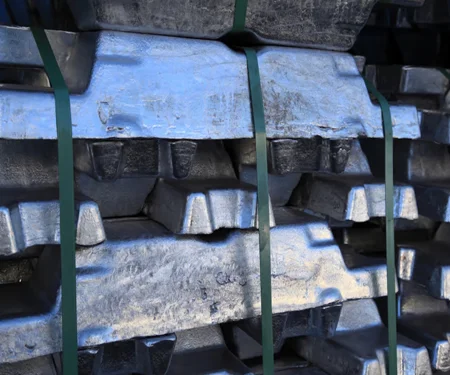
In Abu Dhabi, Kizad is building a massive industrial development that it claims is the first in the world to be based on vertically integrated "clusters" serving industries such as aluminium, steel, plastics, food and beverages, logistics, glass and paper. It will be divided into geographical areas containing anchor tenants producing basic materials to supply mid-stream and downstream manufacturers and also attract producers of support goods and services. The proximity of the businesses within Kizad aluminium cluster allows the establishment of a "hot metal road", a specially constructed roadway enabling the transport and delivery of aluminium in molten form, saving downstream manufacturers the considerable financial and environmental cost of re-melting ingots.
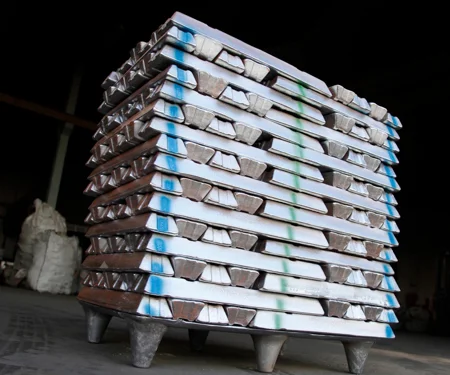
Emirates Aluminium (EMAL), Kizad's first anchor tenant, has already become the largest greenfield single-site smelter in the world with a capacity of 750k metric tonnes per annum in Phase 1 (completed December 2010) which will increase to around 1.3 million metric tonnes by the end of 2014. EMAL is currently supplying more than 200 customers in 36 countries around the world, with the US as its biggest market.
Kizad is an integral part of the Khalifa Port and Industrial Zone (KPIZ), currently the UAE's largest infrastructure project, which comprises a deep-water port with an annual capacity of 2 million TEUs (twenty foot container equivalent units) and 9 million tonnes of general cargo, and an adjacent industrial zone covering an area of 260 square miles -- approximately half the size of New York City -- under construction by Abu Dhabi Ports Company (ADPC) at Taweelah, midway between Abu Dhabi and Dubai.
Designed to take maximum advantage of its position at the crossroads of global trade routes between the East and West and Africa, KPIZ is central to realizing the Abu Dhabi government's "2030 Vision" for a vibrant and diversified economy. It will provide an industrial and logistics hub linked by road to the international airports in both Abu Dhabi and Dubai and to the new 1,200km Etihad railway network which will connect the entire UAE and the rest of the GCC, giving easy access to the markets of the UAE and the wider Middle East with their rapidly growing demand from manufacturing, aerospace, transport and construction sectors.
Previous article
Japan aluminium stock dropped by 4.9% month on month
Next articleALSCON’s scholarship scheme helped underprivileged students of Nigeria
Grow with
AL Circle