India's ₹4 trillion aluminium investment pipeline faces import pressures as AAI seeks higher duties
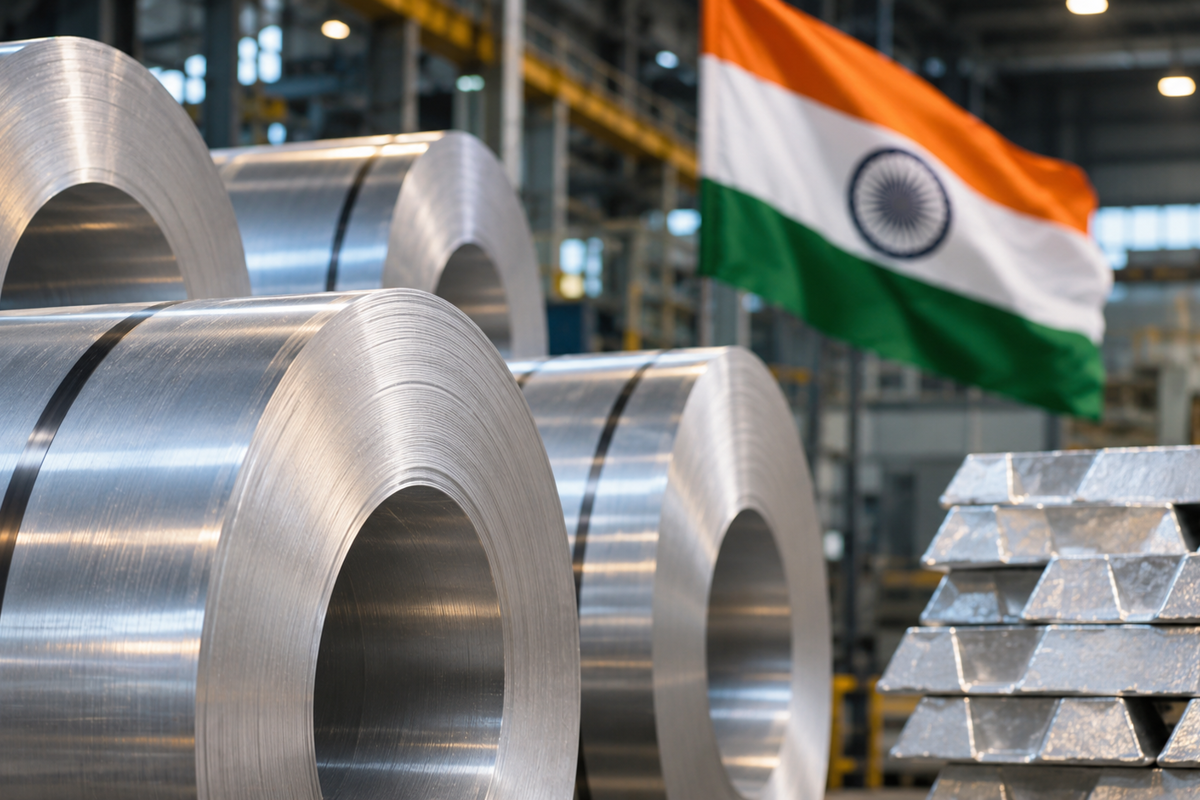
The image used in this article is generated with an AI tool and does not depict any real-time moment
India's aluminium industry is seeking stronger government support to reduce import dependence and accelerate domestic capacity expansion, as rising demand and a substantial import bill put pressure on the country's long-term manufacturing ambitions. The Aluminium Association of India (AAI) has urged the government to introduce a more supportive customs duty structure and other policy measures ahead of Budget 2027-28, warning that a predictable policy environment will be essential to unlock an investment pipeline of INR 4 trillion (USD 43.07 billion).
India's aluminium demand is projected to increase from 6 million tonnes in FY26 to 11.5 million tonnes by FY33. To meet this growth, the industry plans to expand domestic capacity from 4.3 million tonnes per annum (MTPA) to 11 MTPA by FY33. However, AAI believes that the sector's proposed investments could face multiple challenges without timely policy intervention.
The association has submitted recommendations to the Ministries of Finance, Commerce and Industry, and Mines, as well as the Department for Promotion of Industry and Internal Trade (DPIIT). Its proposals focus on strengthening the domestic aluminium value chain, improving the competitiveness of manufacturers and reducing reliance on imported aluminium products.
India's aluminium import bill puts domestic production in focus
The scale of India's import dependence is reflected in its foreign exchange expenditure. According to AAI, imports of aluminium products under Chapter 76 resulted in an outflow of INR 884.34 billion (USD 9.52 billion) in FY26. The association believes that strengthening domestic manufacturing capabilities will help the country meet a larger share of its future aluminium requirements through local production.
The investment requirement for capacity expansion is substantial. AAI estimates that INR 600 billion (USD 6.46 billion) is needed to add every one million tonnes of aluminium capacity, highlighting the importance of long-term policy certainty in this capital-intensive industry.
An AAI spokesperson said, “India has all the necessary resources, capabilities and demand to build a globally competitive aluminium sector. The industry’s proposed investments of ₹4 lakh crores in the coming years will enhance capacity from 4.3 MTPA to 11 MTPA by FY’33 with significant opportunities by doubling employment, along with MSME growth and greater value addition across the country. A supportive and predictable policy framework will create the conditions for these investments and strengthen India’s aluminium value chain for the long-term.”
Explore the production, demand and consumption forecasts of bauxite and alumina in our report: "Global Bauxite & Alumina Market Forecast to 2036: Supply–Demand, Trade Flows & Price Outlook"
AAI seeks higher customs duties on aluminium imports
A central part of the association's recommendations is a calibrated customs duty structure across aluminium products, which it believes would strengthen domestic manufacturers and improve their ability to compete with imported material.
AAI has proposed increasing the Basic Customs Duty (BCD) on primary aluminium to 10 per cent and raising the duty on downstream aluminium product imports to 15 per cent. It has also called for maintaining or increasing import duties on aluminium scrap alongside primary aluminium.
The association argues that these measures could support domestic aluminium production and downstream manufacturing by improving the competitiveness of locally produced material. The proposals come as India prepares for a substantial increase in aluminium consumption over the coming years, creating a need for additional domestic capacity across the value chain.
AAI has also called for maintaining or enhancing import duties on aluminium scrap until mandatory quality controls are introduced for imported material. Under its proposal, imported aluminium scrap should meet a minimum aluminium content requirement of more than 91 per cent, in line with the Government of India's Aluminium Vision Document and practices followed by global peers.
According to the association, appropriate duties and quality standards could reduce foreign exchange outflows, strengthen the domestic scrap market, encourage responsible recycling and support India's circular economy.
Showcase your brand, aluminium recycling initiatives and sustainability vision in our upcoming magazine: Sustainability & Recycling: Aluminium’s Commitment 2026.
Downstream aluminium parks proposed to strengthen manufacturing
Beyond customs duties, AAI has recommended government support for establishing downstream aluminium parks under a plug-and-play model. The proposed parks would provide manufacturers with access to shared infrastructure and hot metal, helping reduce remelting and logistics costs.
The association believes that such facilities could strengthen India's downstream manufacturing ecosystem by encouraging greater value addition, supporting employment generation and improving export opportunities.
AAI's recommendations are intended to address challenges across the aluminium value chain rather than focusing solely on primary metal production. The association believes that stronger downstream capabilities, improved scrap quality and a more competitive customs duty structure will be important as domestic demand expands.
With aluminium consumption projected to reach 11.5 million tonnes by FY33, the industry's ability to expand domestic capacity will remain a key factor in limiting future import dependence. AAI believes that its proposed INR 4 trillion (USD 43.07 billion) investment pipeline could substantially increase production, employment and the sector's contribution to the economy.
The upcoming Budget 2027-28 will therefore be an important opportunity for the government to consider the industry's demands. For AAI, establishing a stable and predictable policy framework will be essential to ensure that a greater share of India's future aluminium demand is met through domestic production, supporting the broader vision of an Atmanirbhar and Viksit Bharat.
Find the right unwrought aluminium for your business. Browse a comprehensive list of primary aluminium products on AL Biz.
Grow with
AL Circle













_md.webp)
_md.webp)