As a result of the ongoing geopolitical discord between Israel and Iran, the Indian aluminium industry (though not impacted directly) is feeling the rippling heat in pricing. In an unexpected turn of events, India’s aluminium price has slipped to INR 242 per kg, contemplating the global metal pressures exacerbated by currency swings and rising oil.
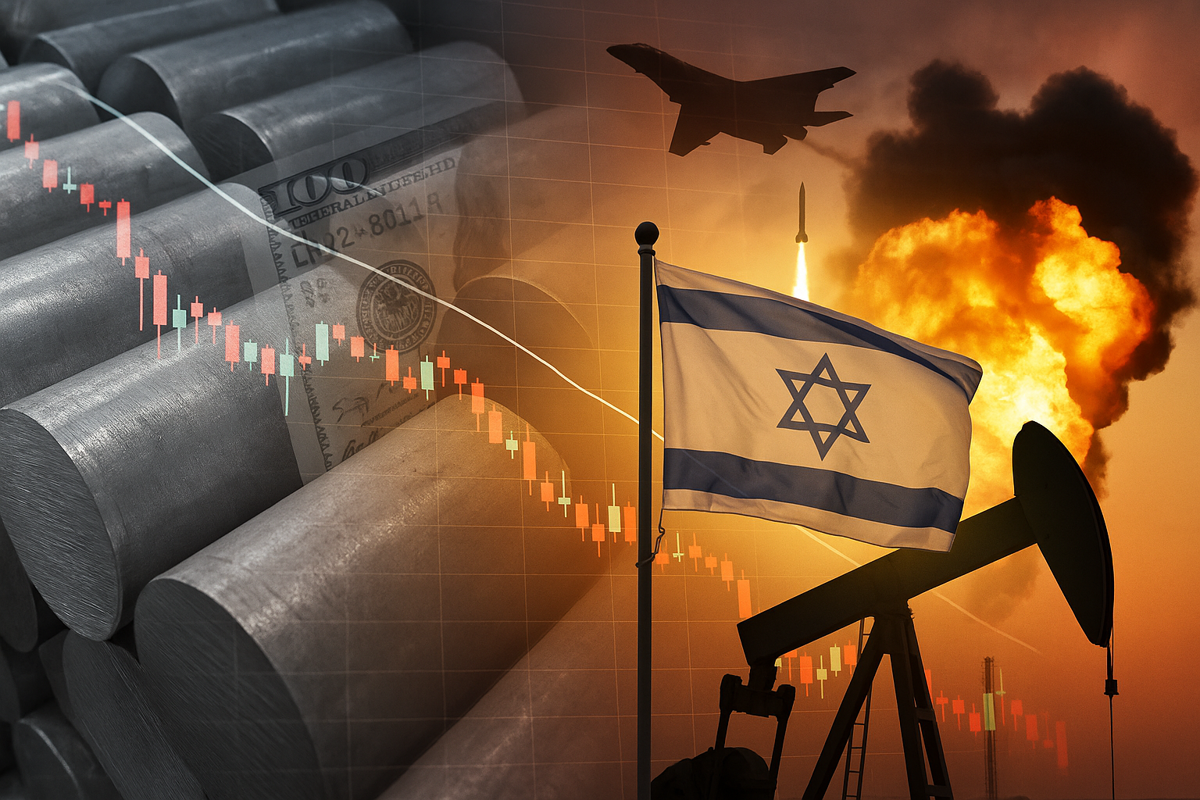
Image for referential purposes only
The chain of events unfolds to be in this order — Israel and Iran under a military clash, which has led to the latter region’s oil supply chain being disrupted. The Sensex (India) has then fallen 1300 points. As aluminium production is highly energy-intensive, notably smelting alone accounts for nearly 40 per cent of production cost. The Middle East, especially the Gulf region, is a major natural gas and fuel oil supplier that powers many smelters globally.
Now, an escalation between Israel and Iran risks disrupting Gulf energy supply routes, primarily through the Strait of Hormuz, through which over 20 per cent of global petroleum passes. Even indirect conflict heightens energy price volatility, particularly oil and LNG, which raises operational costs for aluminium smelters across Asia, Europe, and even parts of North America.
In theory, the aftermath of Israel’s large-scale military strikes on Iran, particularly the bombardment of critical energy and military infrastructure, should have pushed aluminium prices higher. Aluminium is one of the most energy-intensive metals to produce, and Iran, while not a dominant exporter, plays a critical regional role in supplying semi-processed aluminium to neighbouring under-sanctioned economies like Iraq, Syria, and Lebanon. Iran is also a strategic corridor for materials trade with India and China. Moreover, with Brent crude rising sharply post-June 13 and the global energy market bracing for supply shocks, the expectation would be that rising input costs, mainly fuel and electricity, would pressure smelters worldwide and translate into higher aluminium prices.
However, as mentioned in the beginning, aluminium prices have deflated in India. As of June 16, 2025, the benchmark domestic Indian aluminium price stood at INR 242.1, down 0.21 per cent.
This apparent contradiction lies in the way global financial markets price risk in the immediate aftermath of geopolitical shocks. The primary reason for the decline in aluminium is not a change in supply or production costs. It is the strength of the US dollar. Following the Israeli offensive, global markets witnessed a flight to safety.
The US Dollar Index surged above 106 as investors poured into dollar-denominated assets, viewing them as safe havens amid rising Middle East tensions. As aluminium is priced in dollars globally, this currency appreciation makes it more expensive for non-dollar economies, suppressing immediate demand and dragging prices down on international exchanges like the LME and SHFE.
Furthermore, the markets are currently more concerned about demand contraction than supply disruption. While oil has surged and gas prices are expected to follow, smelters haven’t yet shown signs of shutdown or cutback. That’s largely because smelters often hedge their energy needs through long-term contracts, and any sustained cost inflation would take a few weeks to materialise operationally. At the same time, weak manufacturing data from China, flat European industrial output, and mixed demand from India are leading traders to bet against any near-term price hike. The anticipation is that rising input costs could be overwhelmed by declining industrial activity if the geopolitical conflict escalates into a full-blown regional war, dragging global growth down with it.
It is also important to note that Iran’s aluminium sector is still functioning, at least as of this writing. The key smelters like IRALCO, Salco, and Almahdi have not reported any disruptions, even though Iranian energy infrastructure, such as gas fields at South Pars and Fajr-e-Jam, were reportedly hit. The market is operating on the assumption that unless Iran’s domestic power grid faces sustained outages or export flows are entirely blocked via the Strait of Hormuz, aluminium output will continue — albeit under increasing pressure. Inventories on the LME and SHFE are still manageable, and Chinese production was up 2.7 per cent year-on-year in May. These dynamics are all feeding into a belief that aluminium’s fundamentals while tightening, haven’t yet turned dire.
US President Donald Trump, Israel’s main ally, urged Iran to reach a deal on its nuclear program, suggesting that Tehran had brought the attack on itself by resisting a US ultimatum in talks to restrict its uranium enrichment.
In Friday afternoon trading, the dollar gained 0.3 per cent to 143.88 against the Japanese yen and rose 0.1 per cent to 0.8110 francs against the Swiss currency, with the greenback on track to snap two straight sessions of losses against safe-haven currencies.
“Historically speaking, with these kinds of geopolitical events, you get the knee-jerk reaction from the market ... History tells us to kind of look past a lot of this stuff,” said Jack Janasiewicz, Portfolio Manager at Natixis Investment Managers in Boston.
On the other hand, on Friday, the Indian currency (INR) reacted swiftly. On Friday, it opened at INR 86.14 per US dollar, weakening INR 0.54 from the previous day’s close of INR 85.60. The link here is direct - as oil prices rise, Indian refiners need more dollars to pay for shipments. This raises dollar demand, weakens the rupee, and further inflates the cost of oil imports, creating a feedback loop that widens the current account deficit.
When delving into the direct impact on the aluminium production segment among the two nations in question, Israel is not a major aluminium producer or exporter in global terms, but it plays a niche, strategically important role in the aluminium ecosystem, especially in high-tech downstream manufacturing, defence, aerospace, and advanced materials. Iran plays a more significant upstream role than Israel in the global aluminium industry. While not a top-tier player like China, Russia, or Canada, Iran is the second-largest aluminium producer in West Asia after the UAE and has been actively boosting domestic smelting capacity to reduce import dependence and pivot toward self-sufficiency and export.
The Israel-Iran clash complicates Iran’s aluminium drive, with power plants tied to smelters possibly suffering disruption, especially after damage at gas‑processing sites like South Pars and Fajr‑e‑Jam. At the same time, any escalation could trigger fresh Western sanctions, constraining technology imports, finance, and export routes. As an inevitable effect of a transnational, higher freight premiums and insurance hit aluminium exports, which were already precarious under sanctions.
Thus, what we are witnessing is a pricing disconnect: a geopolitical event that inflates smelting costs and risks regional supply constraints has, paradoxically, triggered a price fall. That’s because markets are reacting first and foremost to macroeconomic sentiment, strong dollar, falling demand expectations, not yet to the aluminium supply chain’s microstructural stress. However, if the conflict drags on and further destabilises the Gulf’s energy architecture, or if Iranian aluminium production is indeed curtailed, the market could see a reversal. Smelters already operating on slim margins would either pass on costs to buyers or cut output, and physical traders would reprice inventories upward.













_md.webp)
_md.webp)







