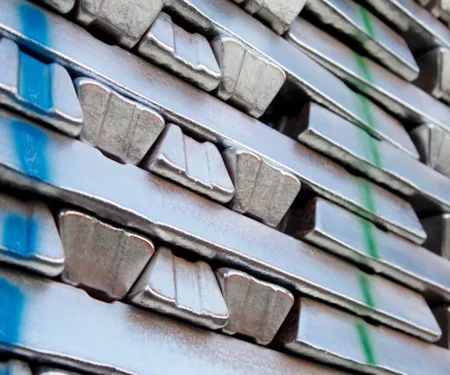
India is set to launch its much-anticipated carbon market by 2026, Union Power Minister Manohar Lal announced on February 21, 2025. This initiative will be a game-changer for Indian industries, particularly exporters, as they strive to align with global carbon emission standards.
By helping businesses curb emissions and transition away from fossil fuels, the move aims to strengthen India's position in the global marketplace while advancing its sustainability goals.
Companies in industries like steel and cement are increasingly concerned about the impact of the European Union’s (EU) Carbon Border Adjustment Mechanism (CBAM), which imposes tariffs on high-carbon imports. To remain competitive in the EU market, manufacturers will need to adopt greener energy sources and reduce carbon emissions. Carbon credits could play a crucial role in this transition, helping companies meet sustainability targets while ensuring compliance with EU regulations.
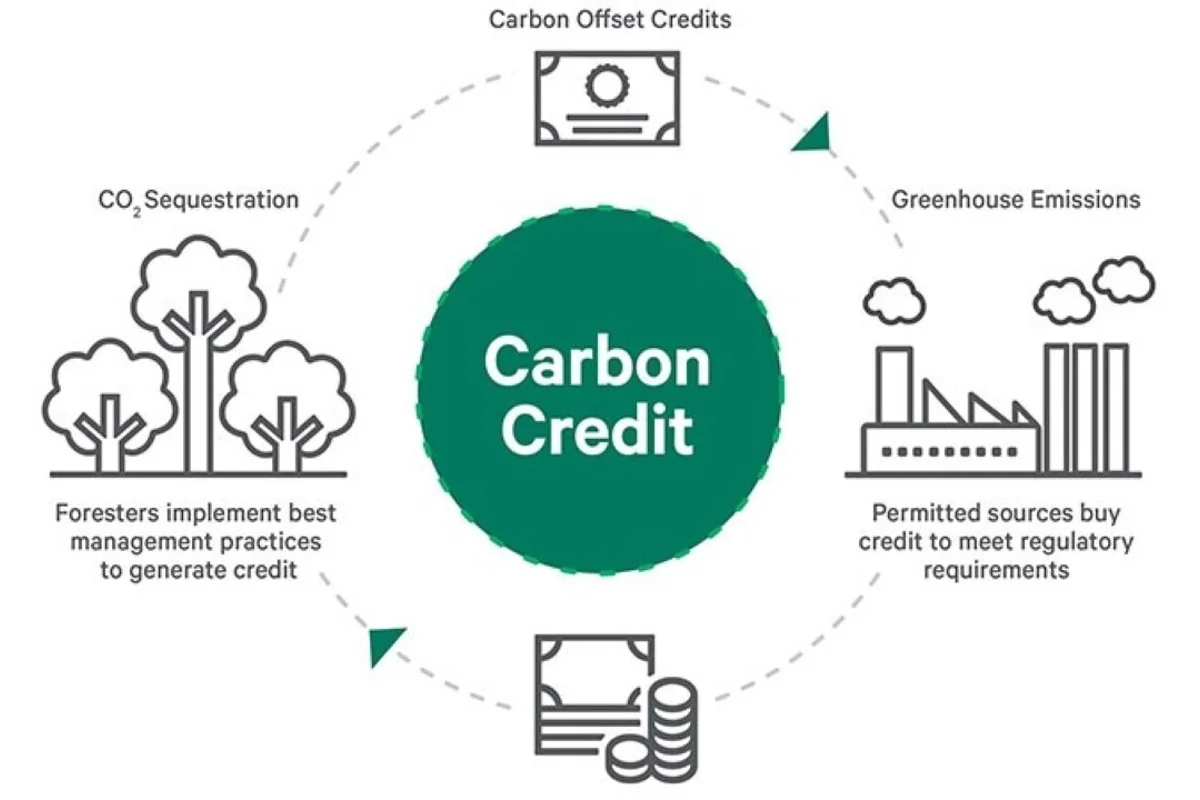
The Energy Conservation (Amendment) Bill, 2022, passed by the Parliament of India, lays the groundwork for establishing a carbon credit trading system in India. Under this framework, industries that successfully reduce emissions will earn tradable credits, while high-emission companies must purchase these credits to offset their carbon footprint.
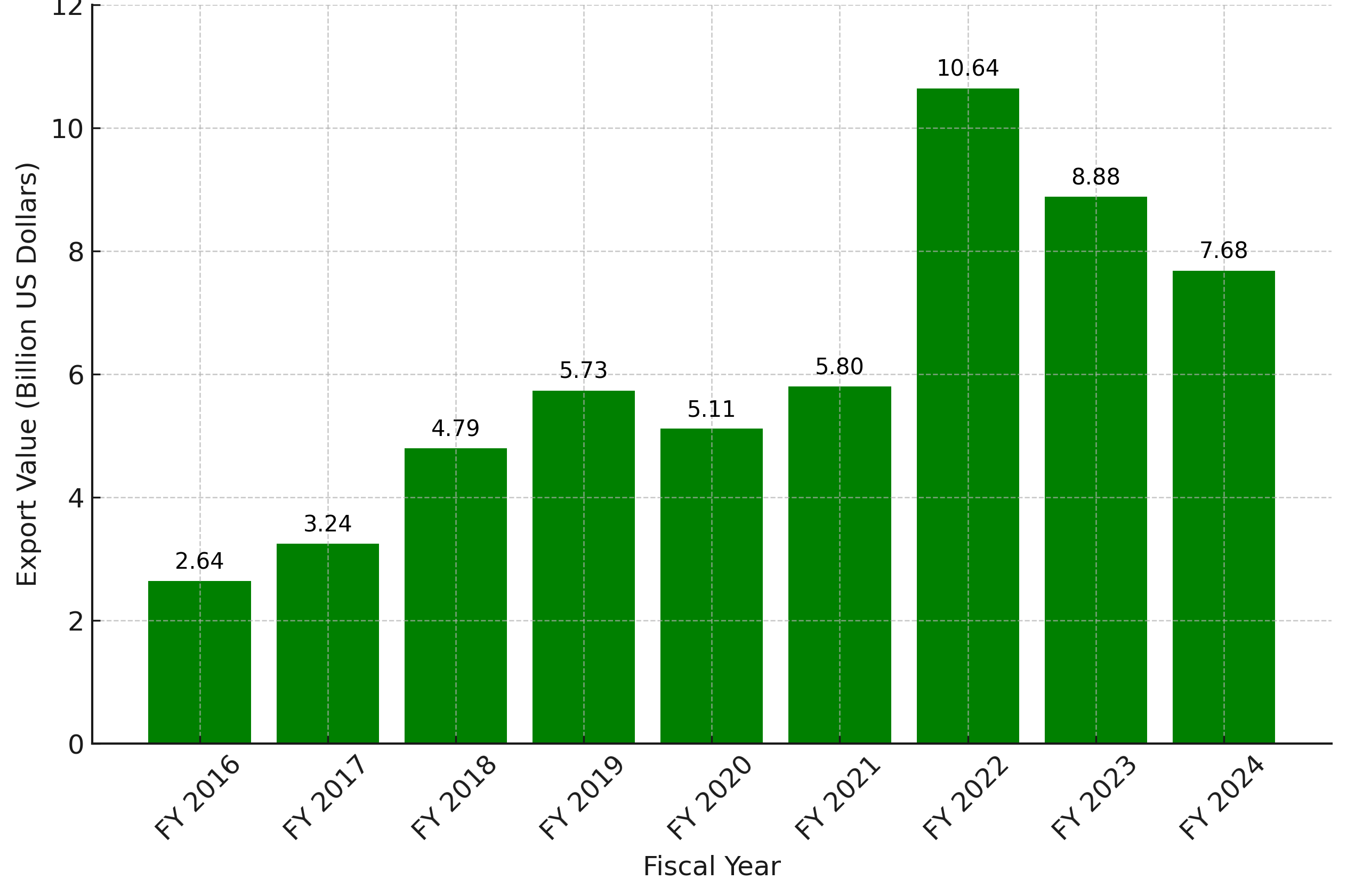
India: The export value of aluminium and its products, FY 2016-24 (in USD billions)
Aluminium is a versatile metal widely used across construction, automotive, and consumer goods industries. However, conventional aluminium production has faced criticism for its environmental impact, particularly due to its high carbon emissions. *The average electricity consumption for aluminium smelting in India is 14,361 kWh per tonne of aluminium. The Indian aluminium industry emits 20.88 tonnes of CO2 per tonne of aluminium.
Although the aluminium sector has not been explicitly mentioned so far, discussions around Indian industries—particularly producers and exporters—and the reliance on fossil fuels, along with the implications of CBAM, undoubtedly bring the sector into focus.
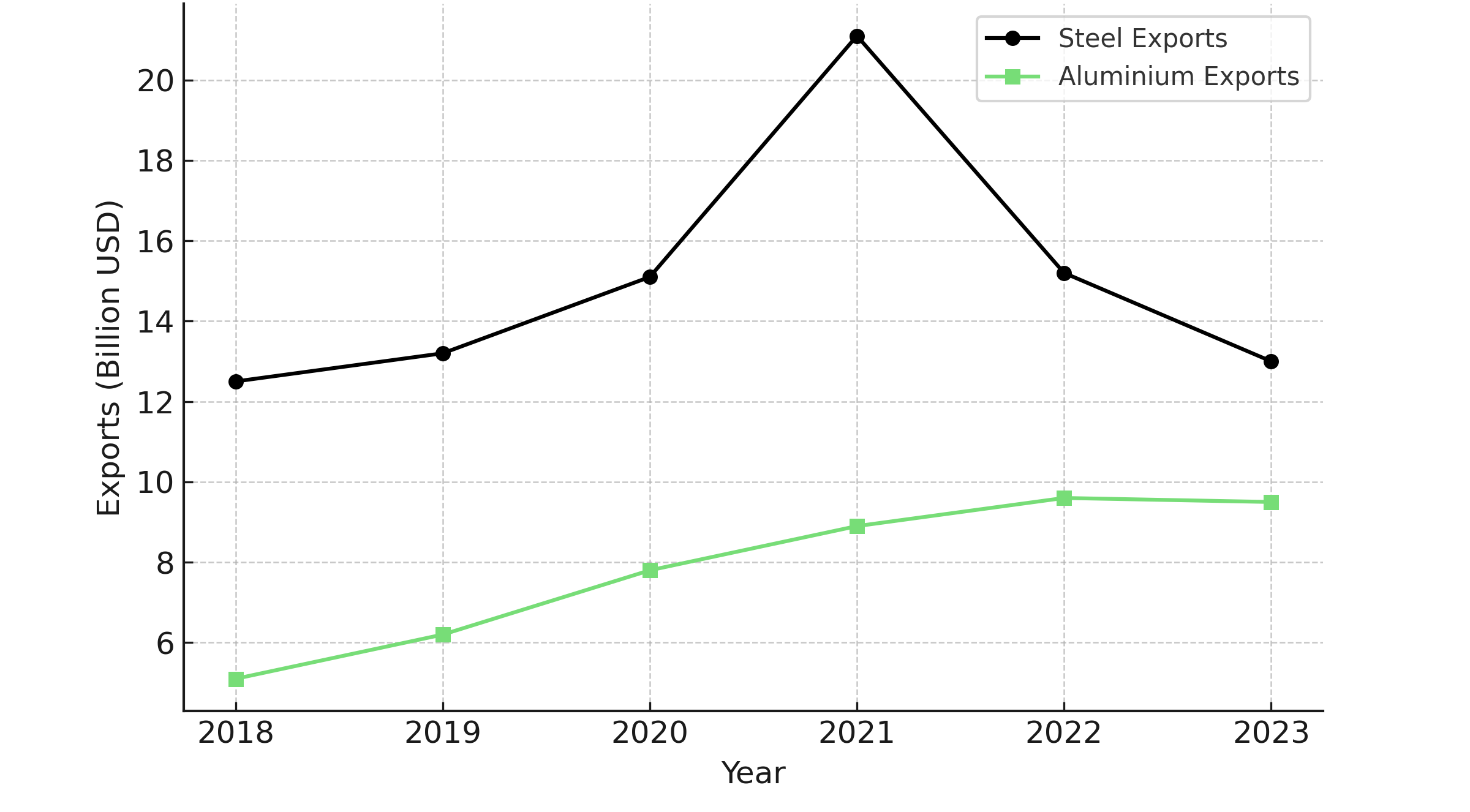
India: Steel Vs Aluminium exports in value, 2018-2023 (in USD billions)
Source: KPMG, EXIMPEDIA, Reuters, EXPORTGENIUS, AL Circle Research
The minister stated, “Very soon, we are going to launch an independent carbon market of our country…Likely by mid of 2026. Under this programme, one who uses fossil fuel or emits carbon would have to buy carbon credits, and those who would use power from non-fossil sources would have carbon credits, which they call sell in the market. So, the market for sale and purchase of carbon credits, which is not there in our country now, will be launched in 2026.”
“Through this, our industries will also be able to grow as several countries have decided that in coming years, they would import only the products made through power from non-fossil sources, and we will export only those products.”
The Union Minister emphasised the industry's need to transition towards non-fossil energy sources and stated that the government is actively preparing the sector for participation in the carbon market.
Carbon markets function as trading systems where carbon credits can be bought and sold. These credits allow companies or individuals to offset their greenhouse gas emissions by purchasing them from entities that have successfully reduced their emissions and accumulated surplus credits. In India, all three power exchanges—Indian Energy Exchange Ltd, Power Exchange India Ltd, and Hindustan Power Exchange Ltd—are set to establish their carbon-credit trading platforms.
During the press conference, the Power Ministry unveiled the latest ratings of power distribution companies (Discoms) across the country. Adani Electricity Mumbai Ltd secured the top position with an impressive score of 99.8, followed by Gujarat’s Dakshin Gujarat Vij Company Ltd in second place. The rankings were determined based on multiple criteria, including financial sustainability, billing and collection efficiency, and distribution losses.
The UNESCO Science Report, released in June 2021, highlights that China's academic output on carbon pricing more than doubled between 2012–2015 and 2016–2019. Building on this momentum, China launched the world's largest national emissions trading scheme in July 2021.**
***In September 2024, China's national emissions trading scheme (ETS) was reported as the world's largest carbon market. That same month, the Ministry of Ecology and Environment (MEE) released a draft policy outlining plans to expand the ETS beyond the power sector to include the steel, aluminium, and cement industries by the end of the year.
This expansion will significantly increase the scheme's coverage, according to the MEE, raising the share of national carbon dioxide (CO2) emissions regulated by the market from 40 per cent to 60 per cent. From 2024 to 2026, companies in the newly added sectors will receive free emissions allowances without a cap on total allocations. However, starting in 2027, the government will begin tightening these allowances to drive emissions reductions.
Top image credit: LinkedIn
*Evaluating Net-zero for the Indian Aluminium Industry by CEEW












_md.webp)
_md.webp)
_md.webp)