Automation, plant design & material flow leads to more profit in AL extrusion: The Cometal stance

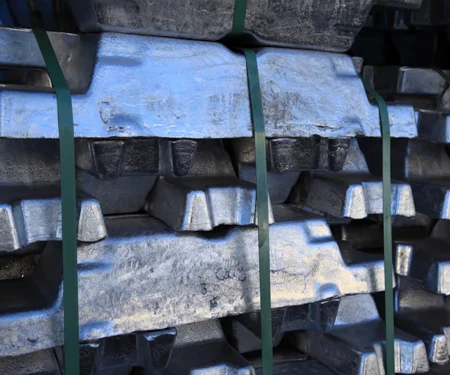
The image used in this article is generated with an AI tool and does not depict any real-time moment
The aluminium industry has been fighting on multiple fronts. Energy prices have surged. Carbon regulations are tightening. Labour shortages persist across manufacturing hubs. Meanwhile, customers are demanding shorter lead times, better quality and greater traceability — often simultaneously.
Yet amid all these pressures, one issue is quietly separating industry leaders from the rest and that is efficiency.
In today's market, every unplanned stoppage, every handling delay and every percentage point of yield loss carries a measurable cost. When margins are under pressure, profitability is increasingly determined not by how much aluminium a producer can make, but by how efficiently they can make it.
To know about the safety and productivity of autonomous furnace tending in aluminium cast houses, join our upcoming webinar here.
The investment shift is already underway
This reality is reshaping capital allocation across the global aluminium value chain. From casthouses and extrusion plants to finishing lines, manufacturers are directing investment towards automation, process integration and smarter material flow. The objective is consistent: extract more value from every tonne produced.
The trend is sharpest in the extrusion sector. Demand continues to grow from construction, automotive, solar and industrial applications — but competition is intensifying at the same pace. Producers are no longer competing on press capacity alone. The focus has shifted to reducing unplanned downtime, accelerating changeovers, improving billet handling logistics and optimising overall plant layout.
Industry data reflects the urgency. Unplanned downtime in extrusion operations can cost manufacturers anywhere between USD 50,000 and USD 250,000 per hour, depending on plant scale — figures that make operational efficiency not a back-office concern, but a boardroom one.
In other words, the industry's next competitive edge may come from engineering rather than metallurgy.
Where integrated plant design makes the difference
This is where the architecture of a production facility — how its systems connect, communicate and hand off between stages — is becoming a genuine source of competitive advantage.
Consider billet handling, a function that rarely appears in strategic discussions but sits at the heart of extrusion productivity. Inefficient billet logistics creates bottlenecks that ripple downstream, affecting press utilisation, cycle times and ultimately throughput. Automating and integrating this single function can recover hours of productive capacity per shift — without adding a single press to the floor.
Explore an indepth analysis of the aluminium wire and cables market in our ALuminium Wires & Cables - Insights & Forecast to 2030 report
Among the companies responding to this shift is Cometal Engineering, an Italian engineering specialist that has spent more than 40 years working alongside aluminium producers worldwide. As manufacturers increasingly seek integrated solutions rather than isolated equipment upgrades, the company has expanded its focus across the entire extrusion and casthouse value chain.
Its portfolio spans extrusion lines, billet and log handling systems, ageing ovens, quenching and cooling systems, profile packing solutions, storage systems and complete casthouse installations. More importantly, these technologies are designed to operate as part of a connected production ecosystem, helping manufacturers improve material flow, reduce bottlenecks and optimise plant performance.
The company's projects today extend across Europe, the Middle East, Asia, North America and South America, reflecting the universal nature of the challenges facing aluminium producers. Whether the objective is increasing throughput, modernising ageing infrastructure or enhancing automation, the industry's requirements are becoming remarkably similar across regions.
What makes this evolution noteworthy
Engineering companies are no longer viewed merely as equipment suppliers. Increasingly, they are becoming long-term partners in plant development, supporting customers from design and installation to process optimisation and future expansions. This approach mirrors the direction in which the wider aluminium industry is moving — towards smarter, more integrated and increasingly automated production environments.
As sustainability expectations rise and global competition intensifies, particularly from lower-cost producing regions, the producers best positioned for the next decade will not necessarily be the largest. They will be the ones with the tightest operations, the shortest recovery times from disruption and the most disciplined approach to yield.

How ceramic welding is reducing furnace downtime in aluminium production: Fosbel’s approach
Next articleSteel out, aluminium in: KUBO reshapes production footprint for next growth phase
Grow with
AL Circle