Guinea faces a paradox with rising bauxite production not helping with the falling prices
A leading bauxite producer in Guinea revised its Q1 26 long-term contract price downward from USD 66 per tonne to USD 62 per tonne on January 29, 2026. Usually, long-term pricing agreements are typically adjusted at the close of a contractual cycle. However, this event is an exception. Unlike fluctuations in the short-run spot market, long-term contracts indicate a broader reassessment of market fundamentals by both suppliers and buyers. Overcapacity in both bauxite and alumina is the real reason behind this readjustment.
For the global aluminium value-chain 2026 outlook, book our exclusive report “Global ALuminium Industry Outlook 2026"
The recent price decline is driven by this simultaneous oversupply of bauxite and alumina. The excess alumina capacity has exerted downward pressure on bauxite prices, and the surplus bauxite capacity has affected seaborne trade volumes. In China, the expansion continues to its alumina refining capacity, surpassing 110 million tonnes, despite a strict 45 million tonne cap on domestic primary aluminium production. This rapid expansion, driven by high utilisation rates and consistent growth in refining capacity, has created a persistent structural surplus.
Also Read: 97 tonnes in January: Sharp dip in Ukraine’s bauxite imports M-o-M amid geopolitical disruptions
The imbalance between newly commissioned capacity and the downstream demand growth has resulted in a sustained surplus. Under these conditions, tightening controls over raw materials costs has become a critical strategy for alumina refineries to ease operational pressure and mitigate margin compression, the narrowing gap between a company’s revenue and its costs.
From a pricing perspective, bauxite spot prices were the first to reflect the rapid weakening of the market fundamentals. In early December, spot prices were around USD 71 per tonne, while the first quarter long-term contract prices stood at approx. USD 66 per tonne.
As the supply demand expectations quickly changed, spot prices fell to USd 61 per tonne before the long term adjustment could happen. However, due to slower pricing mechanisms, the long-term prices remained at higher levels. In response, miners were forced to lower the long term contract prices to realign them with spot market levels.
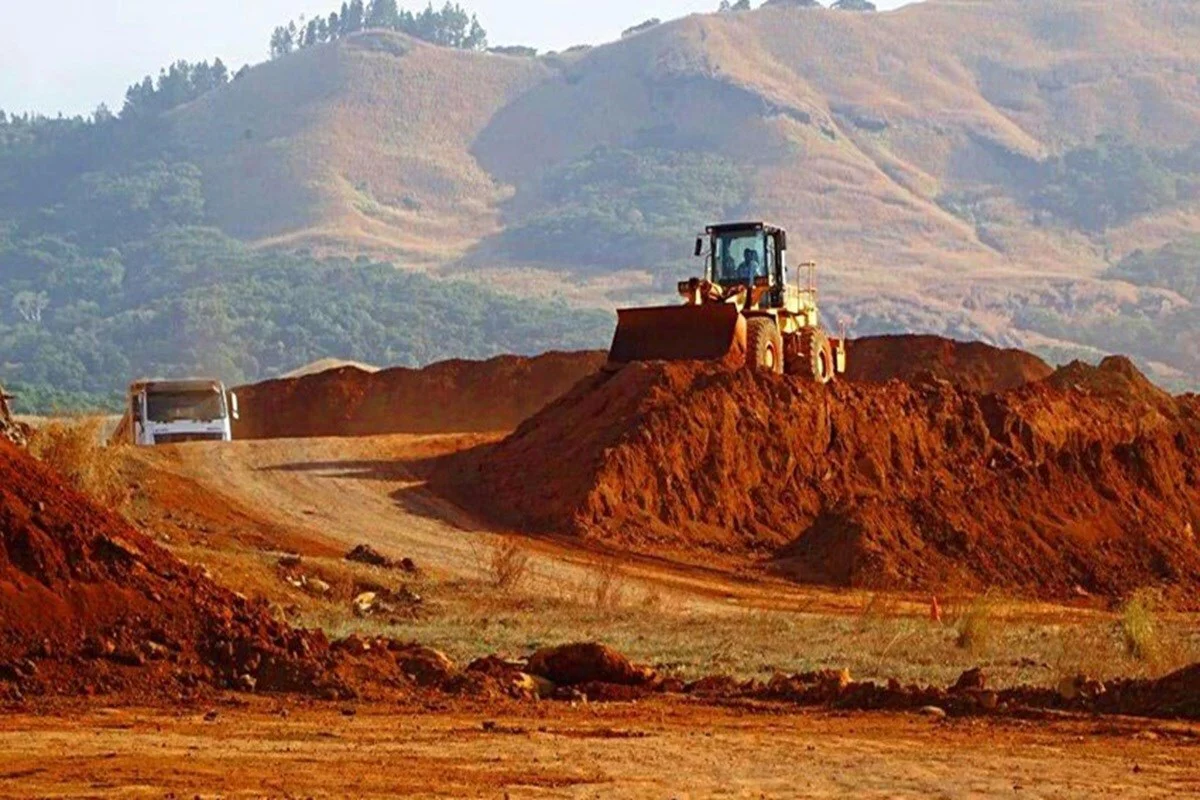
The rapid weakening of bauxite fundamentals has been driven mainly by exceptional supply recovery in Guinea. Mine restarts have boosted export capacity beyond predictions. Exports were previously expected to stabilise at around 180 million tonnes annually, but with Nimba, a state-owned enterprise, and Axis International, a UAE-based company, being back in line, GGuinea’sexport potential is now seen exceeding 220 million tonnes.
The upward revision is mainly driven by Nimba, after the Guinean government's decision and effort to reclaim the assets held by Guinea Alumina Corporation (GAC), a unit of Emirates Global Aluminium (EAG), in October 2024. In July 2025, the lease was transferred to the newly formed state-owned Nimba Mining Company, and it completed its first shipment in November with expectations of 10 million tonnes of exports in 2026.
A similar upward reassessment has occurred at the Axis mining area. In late 2024, output was expected to reach nearly 40 million tonnes annually. However, mining was suspended in mid-May 2025 after the licence was cancelled, halting operations led by Shunda Mining, a private enterprise that specialises in full life cycle technical services for mining engineering.
After more than six months of negotiations, an agreement was reached in late 2025 to resume operations. Shunda Mining completed its first shipment in early January, marking Axis’s return to the seaborne market. Exports are now projected at around 30 million tonnes this year, up from the earlier estimate of 5-10 million tonnes.
Airborne Laser Data (ALD) estimates that Cost and Freight (CFR) prices are approaching profitability, but near-term supply cuts remain unlikely. Miners usually focus on maintaining production and cash flow, so they do not quickly cut output when prices fall, and supply adjustments tend to be gradual rather than immediate. As a result, supply cuts usually come late and unevenly. ALD sees USD 55 per tonne CFR as the key level; below this, higher-cost producers may reduce output. Even with weaker prices, Guinea’s exports are still expected to exceed 200 million tonnes in 2026.
From a shipping standpoint, bauxite oversupply deserves attention because it can affect trade volumes and freight rates at the margin. However, it is not a major concern for the shipping market overall. Oversupply mainly impacts upstream producers, while for shipping, total cargo volume remains the key driver.
If the current fragile balance holds, with miners prioritising volumes over prices and accepting lower prices to maintain output, the impact on the seaborne market could be positive. Additionally, bauxite supply would directly lift seaborne volumes, supporting stronger Capesize demand.
Although rising Guinean supply will put pressure on bauxite prices, especially for higher cost producers, expectations are placed on adjustment to occur mainly through lower prices rather than reduced volumes.
Most of the additional Guinean exports are likely to be absorbed by higher inventory build-up in China, supporting long-haul trades on the Guinea-China route. Higher volumes combined with longer sailing distances would significantly boost tonne-mile demand, tightening the Capesize market and pushing it further toward an undersupplied balance.
Don't miss out- Buyers are looking for your products on our B2B platform

97 tonnes in January: Sharp dip in Ukraine’s bauxite imports M-o-M amid geopolitical disruptions
Next articleGhana’s bauxite circularity plan: Domestic circulation or leakage leading to Guinea 2.0?
Grow with
AL Circle