Germany’s aluminium scrap exports rebound 4.58% in H1 2026: Which countries are buying the most?

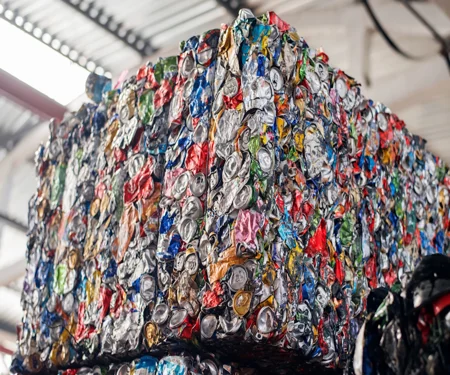
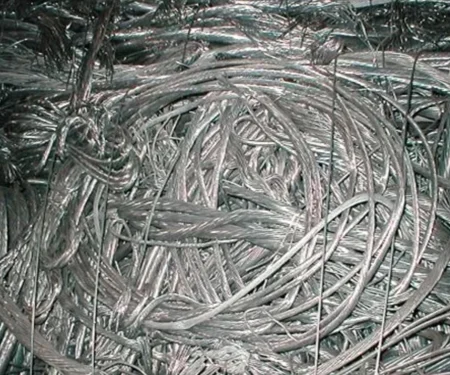
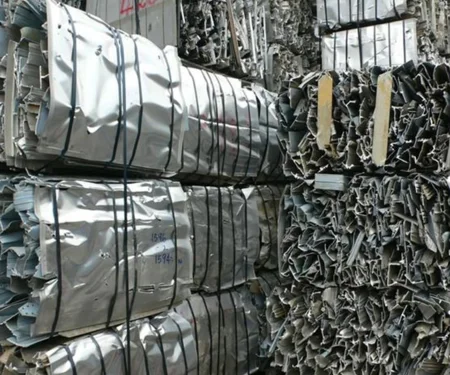
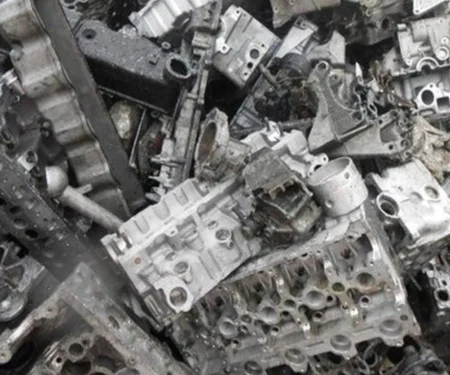
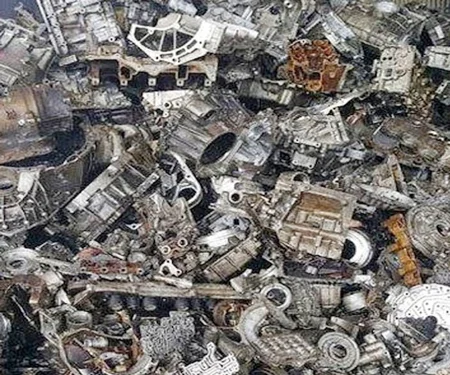
The image used in this article is generated with an AI tool and does not depict any real-time moment
Germany’s aluminium scrap trade showed signs of recovery in the first half of 2026, with exports to the world reaching 616,000 tonnes, up 4.58 per cent from 589,000 tonnes in H1 2025. The increase was even more pronounced against the second half of 2025, with H1 2026 shipments rising 7.50 per cent from 573,000 tonnes. However, exports remained 4.05 per cent below the 642,000 tonnes recorded in H1 2024.
Among Germany’s leading destinations, Italy retained the top spot, Austria and France gained the most, Poland lost ground, and the Netherlands saw only limited growth.
If we look at the percentage of the share, Italy took 15.58 per cent of Germany’s scrap exports, followed by Austria at 13.64 per cent, the Netherlands at 10.06 per cent, Poland at 8.12 per cent and France at 6.17 per cent.
Italy remains Germany’s biggest aluminium scrap buyer
Italy continued to lead Germany’s aluminium scrap export destinations, taking 96,000 tonnes in H1 2026. Imports were almost evenly split between the two quarters, at 47,000 tonnes in Q1 and 49,000 tonnes in Q2.
The headline figure, however, was one of stability rather than growth. Italy imported the same 96,000 tonnes in H1 2025. Against H1 2024, the decline becomes more apparent, with imports falling 10.28 per cent from 107,000 tonnes to 96,000 tonnes.
There was some recovery compared with the second half of 2025. Imports rose from 93,000 tonnes in H2 2025 to 96,000 tonnes in H1 2026, marking a 3.23 per cent increase.
Italy’s continued dominance is rooted in the scale of its secondary-aluminium industry. Northern Italy, in particular, has dense clusters of foundries, extruders and rolling mills that depend heavily on scrap for alloys, billets and castings. Such operations require a consistent supply of quality feedstock to keep furnaces and casting lines running.
Also, Italy has been strengthening its domestic scrap collection and sorting, particularly in aluminium packaging, where recycling rates are close to 90 per cent. To know more about the European recycling trends and forecast, explore our report: World Recycled ALuminium Market Analysis Industry forecast to 2032.
At the same time, industrial demand is weakening. Italy’s manufacturing PMI fell to 49.6 in August 2026 from 51.3 in July, with new orders, output and purchasing activity declining.
Austria gains ground with double-digit growth
Austria was among the strongest-performing destinations in H1 2026. German aluminium scrap shipments to the country climbed to 84,000 tonnes in H1 2026, compared with 72,000 tonnes in H1 2025, representing a 16.67 per cent increase.
The latest figure also edged above H1 2024, when Austria imported 83,000 tonnes, putting H1 2026 volumes 1.20 per cent higher.
The acceleration becomes even clearer when compared with the immediately preceding six months. Imports increased from 73,000 tonnes in H2 2025 to 84,000 tonnes in H1 2026, a rise of 15.07 per cent.
A key factor behind Austria’s stronger appetite is AMAG Austria Metall AG, whose production is heavily reliant on scrap. AMAG uses around 75-80 per cent scrap in its raw material mix, making its purchasing particularly sensitive to the economics of recycled aluminium.
Those economics have become increasingly favourable. Aluminium recycling requires around 95 per cent less energy than primary production, giving recycled metal a stronger competitive position when European energy costs are elevated.
The EU’s CBAM compliance phase, which began on January 1, 2026, added another incentive to favour lower-carbon recycled aluminium. CBAM certificate prices stood at EUR 75.36 per tonne CO₂ in Q1 and EUR 75.28 per cent in Q2, strengthening the incentive to use lower-carbon recycled metal.

Netherlands edges higher, but remains below 2024 levels
The Netherlands remained Germany’s third-largest destination, importing 62,000 tonnes of aluminium scrap in H1 2026. That represented a 3.33 per cent increase from the 60,000 tonnes recorded in H1 2025. However, the latest volume was still 3.13 per cent below H1 2024, when shipments reached 64,000 tonnes.
The half-on-half comparison was somewhat stronger. Imports rose from 59,000 tonnes in H2 2025 to 62,000 tonnes in H1 2026, an increase of 5.08 per cent.
Netherlands does not primarily compete for scrap for domestic consumption. Instead, it collects, sorts and re-ships the material. Through the Port of Rotterdam, scrap collected across Europe is sorted and shipped onwards to overseas markets.
That role is facing increasing competition from the US. With aluminium scrap exempt from the 50 per cent tariff on primary aluminium, US buyers now offer exporters a tariff-free route into the market. This competing demand limited the additional volume passing through the Dutch hub.
To explore trade opportunities of secondary aluminium, visit AL Biz
Poland suffers the steepest decline
German aluminium scrap imports into Poland dropped to 50,000 tonnes in H1 2026, from 63,000 tonnes in H1 2025, marking a 20.63 per cent year-on-year decline - the sharpest fall among Germany’s five leading destinations.
The weakness is also evident over the longer term. Poland imported 60,000 tonnes in H1 2024, leaving H1 2026 volumes 16.67 per cent lower.
There was a small improvement from H2 2025, when imports stood at 49,000 tonnes. H1 2026 therefore brought a 2.04 per cent increase, although the latest volume remained well below both H1 2024 and H1 2025.
The decline appears to be rooted in the automotive sector. Stellantis, one of Poland’s largest automotive employers, paused production at multiple facilities, including Fiat, Jeep and Alfa Romeo lines. Some stoppages lasted eight days, as the company shifted away from traditional combustion vehicles.
That disruption matters for scrap demand because Polish aluminium consumption is closely connected to automotive castings and structural components. Fewer vehicles coming off production lines means less aluminium is required and, consequently, less scrap is needed as feedstock.
Showcase your brand, aluminium recycling initiatives and sustainability vision in our upcoming magazine: Sustainability & Recycling: Aluminium’s Commitment 2026.
France stands out with a 40% surge
France delivered the most dramatic increase among Germany’s five major aluminium scrap destinations.
France recorded the highest growth among Germany’s five major aluminium scrap destinations. Imports surged to 38,000 tonnes in H1 2026, compared with 27,000 tonnes in H1 2025, marking a 40.74 per cent increase. The same growth rate applies against H1 2024, when France also imported 27,000 tonnes.
The increase was not limited to the year-on-year comparison. French imports also rose from 36,000 tonnes in H2 2025 to 38,000 tonnes in H1 2026, representing a further 5.56 per cent increase.
Unlike Austria’s increase, which was closely linked to one major recycler, France’s growth appears to reflect several market factors. Its large automotive and manufacturing base, supported by established capacity in castings, extrusions and sheet production, provides a sizeable domestic market for additional scrap.
The economics of recycled aluminium are also working in France’s favour, with EU’s CBAM compliance phase that began on January 1, 2026, adding further pressure on carbon-intensive primary aluminium.
There is also another trade signal supporting the rise in French scrap demand. Germany’s aluminium extrusion exports to France increased 8.1 per cent in H1 2026, including a 5.7 per cent rise in Q2.
While extrusion and scrap are separate trade categories, their parallel growth points towards a broader strengthening in French demand for German aluminium rather than a one-off shipment or statistical anomaly.
Note: This is exclusive coverage by AL Circle and may not be reproduced, republished or shared without prior permission.
EGA expands European aluminium recycling footprint with 80% Eco Green acquisition
Next articleSt Helens launches foil recycling campaign with ‘scrunch test’
Grow with
AL Circle