First of its kind in Europe: Mercedes-Benz launches its in-house EV battery recycling facility in Kuppenheim
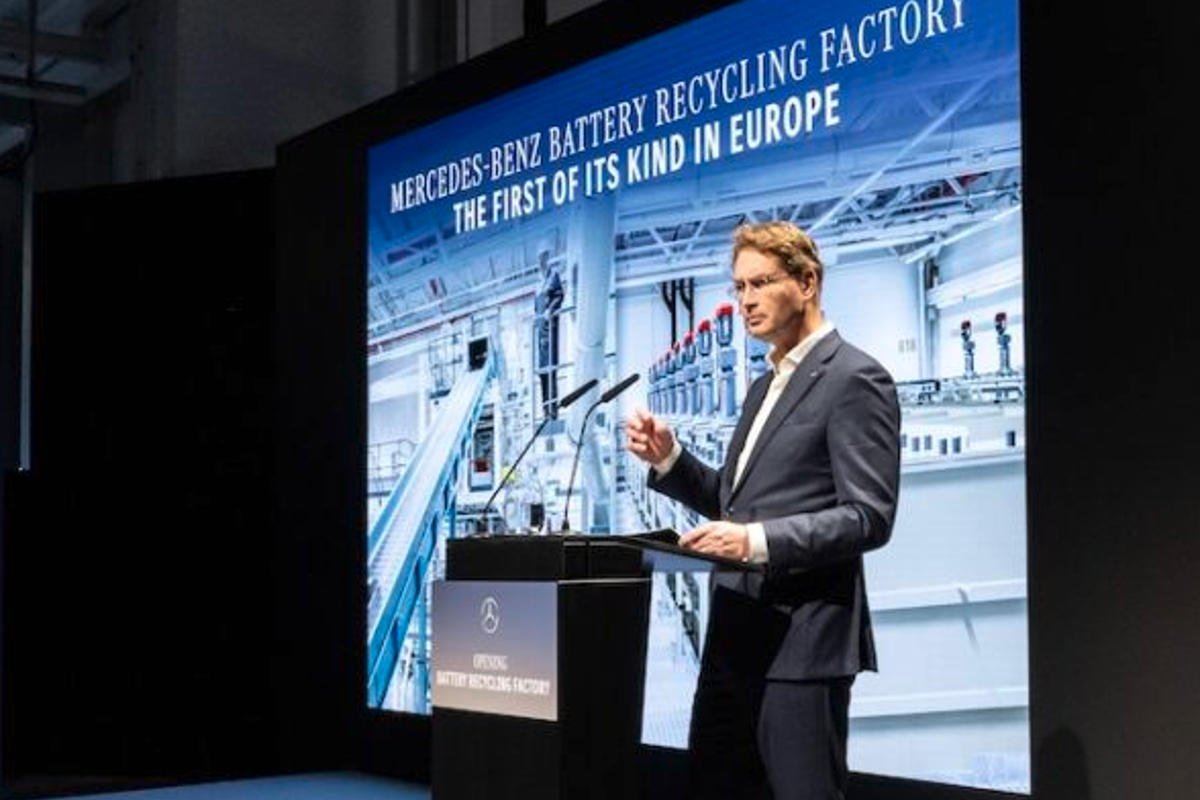
In March 2023, Mercedes-Benz symbolically laid the foundation stone for its cutting-edge recycling plant in Kuppenheim, marking a strategic step towards sustainable practices. However, as per the latest information, on Monday, October 21, Mercedes-Benz made history by opening the first in-house electric vehicle battery recycling plant in Europe (Kuppenheim, southern Germany).
With a 96 per cent recovery rate—where the remaining 4 per cent is lost due to the electrolyte liquid—the plant handles every stage of the battery's lifecycle. This includes module shredding, drying, and the treatment of active materials through a 'mechanical-hydrometallurgical' process. This method mechanically separates aluminium, plastic, copper and iron, resulting in a substance known as 'black mass.' The black mass then undergoes a chemical process to extract the most valuable materials.
About the new plant
The new plant operates entirely on 100 per cent green electricity, with its 6,800-square-metre roof fitted with a photovoltaic system generating over 350 kilowatts (kW) at peak output. Mercedes-Benz promises a final recycling capacity of 2,500 tonnes of materials (including aluminium) annually, sufficient to produce over 50,000 battery modules, ensuring a future that the German automaker guarantees will remain fully electric.
The presence of German Chancellor Olaf Scholz and Baden-Württemberg Environment Minister Thekla Walker at the opening underscored this commitment, reinforcing political intentions aimed at Europe's sustainable future.
Ola Kallenius, number one at Mercedes-Benz, stated, "As a pioneer in automotive engineering, the first integrated mechanical-hydrometallurgical battery recycling factory in Europe marks a key milestone towards improving the sustainability of raw materials. Together with our partners from industry and science, we are sending a strong signal of innovative strength for sustainable electric mobility and value creation in Germany and Europe."
The procedure for recycling
The procedure begins by placing battery modules onto a conveyor belt. The batteries are then mechanically crushed, washed, and broken into fine particles. Using gravity-based air systems, magnetic separators, grinders, and a series of sieves, materials like plastic, copper, aluminium, and iron are separated and packaged according to type.
Simultaneously, the black mass undergoes a series of chemical precipitation processes with progressively increasing pH levels. It is then filtered and further refined to extract copper, cobalt, manganese, nickel, and lithium, achieving purity levels as high as 99.9 per cent. The hydrometallurgical recycling process developed by Mercedes-Benz stands apart from the more common pyrometallurgical method used in Europe, which requires extremely high temperatures (essentially burning the materials) and, consequently, higher energy consumption.
German automakers 'Shouldn't Fear' China, says Scholz
Next articleChina eases restrictions on recycled aluminium, copper imports starting November 15, 2024
Grow with
AL Circle





















