Analysts from Fastmarkets have reported a slowdown in aluminium consumption in the European automotive industry, underpinning muted economic factors. A considerable decline in automobile production due to the ill effects of the cost-of-living crisis has resulted in reduced applications of lightweight metal, according to Fastmarkets analyst James Moore.
Kirstine Veitch, principal consultant at Fastmarkets, also explained: “The real issue is the low level of vehicle output in Europe. While automotive output remains depressed, the European PFA sector will remain challenging.”
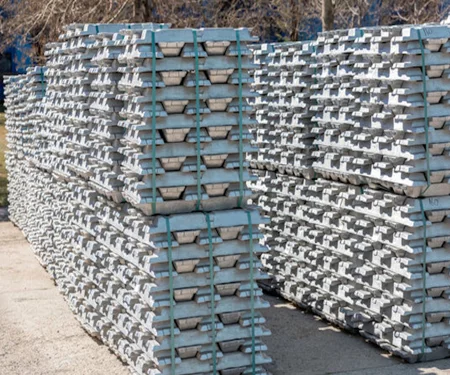
The effect of the decreased production of automobiles is also seen in the premiums of primary foundry alloy (PFA), which is primarily used in automotive parts. According to Fastmarkets data, premiums for aluminium primary foundry alloy silicon 7 ingots delivered duty paid (ddp) in Germany were approximately $500-520 per tonne as of Friday, August 9, compared to $600-650 per tonne on August 11, 2023, and down from the peak of $950-1000 per tonne on June 10, 2022.
Fastmarkets believes that European automobile sales and production will remain subdued in the near term as consumption will most likely remain cautious, particularly on big-ticket items, even if the European Central Bank lowers interest rates as anticipated.
Overview of European cars’ sales and production
Automotive giants like Mercedes-Benz, Audi, and BMW have unanimously reported a downtrend in their respective sales and production. Mercedes-Benz has posted a decline of 15.8 per cent for unit sales in Germany for the second quarter of 2024, compared with the second quarter of 2023.
Audi has reported a production of 139,461 units of vehicles in Q2 2024 in Germany, down by 17.2 per cent from 168,511 cars during the same period of the previous year. In Eastern Europe, including Hungary and Slovakia, Audi produced 76,534 vehicles, down by 76,747 vehicles in the prior year quarter.
BMW, in contrast, has posted a year-on-year 1.1 per cent increase in sales during the second quarter of 2024 but reported a 3.9 per cent decline in deliveries.
Some automobile companies have reported to Fastmarkets that they are receiving customer requests to postpone deliveries.
Global factors on European aluminium demand
In addition to weak domestic demand for aluminium, global factors also impact the European primary foundry alloy (PFA) market. For instance, the European aluminium PFA market is expected to rebound in the latter half of 2024 after automotive production in Japan will resume. Three Toyota models that were suspended since June 3 are scheduled to resume production from the beginning of September with the Ministry of Land, Infrastructure, Transport and Tourism confirming their compliance with the standards.
The decline in automotive manufacturing in China, the world’s largest car market, is another key factor contributing to the sluggish demand for European aluminium PFA.
“However, the results of the ‘third plenum’ in China have shown that the Chinese government is taking the current economic situation seriously, targeting a qualitative economic development, and is taking action to, for example, increase domestic demand and mitigate the risks faced by the real estate sector,” BMW noted in a statement.
But even if the Chinese car market improves, escalating trade tensions with China would continue to pose challenges, affecting the European vehicle market, explained Moore.
According to AL Circle's report "Future of Aluminium in Transportation Sector: an industry analysis with forecasts to 2027," aluminium usage in the transportation sector in Europe is expected to grow at a CAGR of 1.6 per cent from 2021 to 2027, reaching 6.26 million tonnes.












_md.webp)
_md.webp)
_md.webp)