Cireco MRF achieves milestone with automated residual line success

The Scottish waste management company Cireco has celebrated the achievements of its automated residual line, located at the materials recycling facility (MRF) near Dunfermline.
In September 2022, Cierco integrated three AI robots obtained from Recycleye. These robots were installed over a conveyor belt and were responsible for managing reject material at the MRF, a task previously carried out by three manual pickers.
Since the implementation of these robots, which process 30,000 tonnes of recyclables from the Fife council, there has been a notable enhancement in the recovery of recyclable materials. Moreover, the system has demonstrated flexibility in adjusting to variations in the composition of the recycling stream.
David Goodenough, the Service Manager at Cireco, said, "We have experienced a dual benefit: a reduction in the target materials lost to residue and an increase in the quality of material being outputted from other streams."
"It's enabled us to operate the plant on different settings because the robots consistently pick about 30,000 items per shift, whereas, with human operators, there are efficiency peaks and troughs throughout."
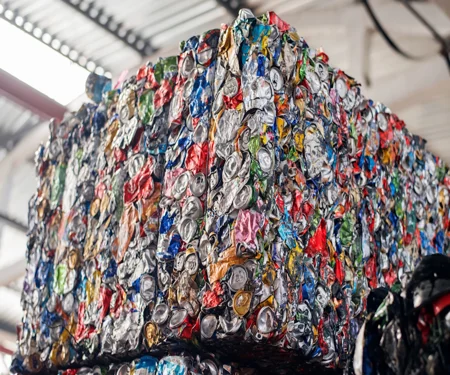
Implementing the new system involves retrieving PET bottles and aluminium that were previously overlooked in the processing plant before the remaining waste is sent to the landfill. This strategy aims to bolster Cireco's profitability by enhancing value extraction from the processing line while reducing sorting costs.
Initially, when the robots were installed, aluminium cans constituted only a small portion of the waste passing through the line. Consequently, only the last robot on the conveyor belt was tasked with picking aluminium cans alongside PET bottles, while the preceding two robots exclusively targeted rolling PET.
However, as time progressed, the proportion of aluminium in the waste stream significantly increased. Recycleye reprogrammed the AI model directing the three robots in response to this shift. Now, all three robots are programmed to pick both target materials, adapting to the changing composition of the waste stream.
Cireco stated that this adjustment will assist Material Recovery Facilities (MRFs) in preparing for forthcoming regulatory changes such as Extended Producer Responsibility (EPR) and Deposit Return Schemes (DRS).
Recycleye manufactures and designs AI-powered robots with a computer vision system on the residual belt. This system utilizes a camera and machine learning algorithms to identify waste items by their material and object type.
Once detected, the information regarding each item and its designated chute is relayed to the corresponding robotic arm. These arms then physically pick and direct the material to the appropriate chute.
These robots have been successfully installed in more than 30 Material Recovery Facilities (MRFs) across Europe.
India's imported aluminium scrap prices continue to rise
Next articleLocal tense scrap shortages propel Aluminium ADC12 prices upward in India
Grow with
AL Circle