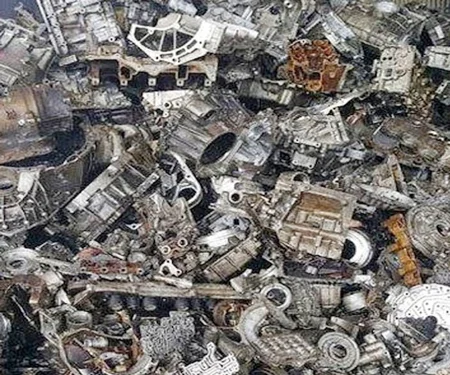
China is boosting its aluminium exports to compensation the supply gaps in Western markets: Source

As observed by market experts, China is boosting its aluminium export volume to balance the supply gaps in Western markets. In February, China exported 26,378 tonnes of primary aluminium in February, the highest monthly since 2010, turning into a net exporter for the first time since November 2019.
China has brought in a shift in its trade patterns. From being a significant importer during 2020 and 2021 as domestic production failed to match demand, China has moved on to being an exporter as production in Europe is affected by the soaring LME aluminium price and physical premiums.
The slower production resulting in a supply crunch in the Western countries has thus led to the surge in export flow of Chinese semi-manufactured products to Western markets. But on the other hand, this is increasing the imposition of anti-dumping duties to protect domestic markets.
The world’s largest producer of aluminium did not need to import much until the domestic production started getting affected by strict power consumption rules in 2020 to meet Beijing’s energy efficiency targets.
In 2020, China soaked up 1.065 million tonnes of primary aluminium from overseas countries and 1.580 million tonnes in 2021. But that boom came to an end in January and February of 2022 with a slump to 57,000 tonnes from 245,000 tonnes during the same period last year, as LME prices exceeded SHFE switching the arbitrage from imports to exports.
China’s two major exports in February were 5000 tonnes to Italy and 20,100 tonnes to Montenegro. The Balkan country might seem an unlikely destination for China’s exports but its only smelter KAP ceased its primary aluminium production at the end of 2021 due to high power costs.
The primary reason behind the increasing shipments of Chinese aluminium products is the widening export-friendly arbitrage.
Aluminium-semis exports in 2019 and 2020 were on downswing as China’s domestic demand was robust and because of the growing number of tariff barriers levied by other countries. But the trend flipped with rising production shipments by 18 per cent and exports by 21 per cent year-on-year in January and February. This growth is likely to continue over the course of the year; more so, the country’s aluminium sectors is collectively recovering from power crisis, with annual output grew by 1.8 million tonnes in January and February, found the International Aluminium Institute (IAI).
In March, the estimated production capacity of 15 Chinese smelters will be collectively at 1.2 million tonnes, lifting monthly production by 16 per cent.
Meanwhile, aluminium production in the rest of the world is declining as most of the smelters are struggling with soaring energy prices, in addition to the impact of Ukraine-Russia conflict on global prices. Production in West Europe fell by almost 10 per cent in the first two months of 2022.

The Ukraine-Russia conflict has also disrupted the supply chain in the industry due to several international sanctions on Russia, compounded by the halt of shipments at Rusal’s Nikolaev alumina refinery in Ukraine.
The IAI figures show Eastern European aluminium production is now stable but for how long is the big unknown.
LME price falls constantly for four days to stop at US$3,483/t; SHFE is closed for Qingming Festival
Next articleCampaign to reopen Alcoa Intalco Works smelter receives boost following hike in aluminium price
Grow with
AL Circle