Canyon Resources nears first output from high-grade Minim Martap bauxite project
The Australia-headquartered mining company Canyon Resources has reported steady progress with its Minim Martap bauxite project in Cameroon. With the first shipment planned in September, the company is aiming to capitalise on the ongoing supply crunch and sustained demand for high-grade bauxite, positioning itself as a potential new entrant in the global supply chain.
Peter Secker, CEO, elaborated on the project’s progress across mining, logistics and financing. He emphasised that, transitioning from development to production, the project is about to reach a milestone.
Explore- Most accurate data to drive business decisions with Global ALuminium Industry Outlook 2026 across the value chain
High-grade resource advantage
One of the project’s defining strengths is its fine ore quality. Minim Martap’s bauxite reserve has around 51 per cent alumina and merely 2 per cent silica. These optimal levels place the bauxite among the highest-grade deposits globally.
The deposit spans more than 1.1 billion tonnes and is located roughly 800 kilometres from the coast. Peter Secker, CEO, explained that the quality advantage would directly lower the refining costs, stating, “the higher the alumina grade and the lower the silica grade, means you consume less caustic. And it means that you don't require as much unit energy to make a ton of alumina.”
This efficiency is expected to support premium pricing, with Canyon targeting an additional USD 10-12 per tonne over the Guinea benchmark of USD 65 per tonne.
Diversifying from conventional project models, Canyon is delaying binding offtake deals until after its first shipment. The aim is to use verified product quality as leverage in negotiations.
Focusing on prepayment structures to enable expansions, the company is looking to secure 5-year agreements in Q3 2026.
Canyon is already discussing the scope with potential buyers from various regions, such as North America, Europe, the Middle East and Asia.
Don't miss out- Buyers are looking for your products on our B2B platform
Progress in the production timeline
On-site activity has picked up pace in recent months. A surface miner has already been deployed to the site, with trial mining expected to begin shortly. Full-scale or production mining is likely to follow in May or June.
Supporting infrastructure is also nearing readiness. Road construction linking the mine to rail networks is about 80 per cent complete, while locomotives are expected to arrive by mid-year. Ore transport to the port is scheduled to begin in July, with stockpiles building through the following months.
The company is targeting to schedule its first shipment of around 50 thousand tonnes by late September or early October.
Funding in place, expansion to follow cash flow
For its first production, Canyon has secured a fully funded path, evident from its balance sheet. At present, it currently holds about USD 40 million in cash and has access to an undrawn USD 95 million debt facility. Total capital expenditure needed to lead the project through production settled just under USD 100 million.
Interestingly, the company has not entered into any early offtake agreements. Before delving into commercial negotiations, it is instead utilising the strategic flexibility by demonstrating product quality.
For future ventures, expansion will largely be funded through internal cash generation. Additional locomotives, each set adding 2 to 3 million tonnes of annual capacity. The expansion will be self-funded, as mentioned by Secker that, “as we start to generate cash flow, that cash flow will then go to fund the next locomotive delivery.”
Market conditions support pricing outlook
Geopolitical tensions and concurrent supply disruptions have elevated global bauxite prices in recent months. Secker noted that prices have risen by about 15 per cent, with the Guinea index expected to stabilise near USD 65 per tonne.
Canyon’s higher-grade material is projected to fetch between USD 76 and USD 78 per tonne, offering a margin advantage over standard-grade supply.
At scale, the company estimates strong cash flow potential, supported by relatively low production and logistics costs.
Infrastructure remains a key risk factor
Despite strong fundamentals, logistics continue to be the most critical variable. Secker emphasised that infrastructure accounts for the bulk of execution risk. “If I had to rank it… I would say 80 per cent [of the risk] is infrastructure,” he stated.
To mitigate this, Canyon has taken a stake in the country’s rail operator, Camrail, and is in talks to boost its holding to strengthen control over the transport chain, which is central to the project’s economics.
A broader rail upgrade programme, funded by the World Bank, is also expected to back long-term scale-up, potentially lifting output from an initial 2 million tonnes per year to 10 million tonnes or more.
Nonetheless, Cameroon’s political stability and government backing provide a favourable setup for the project. The country’s administration and interest in developing its mining sector are positive factors contributing to its advancement.
Beyond mining, Canyon is also exploring downstream opportunities. With significant untapped hydropower potential, the country could support future alumina refining, opening the door to higher value-added production.
Must read: Key industry individuals share their thoughts on the trending topics

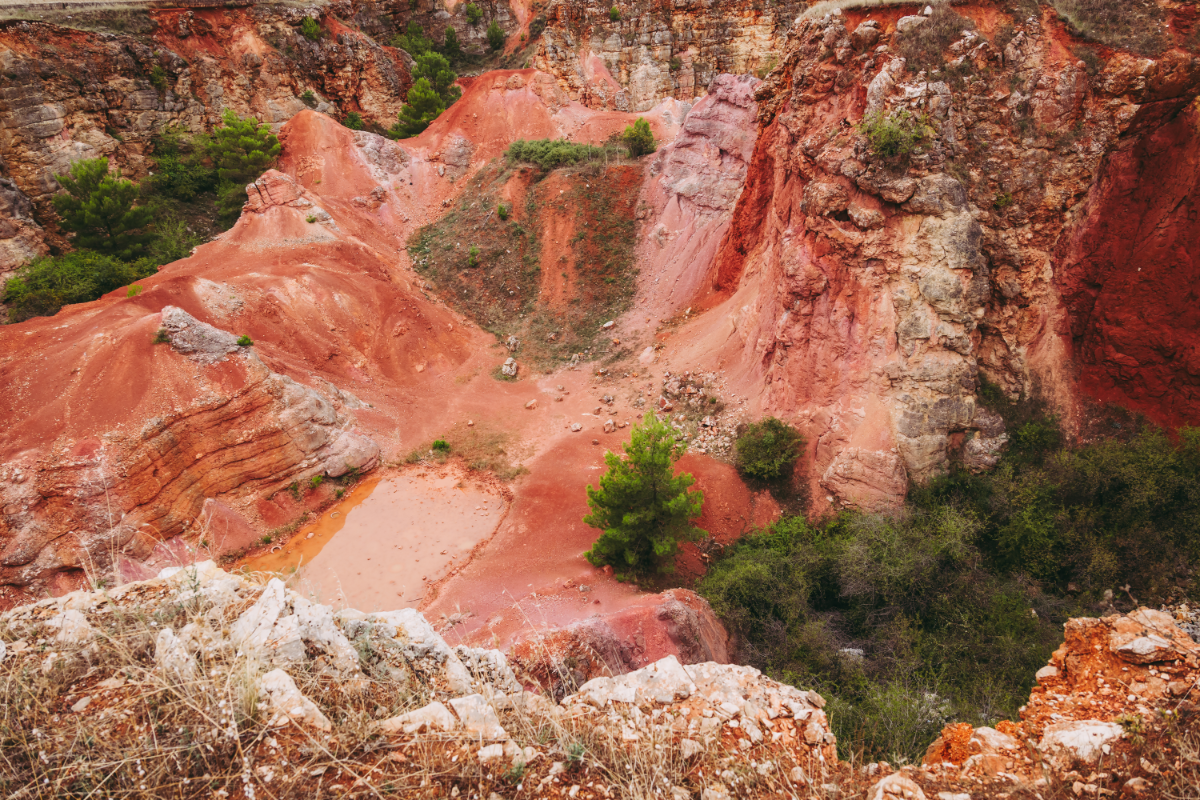
Image for referential purposes only
Brazil’s bauxite exports increase by 20% in 2025 even as production remains stagnant at 30–33 Mt
Next articleGhana’s Nyanahin bauxite lease issue brings policy consistency in focus
Grow with
AL Circle