您想继续阅读英文文章还
是切换到中文?
是切换到中文?

THINK ALUMINIUM THINK AL CIRCLE

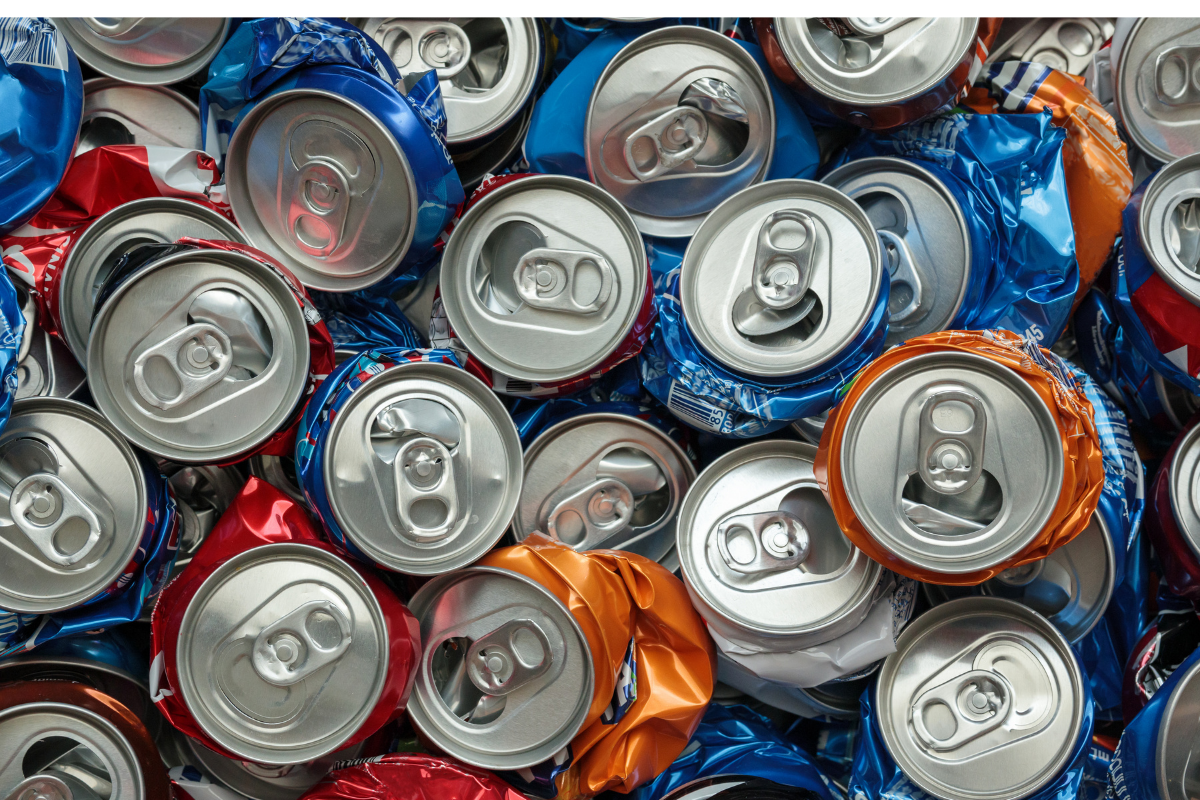
Brazil’s aluminium can story is not about how much it sells, but how much it gets back. For more than 15 years, recycling rates have stayed above 95 per cent, with the system hitting 100 per cent in 2022 and again in 2025. Even with a slight dip to 97.3 per cent in 2024 from 99.7 per cent in 2023, the country still sits among the global leaders-and that consistency underpins how the entire industry operates.
{alcircleadd}Against this backdrop, volumes have stayed close to record levels. In 2025, sales reached 34.1 billion units, the second-highest on record and just below the 34.8 billion cans sold in 2024. The stability in numbers, however, masks a gradual shift in how demand is evolving.
Beer and soft drinks, long the dominant categories, edged down during the year as consumers became more cautious with spending. They still account for the bulk of volumes, but they are no longer driving growth the way they once did.
Growth is instead coming from a broader mix. Canned water stood out with a 24 per cent rise over 2024, making it one of the fastest-growing segments despite its relatively small base. Ready-to-drink beverages, juices, energy drinks, and canned cachaça also moved higher, gradually altering the demand mix.
“We’ve moved from a market concentrated in two categories to one that mirrors increasingly fragmented consumption habits. Remaining above 34 billion units, even without support from beer and soft drinks, underscores the industry’s resilience,” said Cátilo Cândido, CEO of Abralatas.
For 2026 aluminium market outlook, download our report TOC: Global Aluminium Industry Outlook 2026
Recycling strength drives efficiency and investment
The benefits of Brazil’s recycling system extend well beyond collection rates. More than 80 per cent of the aluminium sheets used in can production come from recycled material, supported by an energy mix where renewable sources dominate.
The impact is tangible. Recycling aluminium cans saves around 5,000 GWh of energy each year-roughly 1 per cent of the country’s electricity consumption. It also brings down emissions significantly, with an average 70 per cent reduction across the life cycle of aluminium cans.
Maintaining that system requires constant engagement. Abralatas has continued to run campaigns such as Cada Lata Conta (“Every Can Counts”), which focuses on the role of proper disposal in keeping aluminium in circulation without loss of quality.
In 2025, the LataCadabra campaign pushed the message further through a fully digital approach, running across YouTube, Facebook, Instagram, Google, TikTok, Spotify, and Equality. TikTok, in particular, drove the highest engagement and became the main source of traffic to the campaign’s landing page, which saw around 2 million visits.
Alongside this, producers are still expanding. Ball has reopened plants in Minas Gerais, Ardagh has added capacity, Canpack is preparing a new facility in Poços de Caldas, and Crown is increasing output at its plant in Ponta Grossa. The investments suggest that producers expect demand to keep growing-even if it looks different from before.
Also read: Brazil’s aluminium can industry holds firm in 2025, backed by growth and recycling
Stable demand sets the stage for 2026 growth
The demand picture in 2025 has been stable, though not especially strong. In the first half of the year, aluminium can sales reached 16.5 billion units - equivalent to about 6 billion litres of beverages up 0.7 per cent year-on-year. That comes after a strong 2024, when volumes climbed 7.6 per cent to a record 34.8 billion units.
Some softening has been linked to weather conditions and broader uncertainties, but overall volumes for the year are still expected to remain close to 2024 levels. The underlying support remains intact, backed by a USD 2.17 trillion economy and high per capita consumption.
Looking ahead, the industry is preparing for another growth phase in 2026. The outlook rests on three factors: the continued expansion of newer beverage categories, the rollout of current investments, and a favourable consumption calendar that includes extended holidays and the FIFA World Cup.
“Diversification is no longer a trend - it’s now structural. That’s what gives us confidence to project growth even in an uncertain macroeconomic environment,” Cândido added.
Brazil’s aluminium can sector is still defined by its scale- but increasingly, it is the combination of high recycling efficiency and a broader demand base that is shaping where it goes next.
Don’t miss out- Buyers are looking for your products on our B2B platform
Image sourced from Canva stock image
Responses