Beiersdorf rolls out climate-friendly valves and PCR aluminium cans throughout Nivea aerosol lines

Climate-friendly valves and post-consumer recycled (PCR) aluminium cans are being introduced throughout Beiersdorf's main Nivea aerosol products, resulting in a considerable decrease in total environmental footprint. The action was part of Beiersdorf's larger climate aims, which included a target of reducing total greenhouse gas (GHG) emissions by 30 percent in absolute terms by 2025, compared to 2018 levels, including scope 3 emissions created by ingredient and packaging suppliers in the value chain.
Stefan De Loecker, Beiersdorf's long-serving past chairman of the board, stated in March 2020 that climate change is "one of the greatest issues of our time" and assured that the business will continue to work on tackling it. In its H2 2021 financial report, the firm restated its commitment to making Beiersdorf's worldwide production network climate-neutral by 2030.
Beiersdorf had added a "climate-friendly aerosol valve technology" for its Nivea EcoDeo line, working with UK eco-valve expert Salford Valve Company, that it claimed assured a better yield per can, resulting in a considerable decrease in GHG emissions. Instead of using typical hydrocarbon propellants, the unique Salvalco eco-valve utilised environmentally friendly, inert cases such as nitrogen as a propellant for the aerosol sprays.
“As a result of a strong collaboration following the venture capital investment by Oscar&Paul Beiersdorf Venture Capital in 2020, Nivea is the first global brand to use this patented, climate-friendlier aerosol valve – taking the lead in its industry,” said Beiersdorf.
“We share the vision of a climate-positive future with our partners at Salvaco and are excited to deliver now more climate-friendly aerosol products to our consumers,” stated, Michael Becker, head of global packaging R&D at Beiersdorf.
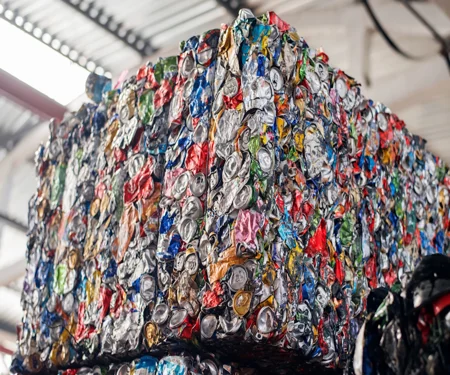
Beiersdorf has also teamed up with Swiss packaging company Nussbaum Matzingen to bring out 100 percent post-consumer recycled (PCR) aluminium cans throughout its Nivea Men deodorant and shaving gel lines in Europe. The redesigned cans cut CO2 emissions by 28 percent for the deodorant line and 35 percent for the shaving gel line, owing to the fact that recycled aluminium requires 95 percent less energy to manufacture. The cans, which were also light-weighted, are already available in Germany, with a larger European deployment scheduled for 2022.
The Nussbaum Group's CTO, Markus Tomasini, stated that all of the primary aluminium has been replaced with drink can trash as a starting material. “Tool and process innovation were the key to being able to process the high alloy content in the post-consumer recycled material,” said Tomasini.

Beiersdorf's vice president of corporate sustainability, Jean-François Pascal, said the company was "delighted and proud" of its newest two packaging agreements, which are aimed at speeding up the company's transition to a "climate-positive future."
“With these kinds of partnerships, we can take serious steps on our sustainability journey,” said Pascal.
Beiersdorf also released 'climate neutralised' renewable plastic jars throughout its Nivea Naturally Good face care collection, which it co-developed with Saudi Arabian chemicals giant Sabic, earlier this year in April. The jars went on sale in June of this year all around the world. Beiersdorf has been working with manufacturing giant Werner & Mertz and R&D institute Fraunhofer Institute for Process Engineering and Packaging (IVV) on a guideline paper on the use of post-consumer recyclates in cosmetic grade packaging for some time. The personal care company stated that the release of this paper earlier this year was intended to spur much-needed reform in the industry.
Launched! AlCircle’s new report on “World Recycled Aluminium Market Analysis - Industry Forecast to 2026”
Next articleRecycled aluminium weekly recap: AlCircle launches new report on “World Recycled Aluminium Market Analysis - Industry Forecast to 2026”; Replacement of primary aluminium by scrap will be sluggish until usage increases in the associated areas
Grow with
AL Circle