Bauxite shipments from Guinea gain momentum as China's reserves deplete, advantage for capesize segment
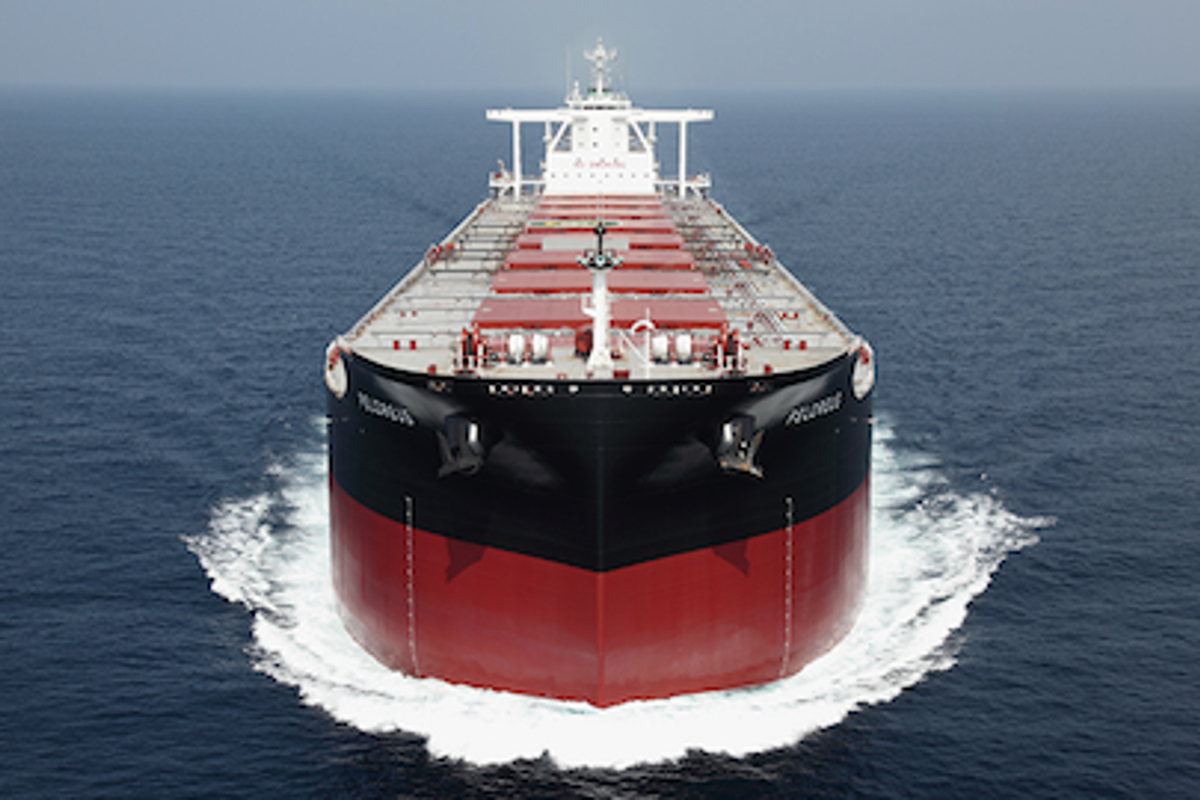
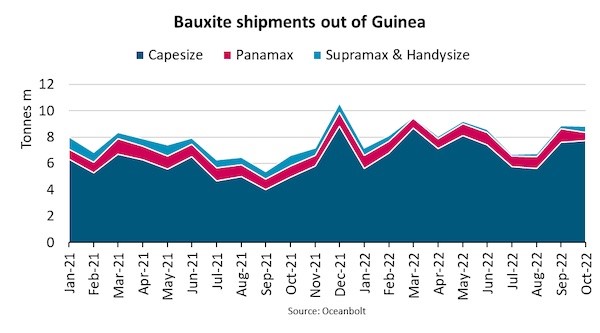
The soaring energy prices in Europe have caused a severe impact on aluminium production and shifted output to China. However, due to China’s increasingly depleted bauxite reserves, this repositioning has increased bauxite shipments, benefitting the West African nation, Guinea, the world’s largest exporter of bauxite, which accounts for around half of traded volumes and has seen a 14.9% growth in bauxite shipments by now in 2022.
As a result of growth in bauxite and coal volumes, capsizes have been relieved this year. A decline in Chinese iron ore demand and reduced congestion has caused the Baltic Exchange's Capesize 5TC index to fall on average 50.6 per cent Y-o-Y.
Filipe Gouveia, the shipping analyst at BIMCO, said, "Weaker iron ore demand led operators to relocate ships to alternative trades such as the bauxite trade out of Guinea. Capesizes have become increasingly dominant, handling 86.2 per cent of volumes in 2022 compared to 78.8 per cent in 2021, pushing smaller segments out of the market. Combined with an increase in exported volumes, capesizes have carried 27.4% more Guinean bauxite in 2022 than in 2021."
Guinea is currently ruled by a military junta that took power in September 2021. It has been announced that the promised transition to democracy will be delayed until September 2024. Demonstrations and social unrest have resulted from this decision, which could threaten the stability and economy of the country.
Bauxite mining companies were given an ultimatum by Guinea's military coup in April 2022, demanding that they invest in alumina refineries by June 2022. Since then, further details about these investment plans have yet to be released.
Gouveia added, "Energy is a key challenge for alumina refinery projects in Guinea due to refineries' high energy requirements. Less than half of Guinea's population has access to electricity, and the country lacks fossil fuel reserves, heavily relying on hydropower. Alumina projects will likely require the construction of new coal- or oil-fired power plants, increasing Guinea's energy import needs."

The energy needed to produce alumina in Guinea seems unlikely to be available in the near future. As a result, Capesize owners should be relieved because only one tonne of alumina is produced by refining four tonnes of bauxite. The increased alumina refining would result in a reduction in Guinea's exports.
Ghana welcomes Bedeschi shiploaders, bauxite and manganese handling efficiency to increase
Next articleMines Awards Guinea awarded Rusal with best performance in the 2022 first edition
Grow with
AL Circle