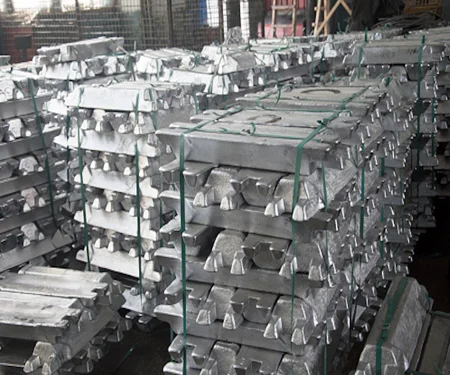
America’s trade associations applaud Representatives Lawson and Buck for reintroduction of Aluminum Pricing Examination (APEX) Act
Beer Institute, American Beverage, National Marine Manufacturers and Flexible Packaging Association have praised Representatives Al Lawson (FL-05) and Ken Buck (CO-04) for the reintroduction of the Aluminum Pricing Examination (APEX) Act.
The APEX Act will bring transparency in aluminium pricing and stability for American workers and job creators.
“We applaud Representatives Lawson and Buck for continuing their bipartisan work to level the playing field and ensure unfair market practices do not disproportionately harm the American beer industry or the 2.1 million jobs it supports,” said Jim McGreevy, president and CEO of the Beer Institute.
“The APEX Act will bring much-needed transparency to aluminium benchmark pricing, which helps all those in the beer industry and the multitude of American job creators that rely on aluminium.”
The American economy has witnessed job losses and economic uncertainty due to the COVID-19 pandemic, and in 2020 alone, more than 568,000 jobs were lost in the beer industry. The APEX Act will restore confidence in the metals market and benefit American workers and the broader U.S. economy, including the millions of American consumers who purchase aluminium products every day.
“America’s beverage companies appreciate this effort to bring transparency, enhanced oversight and more certainty to a complicated metals pricing system,” said Katherine Lugar, president and CEO of American Beverage. “We appreciate Mr. Lawson and Mr. Buck for continuing to lead the way on this bipartisan bill that will ultimately benefit American workers and consumers.”

“Section 232 tariffs have been weighing on the recreational boating industry since 2018, specifically, driving up the cost of critical raw materials and reducing annual exports to Europe by more than 40 percent – a market that previously accounted for a quarter of the industry’s international sales,” said Frank Hugelmeyer, president of the National Marine Manufacturers Association.
“These aluminum and steel tariffs have caused far more harm than any perceived benefits and will lead to significant job losses across multiple sectors of the economy if they are not removed in short order.”
“Fine gauge aluminum foil is necessary for barrier protection and sterility in a host of food, pharmaceutical and medical device flexible packaging, and it is not available in the U.S. both in terms of quantity or quality. The Midwest Premium, on top of the current tariffs and duties on foil from outside the country, leaves U.S. converters vulnerable to competition from foreign suppliers of finished goods. In fact, these extra costs only injure the aluminum manufacturers’ customers and may destroy the very market they seek to protect,” said Alison Keane, president and CEO of the Flexible Packaging Association.
Diageo North America to install two can lines with $80 million investment
Next articleSolarDuck selects Hydro aluminium profiles for its floating solar solution
Grow with
AL Circle