At the recently concluded Material Recycling Association of India (MRAI) international conference held in Jaipur from 28 to 30 January, Mohan Agarwal, managing director and chairman of a prominent secondary smelter CMR Green Recycling, projected robust growth in India’s secondary aluminium demand.
Agarwal forecasted a compound annual growth rate (CAGR) of 7-9 per cent between 2023 and 2028, with demand expected to rise from 1.7 million tonnes in 2023 to approximately 2.4-2.5 million tonnes by 2028. The automotive sector is poised to be a key driver of this growth, with demand anticipated to increase at a CAGR of 7-11 per cent.
India’s automotive sector, already the third-largest market globally, surpassed Japan and now trails only China and the US, according to government reports from January 2024. This growing demand for secondary aluminium underscores the nation’s drive toward sustainable and circular manufacturing practices, particularly in the automotive industry.
“Automotive demand contributed around 40 per cent to overall secondary aluminium demand in India in 2023, and it is expected to increase to 40-45 per cent by 2028,” Agarwal said.
India’s EV sales surge 27% in 2024
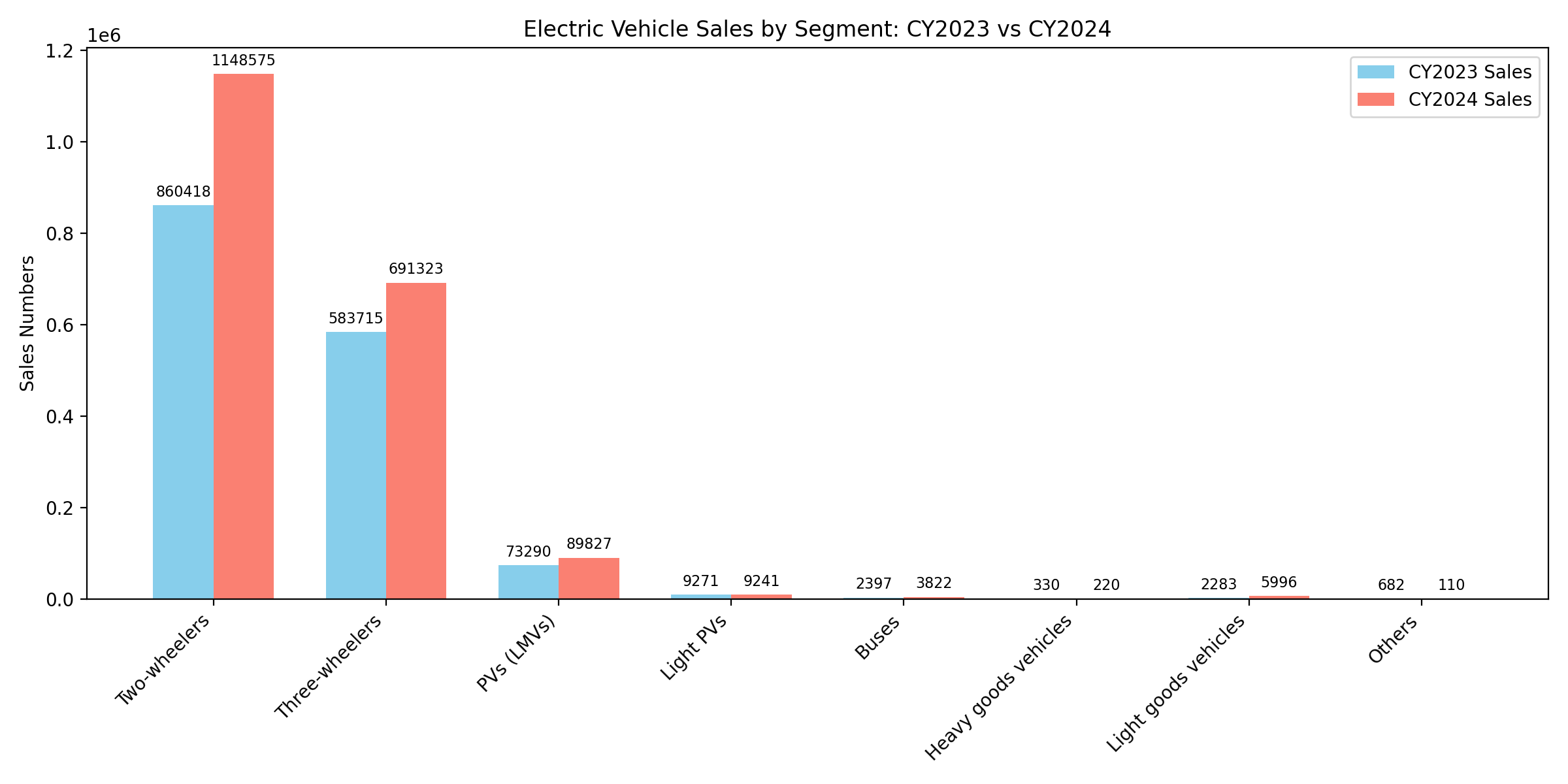
The Indian electric vehicle (EV) industry recorded its highest-ever annual retail sales in 2024, with 1,949,114 units sold. This represents a robust 27 per cent year-on-year (YoY) growth compared to 1,532,386 units in 2023. Notably, all segments saw double-digit growth except for heavy goods vehicles, which continued to lag.
On average, 5,325 EVs were sold daily throughout the year, with an impressive additional 416,728 units sold compared to 2023. The leap year contributed to bolstering daily sales figures as India made significant strides towards greener mobility.
In terms of aluminium consumption, India’s 2024 estimates indicate that the metal was primarily utilised in the electrical sector, accounting for 48 per cent of total consumption. This was followed by the automobile and transport sector at 15 per cent, construction at 13 per cent, consumer durables and machinery and equipment at 7 per cent each, packaging at 4 per cent, and other sectors contributing 6 per cent.
India’s surging EV demand and evolving industrial landscape underscore the country’s dynamic transition to sustainable energy and manufacturing practices. Rising demand in India is part of a broader trend, with increased purchasing power being concentrated in significant eastern nations like China and India, according to Kunal Shah, head of commodity research at Nirmal Bang. Aluminium metal prices are foreseen to sweeten from February or March onward, according to Shah.
“I am expecting a bull run to take place, not because of demand or supply, but China, which is likely to bring stimulus package and lots of required rates of return (RRR) cuts to infuse liquidity in the market and to boost the economy,” Shah said. “Unlike [the] US’s 10-year bond yield, which is continuously going up, China’s 10-year bond yield is continuously going down and posting deflationary scenarios,” Shah said. “Technically, if the US wants to print money, they cannot do that because the inflation in the economy will shoot up, and they will not be able to service their debt.”
“But considering China’s bond yield rates, which are historically low, if [China] wants to come up with any stimulus package – which they have not done in the past five years – [they] can come up with [a] US$1-1.5 trillion package easily,” Shah added.
Prices slide amid softer LME and scrap market decline
The London Metal Exchange (LME) three-month aluminium contract settled at US$2,619.50 per tonne at the 5 pm close of trading on Wednesday, 29 January. This marks a 0.55 per cent week-on-week decline from US$2,634 per tonne.
The lower LME prices have led to a corresponding dip in aluminium scrap prices in India. According to Fastmarkets’ weekly price assessment, the price for aluminium scrap (cast wheels, Troma, cif India) was recorded at US$2,370-2,400 per tonne on Wednesday, down from US$2,400-2,450 per tonne on 22 January.
The overall price alterations in both primary and scrap aluminium markets are indications of shifting global metal demand dynamics and are likely to impact procurement strategies for manufacturers and recyclers in India in 2025.