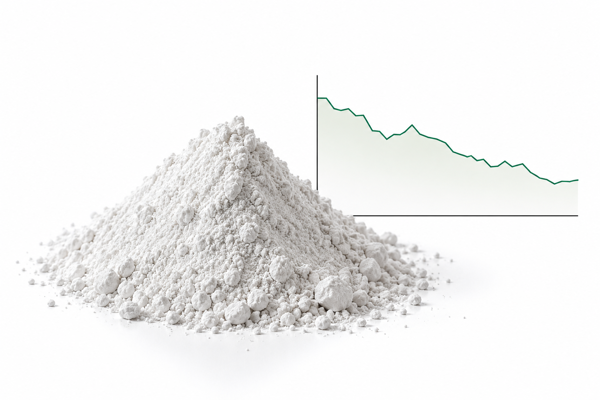
Domestic spot alumina prices edged down slightly last week amid flat trading activity. Recent alumina price movements were mainly attributed to earlier concentrated restocking by downstream buyers, which has led to accumulating inventories at rail stations and smelters. Coupled with supply-side maintenance-driven output cuts that are still building, readily available spot volumes have tightened relatively. Only sporadic tender deals were heard recently, leaving prices in a temporary steady phase. On the bauxite front, domestic ore prices saw limited movement last week. Supply-side bottlenecks are unlikely to ease in the near term, with mines prioritising captive supply, leaving little excess spot material available. For imported ore, freight rates rebounded slightly and consecutively last...
The global aluminium supply chain is facing a series of changes that extend from bauxite mines and alumina refineries to smelters, regional premiums and finished-metal trade. In 2026, the market’s direction is being shaped not only by production volumes but also by freight costs, export restrictions, shifting Chinese demand and tariffs. Developments across Guinea, Australia, China, Europe and North America point to a market where access to supply is increasingly as important as the availability of raw materials. Bauxite supply: Guinea’s cap meets a well-stocked China, but is it stable? Guinea remains central to the seaborne bauxite market, with its shipment connections to China demonstrating the importance of reliable logistics. A new sea-rail route has enabled a Guinea bauxite shipment...
Grow with
AL Circle

China’s domestic average alumina spot price has resumed from the Labour Day holiday from May 1 to 5 with a hike of RMB 50 per tonne. The tightening supply and improving demand have continued to boost the alumina price, marking the eighth consecutive day of rise. According to the Shanghai Metals Market, the domestic alumina price as of May 6 has come in at RMB 3,501 per tonne. In Lianyungang, alumina spot price has skyrocketed by RMB 105 per tonne to reach RMB 3,520 per tonne, followed by the surge of RMB 50 per tonne in Shandong, Henan, Shanxi, and Bayuquan. In Shandong and Bayuquan, the alumina price is standing at RMB 3,470 per tonne and RMB 3,570 per tonne, while the price in Henan and Shanxi at RMB 3,490 per tonne. If compared to a month ago, China’s domestic alumina spot price has...

According to the International Aluminium Institute, alumina production in Africa & Asia (ex-China) amounted to 1.234 million tonnes during March 2024, up by 5.38 per cent from 1.171 million tonnes in February 2024. The output recovered in March after a fall in the previous month by 3.22 per cent from 1.21 million tonnes. On a year-on-year calculation, the March 2024 alumina output in Africa & Asia (ex-China) edged a hike of 18.65 per cent from 1.04 million tonnes. In the first three months of 2024, Africa & Asia’s (ex-China) alumina production totalled 3.613 million tonnes, up by 2.91 per cent from 3.511 million tonnes during the fourth quarter of 2023 and 15.91 per cent more than 3.117 million tonnes during the first quarter of 2023. Africa & Asia is the world’s second largest alumina...

Alpha HPA Limited, an Australia-based ultra-high purity alumina producing company, is reportedly continuing to develop Stage 1 of the battery materials Precursor Production Facility (PPF) in Gladstone, Queensland. The company is also in the final phase of commissioning process equipment to reach the production capacity of the full range of Alpha’s high-purity aluminium products. Alpha’s Managing Director Rimas Kairaitis said: “Alpha continues to build strong production and marketing momentum by leveraging our expanded capacity in the Stage 1 PPF. We are highly encouraged by the stronger end-user engagement and the additional Letters of Intent, which further consolidate the building demand we are observing in our target technology sectors.” Alongside, Alpha HPA is expanding its team and...

OYAK has announced a strategic investment in China for its subsidiary, Almatis, a global leader in specialised alumina products and solutions. This investment aims to bolster Almatis' capabilities by increasing its calcined alumina production capacity from 50,000 to 100,000 tonnes. The expansion is poised to fuel growth in vital markets like semiconductor structural components, consumer electronics, thermal control devices, and electric vehicles. Construction of the new facility, spanning 6,600 square meters, is scheduled to commence in the final quarter of 2024. On September 1, 2015, Dubai International Capital (DIC), the private equity arm of Dubai Holding, announced that it had completed the sale of Almatis, the world's leading supplier of premium alumina for the refractory, ceramic...

According to China Customs data, the country’s alumina exports in March 2024 amounted to 144,100 tonnes, bringing the total exports in the first three months of the year to 421,600 tonnes. China’s alumina imports were 303,800 tonnes in March 2024, which reflected an increase of 3.97 per cent month-on-month and a jump of 334 per cent year-on-year. In three months, China’s alumina imports totalled 947,300 tonnes, up by 105.85 per cent year-on-year. The net imports of alumina stood at 159,700 tonnes in March and totalled 525,700 tonnes from January to March 2024. Customs data also showed that China imported 11.8628 million tonnes of bauxite in March 2024, which increased by 5.19 per cent month-on-month but decreased 1.43 per cent year-on-year. From Guinea, the highest producer and exporter...

In the first quarter of 2024, which concluded on March 31, global alumina production slowed down over a quarter, primarily attributed to a significant decline in China's alumina output. Even a month-on-month recovery in China's alumina production in March 2024 failed to mitigate the overall decline in global output for the quarter. Alongside China, the global alumina production also regained in March but could not appease the Q1 output. However, annually, the world alumina production in Q1 2024 recorded a hike of about 3.49 per cent from 33.879 million tonnes. According to the International Aluminium Institute, the global alumina production in March increased by 6.96 per cent month-on-month from 11.188 million tonnes to 11.967 million tonnes and grew year-on-year by 1.24 per cent from...

China's alumina market has struggled since it launched on the China Futures Exchange about a year ago. But it is now finding some momentum, and the funds have entered the game with some strength. This week, the market saw a significant boost as funds stepped in, pushing the price to around RMB 3800/t. This price increase should encourage and motivate producers. Producers are delighted, and everyone is running to the maximum they can. Ore supply continues to be the issue. The shortage of domestic material is forcing some refineries to increase their use of imported ore. That, in turn, is leading buyers to be cautious, given some properties are drifting from the norm. Strong demand, regional supply weakness, and the funds' involvement are a recipe for higher alumina prices in the coming...

Rio Tinto stands as a global leader in the aluminium industry, renowned for its commitment to innovation and sustainability. With a rich legacy spanning decades, Rio Tinto continues to spearhead transformative projects that redefine industry standards. In November 2023, Rio Tinto unveiled its ambitious plan to invest over $135 million in replacing the alumina conveyor at its prestigious aluminium smelter in Kitimat. This monumental investment marks a significant milestone, echoing Rio Tinto's unwavering dedication to excellence and advancement. Noteworthy figures graced the ceremony, including James Steer, Director of Asset Integrity and Projects; Jerome Pecresse, Chief Executive of Aluminium; Dominic Barton, Chairman at Rio Tinto; Phil Germuth, Mayor of District of Kitimat; Sebastian...

Alumtek Minerals (AM), an Australian-based company, has recently concluded extensive research and development focused on bauxite residue waste, also known as red mud. This endeavour has led to the creation of cutting-edge technology capable of extracting critical raw materials from this waste. AM has successfully developed a supplementary cementitious material (SCM) that meets the rigorous Australian Standard AS3582.4 through a collaborative effort with Cement Australia. This innovative material holds great promise in significantly reducing CO 2 emissions within the cement industry. Alumtek Minerals specialises in processing mining tailings, particularly bauxite residue . Leveraging proprietary technical methods, it is advancing commercialisation efforts to extract rare earth elements and...

The European Union (EU) can bolster its recycling objectives by utilising waste generated during the production of aluminium, nickel, and other industrial materials. Recognising these challenges, a team of researchers secured funding from the EU to address the issues surrounding red mud. Their project, named RemovAL, spanned five years until April 2023. Their innovative solution involved repurposing bauxite residue to pave roads, exemplified by the project's implementation at the Aughinish aluminium refinery. In Limerick, Ireland, nestled within the confines of a former aluminium refinery, lies a pioneering initiative set to reshape Europe's approach to waste management. About RemovAl RemovAl is a EU-funded cooperation project about removing waste from the primary aluminium and alumina...

Prime Minister of Australia Anthony Albanese announced the funding of A$400 million for a high-purity alumina processing factory in Gladstone, as part of its pledge to give out $600 million in loans to develop the market for two critical mineral projects. The news came after Mr Albanese made the announcement alongside Resources Minister Madeleine King at a media conference on Wednesday, April 17. The fund will be provided to Alpha HPA, an Australian company specialised in producing ultra-high purity alumina and related premium aluminium materials, via two separate agencies. The Northern Australian Infrastructure Facility and Export Finance Australia's (EFA) A$4 billion critical minerals facility will offer A$160 million each and A$ 80 million jointly. Alpha HPA will utilise the fund in...

On April 17, Alcoa Corporation announced its operational and financial results for the first quarter of 2024 ended March 31, whereby it noted the revenue of $2.6 billion, down by 3.7 per cent from $2.7 billion a year ago but remained at par to the previous quarter. From the alumina business, Alcoa’s revenue rose 6 per cent due to higher average price and increased shipment but revenue from aluminium division dropped by 3 per cent due to lower average price. Net loss attributable to Alcoa Corporation was $252 million or $1.41 per share, higher than $150 million or $0.84 per share in Q4 2023, owing to average third-party prices of aluminium and higher production costs, partially offset by lower energy and input costs. The net loss in Q1 2024 also included a charge of $197 million related to...

On Wednesday, April 17, the average alumina spot price in China has recorded an increase of RMB 3 per tonne to reach RMB 3,305 per tonne, marking the third consecutive day of rise, showed the Shanghai Metals Market data. On a week-on-week basis, the average alumina price has edged a hike of RMB 8 per tonne; while on a month-on-month calculation, the price is down by about RMB 12 per tonne or 0.36 per cent. In Shandong, Henan, and Shanxi, alumina spot price has unanimously gained RMB 5 per tonne to stand at RMB 3,265 per tonne, RMB 3,325 per tonne, and RMB 3,270 per tonne, respectively. A00 aluminium ingot price Despite the alumina price fall, A00 aluminium ingot price has shrunk by RMB 100 per tonne on the the same day to stand at RMB 20,160 per tonne. The average prices are estimated to...

The Companhia Brasileira de Alumínio (CBA) begins the operation of a filtration system by the end of April, consisting of 3 filter presses, for drying waste from its alumina plant located in Alumínio (SP), which generates 1,500 t/day of waste. With this, the company will be able to completely do without a dam for wet tailings storage. According to Luciano Alves, CEO of the company, the project has involved investments of R$420 million so far, but the total, considering what will be invested in the future, should reach around R$500 million. The filtration system, which was imported, is a technology already approved on the market and the objective is to have a safer operation, as the disposal is now done dry and no longer wet. In fact, as Luciano Alves explains, CBA had already been drying...

Aiming to achieve its global decarbonisation goals - a 10 per cent reduction in carbon emissions in all operations worldwide by 2025 and 25 per cent by 2030 - Hydro is investing R$1.6 billion in projects to decarbonise its operations of alumina production and bauxite extraction in the state of Pará. According to Carlos Neves, VP of Operations, in the areas of bauxite and alumina the company created a road-map for decarbonisation until 2050, with the first stage aiming to reduce emissions by 16 per cent, in order to contribute to the group achieving the global target of 10 per cent reduction by 2025. To this end, some projects were developed along the decarbonisation route, with emphasis on the alumina plant, located in Barcarena (PA). He adds that although Hydro is well positioned in the...

According to the Shanghai Metals Market survey, China’s metallurgical-grade alumina production amounted to 6.782 million tonnes in March 2024 (31 calendar days), reflecting a month-on-month increase of 8.3 per cent from 6.262 million tonnes and a year-on-year rise of 2.13 per cent from 6.64 million tonnes. From January to March 2024, China’s metallurgical-grade alumina production totalled 19.764 million tonnes, marking an annual growth of 3.31 per cent from 19.13 million tonnes. China’s daily average alumina output in March 2024 was 218,800 tonnes per day, up by 4,500 tonnes per day from 214,300 tonnes in March 2023. Operating capacity In the year’s first three months, China’s alumina production capacity was 100 million tonnes, while the operating capacity was 79.96 million tonnes and the...

According to the International Aluminium Institute, alumina production in North and South America dropped considerably in February 2024. On a Month-on-Month scale, the alumina production in North America has dwindled by 15.5 per cent or 31,000 tonnes from 200,000 tonnes in January 2024 to 169,000 tonnes in February. Similarly, in South America, there has been a Month-on-Month fall of 40,000 tonnes or 3.94 per cent, from 1.015 million tonnes registered in January this year to 975,000 tonnes in February. Year-on-Year comparison If we consider the alumina production rate during February 2023, we can witness a Year-on-Year slump of 14.2 per cent or 28,000 tonnes in North America from 197,000 tonnes. But on the other hand, in South America there can be seen a Year-on-Year influx of 39,000...

China's alumina market is under pressure at the moment. Supply of bauxite from local mines remains difficult. The authorities are controlling the amount of explosives that can be used to unlock the ore. As well, some mines have not been successful in getting mining permits. Imported ore is also problematic. In addition to the ore problems for some refineries, other refineries have been down for maintenance, so the supply of finished products has been limited as well. (If all that idled capacity had been operational, the ore shortage would have been worse.) These difficulties on the supply side have led producers to take a hard line on prices. However, the market is not accepting this, and smelters are putting pressure on refineries to lower their prices. Our Zibo team expects the...