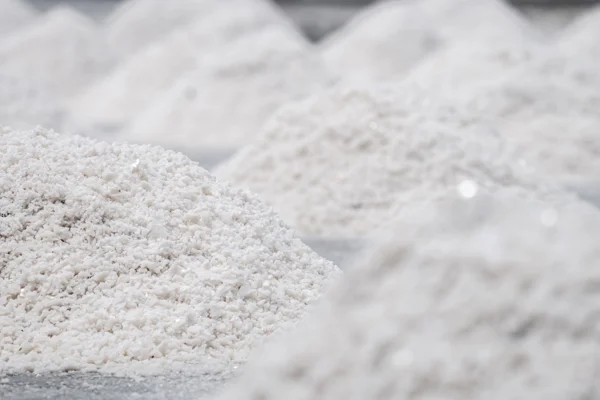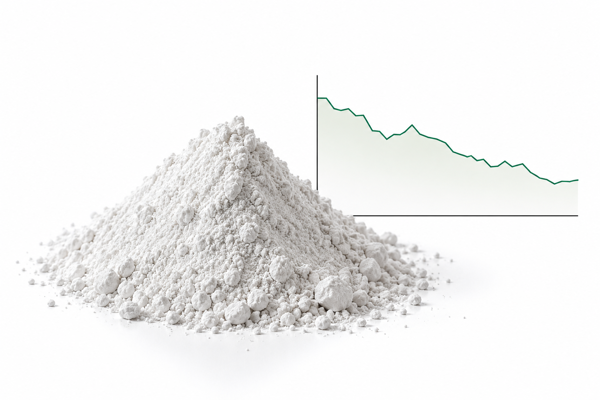
Domestic spot alumina prices edged down slightly last week amid flat trading activity. Recent alumina price movements were mainly attributed to earlier concentrated restocking by downstream buyers, which has led to accumulating inventories at rail stations and smelters. Coupled with supply-side maintenance-driven output cuts that are still building, readily available spot volumes have tightened relatively. Only sporadic tender deals were heard recently, leaving prices in a temporary steady phase. On the bauxite front, domestic ore prices saw limited movement last week. Supply-side bottlenecks are unlikely to ease in the near term, with mines prioritising captive supply, leaving little excess spot material available. For imported ore, freight rates rebounded slightly and consecutively last...
The global aluminium supply chain is facing a series of changes that extend from bauxite mines and alumina refineries to smelters, regional premiums and finished-metal trade. In 2026, the market’s direction is being shaped not only by production volumes but also by freight costs, export restrictions, shifting Chinese demand and tariffs. Developments across Guinea, Australia, China, Europe and North America point to a market where access to supply is increasingly as important as the availability of raw materials. Bauxite supply: Guinea’s cap meets a well-stocked China, but is it stable? Guinea remains central to the seaborne bauxite market, with its shipment connections to China demonstrating the importance of reliable logistics. A new sea-rail route has enabled a Guinea bauxite shipment...
Grow with
AL Circle

The development of Indonesia’s aluminium downstream industry holds substantial promise despite the slow progress seen in recent years. A senior government official recently revealed that only one of the eight alumina refinery projects in the government's ambitious pipeline has shown significant progress. This underwhelming advancement highlights the urgent need for strategic intervention to unlock this sector's full potential. The Indonesian government's construction of alumina refineries aims to enhance the added value of domestically mined bauxite minerals. On June 21, 2024, Irwandy Arif, an expert staff member at the Ministry of Energy and Mineral Resources (ESDM), said, "The Minister of Energy and Mineral Resources has ordered direct field supervision for eight alumina refinery...

Only 400 of the 5,000 employees remain at the Nikolaev Alumina Refinery, which ceased operations in March 2022 at the onset of the full-scale Russia-Ukraine conflict, an independent local media reported. According to Oleksii Medvid, the acting General Director of Nikolaev Alumina Refinery, the primary responsibilities of the remaining workers include maintaining two red mud (bauxite residue) storage facilities spanning approximately 400 hectares and safeguarding the company’s property. Oleksii Medvid stated, "These 400 specialists oversee the preservation of the enterprise, its equipment, and two bauxite residue storage facilities. This is the only operational precinct within our company. The bauxite residue remains in storage and does not enter the precinct. It is crucial to monitor the...

During January-May 2024, China witnessed a positive trend of aluminium raw material and aluminium product imports, as demonstrated by the Shanghai Metals Market’s latest survey. Considering raw materials, China’s bauxite and alumina imports grew in May due to the growing demand for primary metal production, as many smelters, especially in Yunnan, resumed operations because of the increased generation of hydropower backed by sufficient rainfall. According to the National Bureau of Statistics, China’s primary aluminium production in May reached 3.65 million tonnes, marking a 2-year high. China is increasingly depending on imported ore as domestic supply lines are struggling. At the end of May, out of 100 million tonnes, China’s operating capacity stood at 82.29 million tonnes, with an...

The Chinese domestic alumina market has consolidated recently at a high level. Prices remain up around RMB3800/tonne, almost RMB1000 above where they were just a few weeks ago. There's little chance of prices going down, as demand is still strong and supply lines are still struggling. Imported ore is coming in at record levels, but domestic ore supply is still struggling. As well, a small handful of refineries has been running at reduced capacity while performing maintenance. The spot alumina market, which admittedly is not a major part of the picture, has been running very thin recently. In the meantime, the Shanghai index is starting to get some solid inventory numbers to back it up. Thanks to Ecolab for the use of this image.

According to the Shanghai Metals Market survey in early June, the accumulated inventory of alumina at aluminium smelters across China stood at 2.8815 million tonnes. The number of days of in-plant alumina stocks at Chinese aluminium smelters in early June was 12.78 days, considering that the national aluminium output was 3.632 million tonnes in May, with a daily output of 117,200 tonnes. Alumina stocks at smelters, region-wise In the Northwest Chinese regions, such as Ningxia, Qinghai, Gansu, and Xinjiang, some aluminium smelters had considerable alumina orders to deliver, which led to lower in-plant alumina inventories. Meanwhile, some smelters in the regions encountered a sluggish buying sentiment, leading to relatively stable inventory levels. Thus, the average days of in-plant alumina...

According to the International Aluminium Institute survey, Africa & Asia (ex-China), the world’s third-largest alumina-producing spot after China and Oceania, witnessed a sharp month-on-month fall of 19.25 per cent, standing below 1 million tonnes for the first time in the past three years. The last time Africa & Asia’s alumina output stood below 1 million tonnes was in April 2020, standing at 978,000 tonnes. In April 2024, the production reached 997,000 tonnes, up by 1.94 per cent from the same period in 2020 On a year-on-year basis, Africa & Asia’s alumina output in April 2024 decreased by 6.38 per cent from 1.065 million tonnes. The daily average output in April 2024 was 33,200 tonnes, down by 16.58 per cent M-o-M from 39,800 tonnes and 6.48 per cent less Y-o-Y than 35,500 tonnes. From...

According to the Shanghai Metals Market survey, China's metallurgical-grade alumina production in May 2024 (31 calendar days) recorded a monthly hike of 4.64 per cent, reaching 6.989 million tonnes versus 6.679 million tonnes. The daily average output stood at 233,000 tonnes per day, reflecting an increase of 4.67 per cent from 222,600 tonnes in April 2024. The accumulated production of China's metallurgical-grade alumina from January to May 2024 amounted to 33.451 million tonnes, up 3.42 per cent Y-o-Y. At the end of May 2024, China's alumina capacity was 100 million tonnes, with an operating capacity of 82.29 million tonnes and an operating rate of 82.3 per cent. In April 2024, China's operating capacity was 81.27 million tonnes, with an average operating rate of 81.3 per cent. Alumina...

According to a report on Friday, June 7, Guinea will house its second major alumina refinery, which will be constructed by a subsidiary of Emirates Global Aluminium (EGA). The news came after two senior officials of Guinea's mines ministry told Reuters that a non-binding agreement was signed between Guinea and EGA's subsidiary company. The agreement, known as a Term Sheet, states that EGA's subsidiary Guinea Alumina Corporation (GAC) will build the 2 million tonnes capacity refinery in west Guinea by September 2026, initially producing 1.2 million tonnes annually. The signing was presided over by Djiba Diakité, Minister and Chief of Staff at the Office of the Presidency of the Republic, and Chairman of the Strategic Monitoring Committee for the Simandou project, at the Petit Palais of the...

The United States alumina imports in the first quarter of 2024 ended March 31, edged down 12.69 per cent annually and saw a more intense decline of 21.45 per cent on a quarter-on-quarter basis. The downfall in alumina imports indicates reduced demand for primary aluminium production in the United States. What once used to be one of the world's largest producers of primary aluminium, accounting for 15 per cent of the global production, now accounts for only 1 per cent. According to the US Geological Survey, the United States imported 282,000 tonnes of alumina during the first quarter of 2024, in comparison with 323,000 tonnes in Q1 2023 and 359,000 tonnes in Q4 2023. However, the downfall occurred in Q1 2024 after uninterrupted hikes in each quarter last year. In Q2 2023, the United States...

In a groundbreaking achievement, researchers from the Indian Institute of Technology, Madras (IIT-M) have unveiled a pioneering method to break down common minerals into nanoparticles using water microdroplets. This remarkable discovery marks a significant milestone, as it is the first research paper from IIT-M to be published in the esteemed ‘Science’ journal. The study demonstrates that the seemingly simple action of water microdroplets can effectively break minerals, leading to the creation of nanoparticles. This innovation opens new avenues in the field of nanotechnology and materials science, highlighting the potential for sustainable and cost-effective production techniques. The publication of this research in ‘Science’ underscores the global relevance and impact of the findings and...

The International Aluminium Institute (IAI) reports that the world's alumina production in April 2024 experienced a significant decline, both on a monthly and yearly basis. This trend was primarily driven by reduced output in key regions such as China, Africa & Asia (ex-China), Europe (incl. Russia), and Oceania, indicating a potential shift in the global alumina market. According to IAI data, the world's alumina production in April 2024 stood at 11.554 million tonnes, down by 4.41 per cent from 12.087 million tonnes in March 2024 and 0.62 per cent less than 11.626 million tonnes in April 2023. In January and February 2024, the world's alumina output amounted to 11.905 million tonnes and 11.188 million tonnes. However, despite the latest fall for an alternate month, the global output of...

In the realm of industrial sustainability, few challenges loom as large as the management of bauxite residue, commonly known as red mud. It's an industrial waste generated during bauxite processing into alumina using the Bayer process, which has a complex composition that poses significant environmental and economic concerns. However, amidst these challenges lies a beacon of hope: Al Circle's latest industry-focused report, " A Comprehensive Analysis of Bauxite Residue - Red Mud. " This report, meticulously developed by including various thoughts and insights of experts and environmental scientists, delves deep into the heart of the red mud dilemma. It offers a comprehensive analysis that promises to reshape the landscape of bauxite residue management. No stone is left unturned in this...

According to the Shanghai Metals Market survey, China’s average alumina spot price has jumped by RMB 33 per tonne over the weekend to stand at RMB 3,878 per tonne as of May 27. This latest hike has marked China’s domestic alumina price above a 2-year high. In Lianyungang and Bayuquan, alumina spot price has soared by RMB 85 per tonne to reach RMB 3,955 per tonne and RMB 3,965 per tonne, respectively, followed by a rise of RMB 40 per tonne in Shandong to RMB 3,860 per tonne. In Henan, Shanxi, Guizhou, and Guangxi, alumina price has unanimously increased by RMB 30 per tonne to start the week at RMB 3,870 per tonne, RMB 3,885 per tonne, RMB 3,875 per tonne, and RMB 3,910 per tonne, found SMM. The Australian alumina FOB price has also increased over the weekend after remaining restrained...

In a strategic manoeuvre to secure Alumina Ltd.'s $4 billion buyout, American aluminium giant Alcoa has tailored a unique arrangement for the company's second-largest shareholder, China's CITIC Group. As reported by the Australian business-focused, compact daily newspaper Australian Financial Review, this move aims to garner CITIC's backing while adhering to US banking regulations. Sources indicate that the modifications were crafted in collaboration with CITIC to safeguard the group's position if the shareholder vote favours the takeover. As of now, CITIC has yet to officially decide whether it will retain its stake in Alumina Ltd. or sell its shares in exchange for Alcoa stock. Alcoa's all-stock offer for Alumina Ltd. now includes an additional provision: issuing non-voting convertible...

Rio Tinto announced on Tuesday that it has declared force majeure on alumina shipments from its operations in Queensland, Australia, due to a gas shortage. Gas supplies from Rio's Gladstone facilities have been significantly disrupted following an incident on the Queensland gas pipeline in early March, as told by a company spokesperson to Reuters on Monday. In March, the company stated that it was evaluating the impact of fires in Queensland on the gas pipeline that supplies the plant. About the declaration A spokesperson stated in an email that the force majeure notice, which affects third-party contracts, is a temporary measure. Force majeure is a legal declaration that releases a company from its contractual obligations due to uncontrollable circumstances. According to the...

Alpha HPA is officially set to establish the world's largest single-site high-purity alumina products refinery in Gladstone, Queensland. The company has made a final investment decision (FID) on Stage Two of its 'HPA First' project, following the successful construction, commissioning, and 16-month operation of the Stage One precursor facility. "Construction of the 10-hectare, state-of-the-art, full-scale facility will commence mid-2024 on the existing HPA First project site at Yarwun, near Gladstone, where the company's Stage One facility is already in small-scale production of its high purity aluminas and aluminium materials product range. Stage Two will encompass full-scale production of up to 10,000 tonnes of high-purity aluminium materials per year creating 120 ongoing local jobs on...

According to the Shanghai Metals Market survey, China’s metallurgical-grade alumina production in April 2024 amounted to 6.679 million tonnes, reflecting a month-on-month decline of 1.52 per cent from 6.782 million tonnes but a year-on-year increase of 2.2 per cent. However, it is to be noted that despite the M-o-M fall in April’s monthly output, the daily production stood 3,900 tonnes per day higher than the previous month, reaching 222,600 tonnes per day. Aluminium capacity and resumption As of the end of April 2024, China’s existing alumina capacity was 100 million tonnes, with an operating capacity of 81.27 million tonnes, while the average operating rate was 81.3 per cent. In Shanxi, the operating rate grew by 2.7 per cent M-o-M to stand at 72.9 per cent and the operating capacity...

Allup Silica has uncovered a potentially significant kaolin clay deposit following an exploration campaign targeting silica and rare earths at its Pink Bark project near Esperance in Western Australia. Preliminary analysis of the initial samples indicated aluminium oxide (alumina) content within the range of 17 per cent to 20 per cent. The company estimates the deposit between 700,000 and 1.2 million tonnes of kaolin spread across 69 square kilometres. To investigate further, they conducted an XRF analysis on eight selected samples. During the reconnaissance air-core (AC) drilling, which involved 41 holes averaging 20 meters in depth across two exploration licenses, totalling 823 meters drilled and logged at 1-meter intervals, the kaolin was observed in thicknesses ranging from 5 meters...