The Columbus Dispatch
Alcoa taps OSU in drive for lighter auto body
Edited by : AL CIRCLE
4 min read
Plenty of college campuses do their part to lighten metal vessels — especially during tailgate season.
The effort at Ohio State University, however, is creating a different kind of buzz. OSU is one of just two U.S. schools — the other is the University of Michigan — to share in a two-year, $4?million grant recently awarded by the Alcoa Foundation, an arm of the world’s leading aluminum producer.
OSU’s Institute for Materials Research is getting $400,000 to support its pursuit of lighter — and environmentally friendly — vehicle chassis and bodies.
“There is a growing recognition that the lightest-weight and most-affordable vehicles in the future will not be made from one material, but many different ones,” said OSU’s Glenn S. Daehn, professor of materials science and engineering and project leader for the school’s Alcoa-funded research.
What does Alcoa hope to get out of the materials research?
“This program will help extend and develop sustainable design and manufacturing technologies that leverage large-scale production,” said Kevin B. Kramer, Alcoa’s president of growth initiatives, a position created in 2009 to support “commercialization strategies for organic growth.”
Translation: Ideally, in the end, the research will produce an even bigger market for aluminum.
Kramer, an OSU grad who previously oversaw Alcoa’s wheel and transportation-products business, discussed the company’s goals with Mike Kallmeyer, host of ONN-TV’s Ohio Means Business. An edited excerpt:
Q: Explain what you do at Alcoa.
A: My title is president of growth initiatives, and, really, the objective is threefold: We help the business units sell more-profitable products around the world; we help drive new, innovative products with our business units, as well as our technical center; and we help build our brand — and a big part of that is to tell the story of sustainability.
Q: And what is that story?
A: (Alcoa) is a 123-year-old company; we literally invented the industry. And so, while we have all these great examples of driving innovation and using the product, in fact, 75 percent of all the aluminum ever produced in the industry — not just with Alcoa — is still in application, with basically no downsizing.
So we have the foundation of, really, a great sustainable story, and we have done that for many years. And yet, a couple of years ago, we determined that we needed to extend the conversation far beyond just the conversation around recycling. It’s critical, but there’s a lot of other foundational tenets of why we have to change the conversation very differently for the next 123 years.
Q: As the executive sponsor of Alcoa’s long-standing relationship with Ohio State, you’ve worked closely with students here.
A: The role that I had last year, and continuing this year, is really talking about the things that challenge us, the things that excite us and, at times, the things that confuse us.
Q: When it comes to sustainability, are there common challenges facing most businesses?
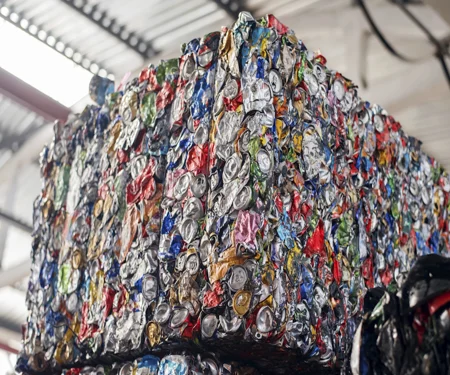
A: I think the challenges are different across the companies and across the industries. Everyone can talk about turning off the lights (and) recycling aluminum cans, which we all need to do, because, when you recycle an aluminum can, it becomes a (new) can in 60 days.
But really, from an Alcoa perspective, our company has some unique challenges. We’re a mining company. We are a very large consumer of electricity. We own a lot of our own electricity — everything from coal-fired power plants to state-of-the-art hydro plants to geothermal plants. So we have a huge responsibility to lower our greenhouse-gas emissions, our carbon footprint, and we’ve done that — by 43?percent in the last 20 years.
But part of that responsibility is to continue to be very transparent. To a degree, we are part of the problem, but we are (also) a big, big part of the solution. So I think ours is kind of a unique challenge — to take advantage of the great technology and the different ways to reduce the greenhouse-gas footprint, but it’s also talking about the “use phase” of products.
How can we (reduce the weight) of vehicles? … Look at the needs of the auto industry: to improve fuel economy, to reduce CO2 emissions. Look at the needs of the aerospace industry: more-lightweight planes. (With) anything that moves, we can have a very, very relevant conversation (about the merits of aluminum) against virtually any other material.
Previous article
Middle East Will be Strong Competitor to China Aluminum Products
Next articleMingtai Aluminum Plans to Establish Wholly-owned Commercial Company
Grow with
AL Circle