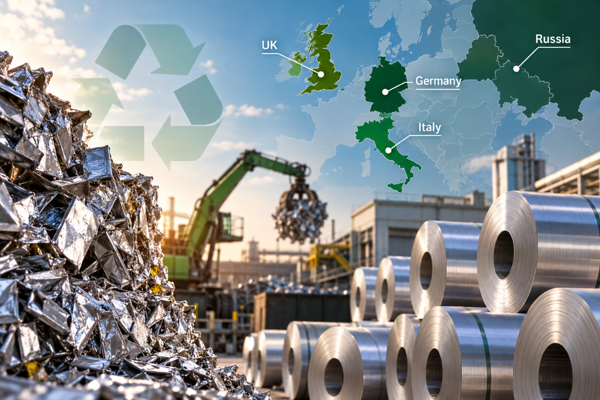
Europe’s recycled aluminium industry is an important component of the global secondary aluminium supply chain, with Germany, Italy and the United Kingdom (UK) representing key national markets. Production across the European region stood at nearly 6 million tonnes in 2023, supported by established scrap recovery systems, industrial recycling capacity and demand for recycled metal. Russia also contributes to the regional landscape through secondary aluminium production units concentrated in several industrial centres. According to AL Circle’s analysis in its report, “ World Recycled ALuminium Market Analysis Industry Forecast ”, the four countries present different market structures, from Germany’s substantial recycling capacity and Italy’s scrap-based production to the UK’s organised...
Alumil India, the fully-owned Indian subsidiary of Alumil Group, has successfully delivered advanced fenestration solutions for NICMAR University in Pune, transforming a precast campus vision into a functional, durable and future facing learning environment. The project required approximately three hundred windows within a tight timeline which was successfully delivered by Alumil India. The project deployed Alumil’s top-hung window systems combined with sleek mullions and glazing. “NICMAR University presented an opportunity to demonstrate how fenestration can become an integral part of both a building’s architecture and its performance. The project required us to respond to large openings, intensive daily usage, acoustic and weather considerations, safety, and the specific challenges of...
Grow with
AL Circle

Vietnam has taken a major step towards building a self-sufficient aluminium industry after unveiling its first domestically produced primary aluminium ingots, a milestone that completes the country's bauxite-to-aluminium production chain and is expected to reduce aluminium imports by around USD 1.5 billion annually. The first aluminium ingots were unveiled at the Dak Nong Aluminium Smelter in Nhan Co Industrial Park, Lam Dong Province, making it Vietnam's first pilot facility to produce primary aluminium from domestically processed alumina. From bauxite to finished aluminium The project, operated by Tran Hong Quan Metallurgy Co., Ltd., allows Vietnam to process its own bauxite resources into finished aluminium products instead of exporting alumina for further refining overseas. The...

As global aircraft production accelerates and supply chain pressures persist, Airbus has added South Korea's SeAH Aerospace & Defense (SeAH A&D) to its aluminium supply network, making the company the first Korean materials supplier to secure a direct long-term agreement with the European aircraft manufacturer. The agreement, signed during the Farnborough International Airshow 2026, reflects a broader industry effort to secure reliable sources of high-strength aerospace materials as demand for new aircraft continues to outpace the availability of certified suppliers. Airbus secures future aluminium supply Under the long-term agreement, SeAH A&D will begin the quality certification process for its high-strength aluminium alloys during the second half of 2026. The materials are intended for...

Aluminium prices command the market's attention because they determine the value of the finished metal that carmakers, packaging manufacturers and construction firms ultimately buy. Yet one step up the supply chain, a quieter benchmark has spent the past three years doing something aluminium rarely does: moving on its own terms. Alumina, the intermediate product refined from bauxite and smelted into primary aluminium, surged past USD 800 per tonne in late 2024, lost more than half its value within months and, by mid-2026, was trading near USD 330 per tonne even as aluminium climbed towards multi-year highs. Traders focused solely on the LME aluminium price would have missed much of that story. The LME alumina price trend is where it began. Reading the LME alumina price trend through its...

Mercedes-Benz and Norsk Hydro have solidified their long-term partnership to accelerate the use of recycled aluminium across Europe. The initiative reinforces the automotive industry’s decarbonisation goals while reinforcing regional supply chains, thereby taking the EU a step closer to the Net Zero goals. As part of the expanded collaboration, Mercedes-Benz will become the first European automaker to use Hydro CIRCAL in serial production for its next generation of large electric vehicles (EV). The recycled aluminium contains at least 75 per cent post-consumer scrap, a significant increase from the previous minimum of 25 per cent. The material is produced from end-of-life vehicles, buildings and infrastructure through advanced recycling processes. To know the aluminium casting demand...

From wrapping leftovers to lining baking trays, aluminium foil is one of the most common items found in kitchens. Yet one small detail has puzzled home cooks for years: why does one side look shiny while the other looks dull? The answer isn't a special coating or a hidden cooking trick - it's simply science. It all comes down to the manufacturing process Aluminium foil starts out as large sheets of metal that are rolled repeatedly until they become incredibly thin—typically less than 0.02 millimetres thick. By the final stage, the foil is so delicate that it could tear if rolled on its own. To prevent this, manufacturers roll two sheets together at the same time. The outer surfaces are pressed against highly polished steel rollers, which leave them smooth and shiny. Meanwhile, the two...

Ireland’s Aughinish Alumina is back on the news forefront as the government report based on its investigation has found no evidence that alumina produced at the refinery is being exported to feed the Russian defence sector . However, owing to complexities emerging from global supply chains, authorities could not conclusively rule out such a possibility. Therefore, the EU has not ruled out the potential of including alumina exports in the 21st Sanctions Package on Russia. Irish Taoiseach Micheál Martin shared the findings with Ukrainian President Volodymyr Zelenskyy during a meeting in Kyiv, where the two leaders discussed concerns surrounding alumina exports to Russia. While President Zelenskyy suggested Ireland examine whether alumina could be sanctioned under national legislation ,...

Brazilian Rare Earths (BRE) has moved a step closer to developing its Amargosa Bauxite-Gallium Project in Brazil after its newly created subsidiary, Alurion Resources Limited, raised approximately A$50 million (USD 24.5 million) through an initial public offering (IPO) in Australia. The company issued 47,619,048 fully paid ordinary shares at an offer price of A$1.05 (USD 0.74) per share, with the proceeds earmarked to accelerate development of the USD 119 million project. The funding will support land acquisitions, technical studies, environmental licensing, exploration activities, community programmes, safety initiatives and equipment purchases as Alurion advances the project. Shareholder-backed demerger clears path The IPO follows the demerger of the Amargosa Bauxite-Gallium Project...

Jamaica’s bauxite and alumina export earnings are expected to improve in 2026, even though the first quarter was weak. The government expects production to rise as repairs continue after Hurricane Melissa, and the aluminium industry is watching closely because bauxite is the raw material used to make alumina for aluminium smelting. According to the Jamaican Government's annual Form 18-K filed with the US Securities and Exchange Commission (SEC), export earnings from bauxite and alumina are projected to rise 24 per cent to USD 760 million in 2026 from USD 612.3 million in 2025. Even if achieved, earnings would remain below the USD 803.4 million recorded in 2024. The recovery is coming after a tough 2025, when Jamaica’s bauxite and alumina earnings fell 23.8 per cent, or USD 191.1 million,...

South32 has recognised exceptional costs of USD 117 million after the closure of its Mozal aluminium smelter in Mozambique , as an unresolved power deal impasse with the Mozambican government keeps operations stalled. The Mozal smelter, one of Africa’s largest aluminium producers with a 560,000-tonne annual capacity, entered care and maintenance on March 15 after negotiations over electricity tariffs failed. South32 has maintained that aluminium production is no longer commercially viable under the current power pricing structure, with electricity accounting for the plant’s highest operating cost. Explore: The most comprehensive and forward-looking industry-focused report — Global Bauxite & Alumina Market Forecast to 2036: Supply–Demand, Trade Flows & Price Report Mozal, a USD 2 billion...

Türkiye's aluminium import trends during January-May 2026 present a mixed picture, with lower import volumes but higher import values. Comparing the latest data with the previous two years provides insights into how the country's import mix has evolved and whether its downstream aluminium trade has maintained its share of total imports. Türkiye's cumulative aluminium imports (January-May) YTD 2026: 799,558.22 tonnes, valued at USD 2.9 billion (down 10.4 per cent in volume from YTD 2025, while import value rose 11.5 per cent) YTD 2025: 892,320.27 tonnes, valued at USD 2.6 billion (up 22.9 per cent in volume from YTD 2024, while import value increased 36.8 per cent) YTD 2024: 726,126.13 tonnes, valued at USD 1.9 billion Of the total aluminium imported by Türkiye during the January-May...

The Middle East updates on rising geopolitical tensions continue to fill the board. Still, aluminium prices have all the gains triggered by the Middle East crisis that began on February 28 this year. The London Metal Exchange (LME) aluminium price chart recorded the three-month contract slipping back to USD 3,170.5 per tonne , slowly retreating to the range where it traded before the geopolitical tensions intensified. The market’s calm comes even as updates from the Middle East about disruptions at Gulf smelters report nearly 2 million tonnes of annual production removed from global supply chains. After reaching a four-year high of USD 3,855 per tonne at the close of June 2 , aluminium prices have retreated as traders increasingly believe higher exports from China and Indonesia can offset...

Aluminium is often described as one of the most recyclable industrial materials, and the UK already has much of the infrastructure needed to support a circular aluminium economy. Collection systems are well established, recycling rates are strong, and remelting capacity exists across the supply chain. According to Nadine Bloxsome, CEO of the Aluminium Federation (ALFED), the challenge is no longer whether aluminium can be recycled, but whether the UK is keeping enough of the value created from that recycled material. One of the biggest issues is the way aluminium is still viewed. The term "scrap" often suggests waste, yet secondary aluminium has become one of the UK's most important raw materials, particularly as domestic primary aluminium production remains limited. ALFED estimates that...

China's solar power installations declined sharply in the first half of 2026 after record additions a year earlier, as the market adjusted to changes in the country's renewable energy pricing mechanism. According to an analysis by the China Photovoltaic Industry Association based on official data, China installed 72.07 GW of new solar capacity during January-June 2026, down 66 per cent from 212.21 GW in the same period of 2025. In June, new installations stood at 12.48 GW, a decline of 13.1 per cent year-on-year. The decline follows the unusually high installation levels recorded in early 2025, when developers rushed to connect projects before June 1, the date on which new wind and solar projects shifted from fixed feed-in tariffs to market-based electricity pricing. May 2025 alone...

The London Metal Exchange (LME) aluminium price chart continued to record a declining trend across all the pricing segments at the close of the June 24 trading session. Only the alumina pricing segment showed consistency. The LME aluminium cash bid as well as offer prices eased by 0.59 per cent day-on-day. The bid reached USD 3,174.5 per tonne on July 24 from USD 3,193.5 per tonne on July 23 . The offer shifted to USD 3,175 per tonne from USD 3,194 per tonne. Explore: The most comprehensive and forward-looking industry-focused report — Global Bauxite & Alumina Market Forecast to 2036: Supply–Demand, Trade Flows & Price Report On June 24, both the LME aluminium three-month bid and offer prices reported a 0.68 per cent fall. The bid slipped to USD 3,160 per tonne from USD 3,181.5 per tonne...

Gaming hardware maker Wallhack has revealed its first gaming keyboard, expanding its product portfolio beyond gaming mice with the introduction of the Wallhack K-001. The company shared an early preview of the keyboard through its official X account ahead of its scheduled launch on July 24, 2026, showcasing a design centred on premium aluminium construction and Hall-effect switch technology. CNC aluminium body targets premium gaming market The Wallhack K-001 features a CNC-machined aluminium chassis, offering a rigid build designed to enhance durability and provide a solid typing experience. It has a compact 65 per cent layout, keeping the essential navigation keys while reducing the overall footprint to create additional desk space for mouse movement during gaming. The keyboard also...

Meiji Holdings is exiting its dairy business in China after agreeing to sell its drinking milk, yoghurt and business-to-business (B2B) operations to Shanghai AustAsia Food in a deal worth up to RMB 320 million (USD 47.2 million), marking a strategic shift towards higher-priority businesses, including chocolate. The transaction includes Meiji's dairy operations under Meiji (China) Investment, Meiji Dairies Tianjin and Meiji Dairies Suzhou. Before completion, Meiji will transfer the businesses into a newly established subsidiary, which will then be sold to Shanghai AustAsia Food, leaving the Japanese company with no ownership in the operations. The deal is expected to close on December 31, 2026, subject to regulatory approvals and customary closing conditions. China losses drive portfolio...

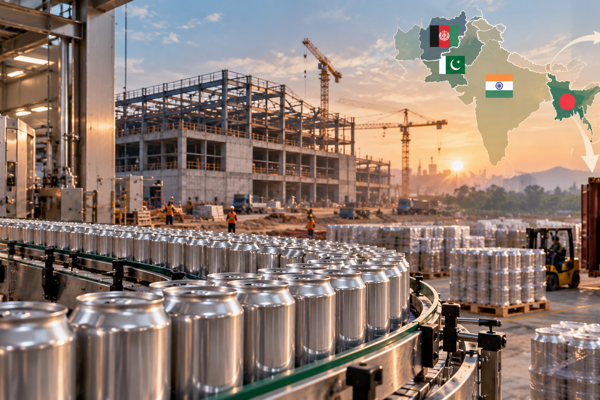
The effects of the ongoing Middle Eastern conflict are now being felt beyond global shipping lanes, reaching supermarket shelves in India through a higher-priced Diet Coke. Supply disruptions affecting aluminium cans have prompted Coca-Cola to change its packaging strategy, illustrating how geopolitical tensions can quickly ripple through consumer goods supply chains. According to a Reuters report, commercial shipping through the Strait of Hormuz, a vital route for aluminium cans and related raw materials, was disrupted as the conflict intensified. The tighter supply forced Coca-Cola to source larger aluminium cans from Southeast Asia, increasing procurement costs. To manage those costs, the company has reportedly replaced its widely sold 300 ml Diet Coke cans priced at INR 40 with 330 ml...

Ardagh Metal Packaging (AMP) reported stronger second-quarter earnings, supported by improved profitability in Europe despite a slight decline in global beverage can shipments, and raised its full-year adjusted EBITDA guidance. The company posted revenue of USD 1.71 billion for the quarter ended June 30, 2026, up 18 per cent from USD 1.46 billion a year earlier. On a constant currency basis, revenue increased 16 per cent, reflecting higher input cost pass-through to customers and favourable volume and product mix. EBITDA exceeds guidance Adjusted EBITDA increased 14 per cent year on year to USD 240 million, exceeding the company's guidance range of USD 210-220 million. On a constant currency basis, adjusted EBITDA rose 13 per cent, primarily due to improved input cost recovery. Following...