










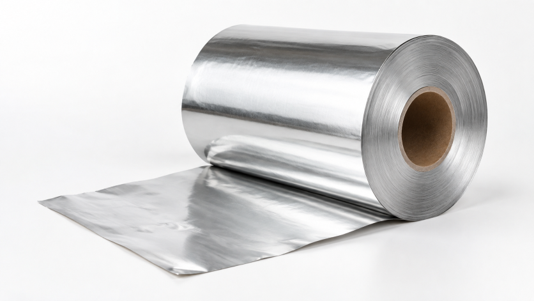
Buying aluminium foil based solely on alloy and thickness is a common sourcing mistake. Foil used to seal food, for insulation, or in the manufacture of HVAC components may all be described as industrial aluminium foil, but each application places different demands on performance, cleanliness, surface condition, and conversion. A reliable sourcing process therefore starts with the end use and works backwards to the material specification.
Do not treat every foil quotation as an offer for the same product. Before comparing prices, confirm that each aluminium foil supplier is quoting against the same technical, commercial and regulatory requirements.
Start with the application and conversion process
A request for quotation should explain what the foil must do and how it will be processed. State whether it will be laminated, lacquered, printed, embossed, slit, formed, bonded or exposed to heat and moisture. These details affect alloy choice, temper, gauge tolerance, surface treatment, pinhole acceptance and coil configuration.
The specification should cover width, core size, outside diameter, coil weight, winding direction, joint limits, edge condition, packing and quantity. If the material will run on automated equipment, dimensional consistency and winding quality can be as important as the nominal alloy. Trial coils are sensible when qualifying a new source, but they should be tested under production conditions rather than judged only through laboratory certificates.
Aluminium foil for packaging
Aluminium foil for packaging must be matched to the product, converting route and barrier performance required. Flexible food, pharmaceutical and household applications may need resistance to moisture, oxygen, light, grease or aroma transmission. Seal integrity, compatibility with adhesives and coatings, printability and forming behaviour may also matter.
Many packaging specifications use 1xxx aluminium foil or 8xxx aluminium foil, but the series name is not enough to approve the material. Buyers should define the exact alloy and temper, thickness and tolerance, surface finish, wettability or treatment, pinhole limits, cleanliness and mechanical properties. For food or pharmaceutical contact, request the relevant declarations, traceability records and compliance documents for the destination market. If the foil will be converted into containers, lids or blister structures, test its forming or sealing performance in the intended laminate or production line.
Aluminium foil for insulation
Aluminium foil for insulation usually works as a reflective facing, vapour barrier or laminate component. Here, the sourcing focus shifts from direct product contact to durability within the insulation system. Buyers should specify whether the foil will be bonded to kraft paper, woven fabric, polymer film, foam, mineral wool or another substrate.
For aluminium foil for insulation, assess reflectivity, surface condition, bond compatibility, corrosion resistance and resistance to moisture or alkaline environments. Tensile strength and elongation should suit the lamination and installation process. A very thin foil may reduce material cost but can increase the risk of tearing, pinholes or damage during handling. Fire-performance requirements generally apply to the completed facing or insulation assembly, so a foil certificate alone does not establish compliance.
Foil requirements for HVAC applications
HVAC uses can include duct insulation facings, flexible duct laminates, heat-exchanger fin stock and protective barriers. These are not one specification. Foil used as a duct-facing layer needs reliable lamination, moisture resistance and installation durability. Fin stock requires much tighter control of thickness, mechanical properties, formability, surface quality and coating performance because it must run consistently through high-speed fin-forming equipment.
For coated fin stock, buyers may need to define hydrophilic or corrosion-resistant coating requirements, coating weight, adhesion and resistance to the operating environment. Alloy and temper selection should reflect the forming process and required fin strength. Packaging-grade foil should not be substituted simply because its dimensions appear similar.
How to evaluate an aluminium foil supplier
Ask suppliers to respond to a controlled specification sheet rather than a loose product description. Compare mill source, certificates of analysis, tolerance capability, quality control, traceability, minimum order quantity, lead time, packing and claim procedures. Clarify whether the offer is mill-direct, stock material or material from multiple mills, because shipment consistency may differ.
Request representative samples and agree on acceptance criteria before ordering. The lowest price per tonne can become the highest converted cost if poor flatness, inconsistent gauge, weak adhesion or damaged coil edges increase scrap and downtime. Total sourcing cost should include conversion yield, freight, duties, inventory exposure and the supplier’s ability to maintain repeatable quality.
Buyers seeking aluminium foil across packaging, insulation and HVAC requirements can review the product sourcing profile of LODEC Group through the AL Biz marketplace. The company page offers a direct route to assess its aluminium product portfolio and open a specification-based discussion: LODEC Group company page.
Good foil sourcing is therefore not about finding a generic material at the lowest quoted rate. It is about translating the end use into measurable requirements, validating the material in the actual process and selecting a supplier capable of delivering the same result repeatedly.


 Voyagerman Technology


