











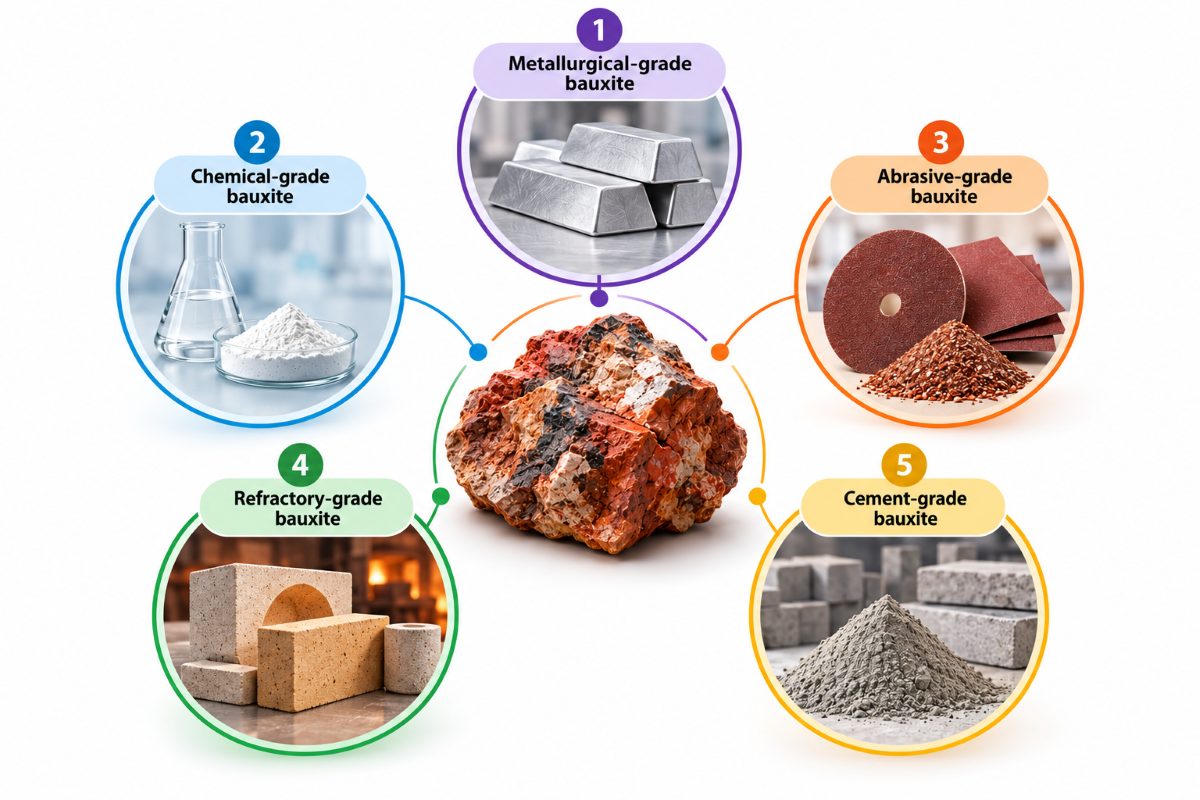

Bauxite is not a one-size-fits-all raw material. Differences in grade, mineralogy, chemical composition and impurities determine how it is processed, where it can be used and what processing requirements it creates. For businesses across the aluminium value chain, understanding these differences can influence sourcing, refining and application decisions.
Bauxite is the primary source of aluminium and mainly comprises hydrated aluminium oxides, alongside impurities such as silica, iron oxides and titanium dioxide. Its three principal aluminium-bearing minerals are gibbsite, boehmite and diaspore.
Based on composition and end use, bauxite can broadly be divided into metallurgical and non-metallurgical grades, including chemical, abrasive, refractory and cement grades.
1. Metallurgical-grade bauxite
Metallurgical-grade bauxite is primarily used to produce alumina, which is subsequently processed into aluminium. It typically contains around 40-55% Al₂O₃, with varying levels of silica, iron oxide, titanium dioxide and other constituents.
Why bauxite mineralogy matters
The mineralogy of bauxite directly affects refining temperature, energy requirements and processing conditions.
- Gibbsitic bauxite can generally be refined at around 143°C-150°C, making it the least energy-intensive of the three types. It is predominantly found in Australia, Brazil, Guinea and Jamaica.
- Boehmitic bauxite requires higher refining temperatures of around 240°C-260°C, increasing energy requirements. It is found in regions including China and Europe.
- Diasporic bauxite requires temperatures above 260°C, making it more energy-intensive to process. It is associated with deposits in China, Greece and Vietnam.
For refiners, therefore, alumina content alone does not determine feedstock suitability. Mineralogy also needs to be considered.
Metallurgical bauxite can further be classified into Grade A, Grade B and Grade C, with specifications covering Al₂O₃, SiO₂, Fe₂O₃, TiO₂, CaO, moisture, particle size and monohydrate content. All three grades shown have a minimum 42% Al₂O₃, while permitted impurity levels vary.
2. Chemical-grade bauxite
Chemical-grade bauxite is used for producing aluminium-based chemicals. Its specifications include a minimum of 48% Al₂O₃, maximum 3% SiO₂ and Fe₂O₃ levels of 20-23%.
For chemical manufacturers, the chemical composition of the feedstock is therefore a key consideration when assessing material suitability.
3. Abrasive-grade bauxite
Abrasive-grade bauxite is used in products such as grinding wheels, sandpapers and cutting tools, where hardness and wear resistance are important.
The SNA-83, SNA-85 and SNA-87 grades shown differ in parameters including Al₂O₃, SiO₂, Fe₂O₃ and TiO₂. Their bulk density ranges from approximately 2.70-2.80 g/cm³, demonstrating how grade specifications can vary according to application requirements.
4. Refractory-grade bauxite
Refractory-grade bauxite is used in high-alumina refractory bricks, castables and monolithics for high-temperature applications.
The grades shown range from SN R90 to SN R70, with minimum Al₂O₃ levels of 90% to 70%. Variations in SiO₂, Fe₂O₃, TiO₂, CaO and MgO further distinguish these grades.
For refractory manufacturers, selecting the appropriate grade is critical to achieving the required high-temperature performance.
5. Cement-grade bauxite
Cement-grade bauxite is used in high-alumina cement. The Grade A, B and C specifications shown have minimum Al₂O₃ levels of 42%, 40% and 38%, respectively, alongside differing limits for SiO₂, Fe₂O₃ and TiO₂.
Why bauxite grade matters to businesses
| Grade | Main application | Key consideration |
| Metallurgical | Alumina and aluminium | Mineralogy and impurities |
| Chemical | Aluminium-based chemicals | Chemical composition |
| Abrasive | Grinding and cutting products | Alumina and physical properties |
| Refractory | High-temperature materials | High Al₂O₃ and impurities |
| Cement | High-alumina cement | Al₂O₃ and impurity levels |
For miners, refiners, traders, procurement teams and downstream manufacturers, understanding bauxite grades provides a clearer basis for evaluating material suitability, processing requirements and potential end-use markets.
The market perspective
Bauxite grade is also part of the wider global bauxite and alumina market, where supply, refining capacity, trade flows and regional developments influence commercial decisions. AL Circle’s report, “Global Bauxite & Alumina Market Forecast to 2036“, provides a broader view of these market dynamics alongside bauxite and alumina developments.
Conclusion
Bauxite grade, mineralogy and chemical composition collectively determine how the ore is processed and where it can create value. For businesses across the aluminium value chain, understanding these differences can support more informed decisions around sourcing, refining and industrial applications.