











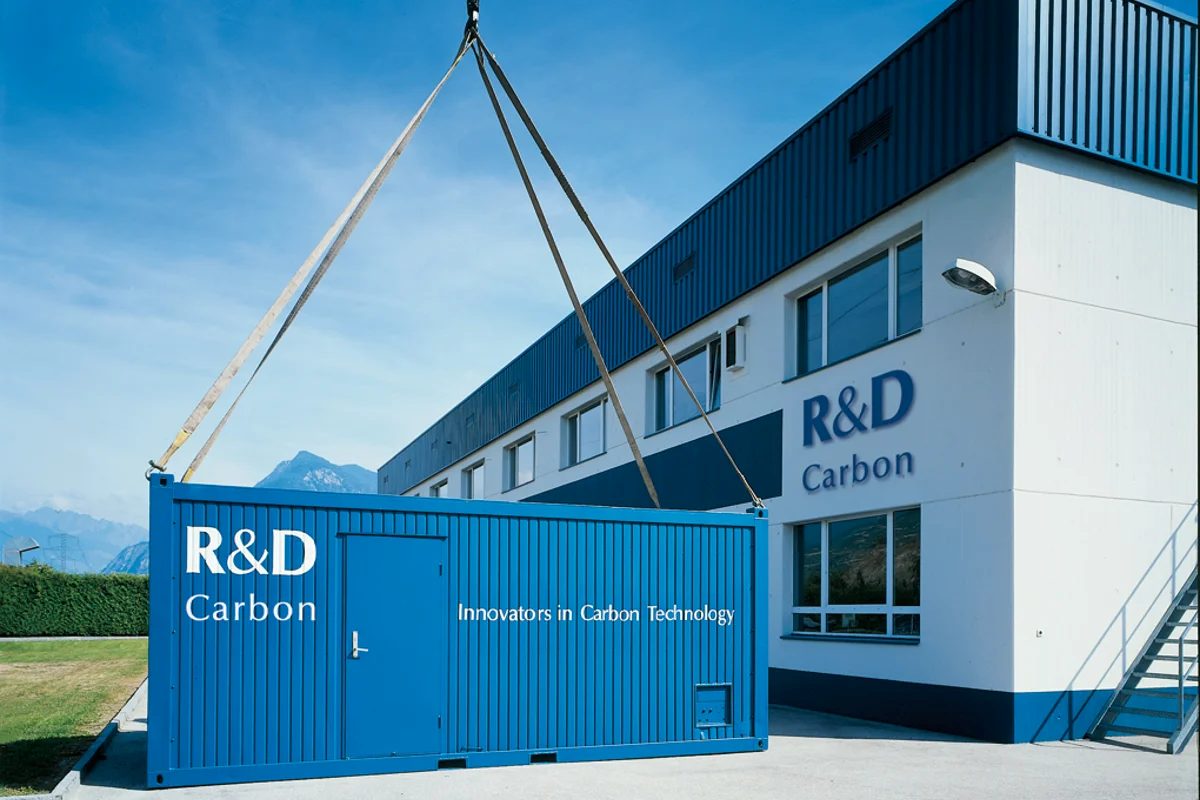

Anode quality plays a critical role in aluminium smelting, influencing carbon consumption, electricity use, process stability and metal purity. Switzerland-based company R&D Carbon addresses this challenge through specialised testing equipment, laboratory services and technical support. Its approach gives producers measurable insight into raw materials and electrode performance, supporting better-informed production decisions and lower-emission operations.
The Challenge
In the Hall–Héroult process, carbon anodes conduct electricity and are consumed as alumina is reduced to aluminium. Their performance depends on raw-material properties, including those of calcined petroleum coke and pitch, as well as manufacturing conditions.
Poorly controlled anode properties can increase carbon consumption through reactions with air and carbon dioxide. These reactions generate carbon dust and can affect bath conditions and current efficiency. High electrical resistivity can also increase voltage drop and energy losses. In addition, impurities in coke and pitch may transfer into the aluminium, affecting metal quality.
For smelters, the challenge is to assess several interdependent properties rather than rely on a single quality specification.
The Solution
R&D Carbon provides more than 50 types of instruments for testing coke, pitch, anodes and cathodes. Its portfolio measures density, electrical resistivity, air and carbon dioxide reactivity, thermal conductivity and mechanical properties, with equipment supporting relevant ISO and ASTM test methods.
These capabilities help producers evaluate raw-material sources, optimise process parameters and conduct routine laboratory quality control. Certified reference materials, consumables and spare parts support instrument calibration and testing reliability.
The company also connects laboratory analysis with industrial application. Its research facilities and pilot plant support material evaluation and process development, while technical audits and benchmarking assess performance from raw materials through to pot operation. Maintenance, repairs, retrofits and training help customers sustain their testing capabilities.
Results and business impact
R&D Carbon’s testing-led approach gives producers evidence to guide material selection and process adjustments. Better control of anode reactivity and resistivity can help reduce avoidable carbon and electricity losses, while raw-material characterisation supports control of impurities and aluminium quality.
Key lessons for the professionals
Anode testing is not simply a laboratory exercise. It connects material quality with energy efficiency, emissions and product consistency. R&D Carbon demonstrates how measurement, technical expertise and ongoing support can help smelters identify improvement opportunities and make informed production decisions.
Source: Better anodes, lower emissions: R&D Carbon puts testing at the centre of aluminium smelting