您想继续阅读英文文章还
是切换到中文?
是切换到中文?

THINK ALUMINIUM THINK AL CIRCLE

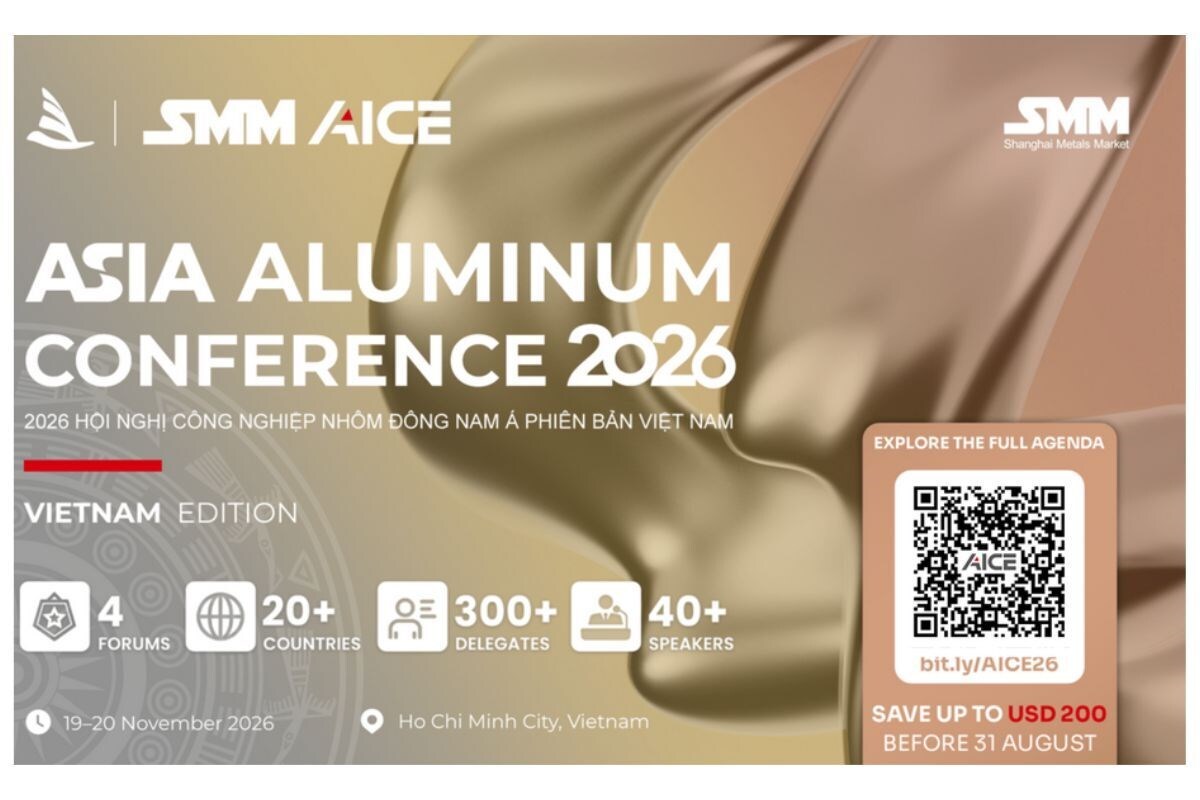
This image has been obtained from SMM's official website
On July 23, 2026, a delegation from Shanghai Metals Market (SMM) conducted an on-site visit to TRAN HONG QUAN METALLURGY Co., Ltd. (THQ) in Vietnam. The delegation included:
{alcircleadd}The two sides held in-depth discussions on the development of Vietnam’s primary aluminium projects, domestic aluminium supply capacity, supporting industrial infrastructure, and future market strategies.
The visit also provided a clearer picture of the changes taking place across Vietnam’s aluminium industry. A new industrial landscape is gradually emerging—one built on resource advantages, driven by breakthroughs in primary aluminium production, and extending further into downstream processing and manufacturing.
A landmark development: Vietnam begins producing its own primary aluminium
On July 27, Vietnam’s first batch of aluminium ingots with a purity of 99.71 per cent was successfully produced at THQ’s Dak Nong aluminium smelter project. The facility is a pilot plant using electrolytic smelting technology to produce primary aluminium.
This means that Vietnam now possesses not only abundant bauxite resources and alumina production capacity, but also the capability to produce primary aluminium. For the first time, the country has established a complete “bauxite–alumina–primary aluminium” value chain.
The significance of this development goes beyond the addition of a new aluminium smelter. More importantly, it indicates that Vietnam is beginning to move away from a resource-export-oriented model and toward higher-value materials production and industrial processing.
Three major changes are reshaping Vietnam’s aluminium value chain
Vietnam holds significant bauxite reserves, with particularly strong resource advantages in the Central Highlands.
In the past, Vietnam largely relied on alumina exports while continuing to import substantial volumes of primary aluminium. Going forward, a greater proportion of domestically produced alumina is expected to enter the electrolytic smelting process, allowing more industrial added value to remain within Vietnam.
This transition is also consistent with Vietnam’s broader efforts to promote the deep processing of mineral resources and upgrade its manufacturing sector.
The supporting infrastructure developing around Vietnam’s alumina and aluminium projects includes:
Together, these factors support more than the operation of a single factory—they create the foundation for an entire industrial cluster. Vietnam is gradually establishing an interconnected industrial structure spanning resource development, smelting, processing, and manufacturing.
For companies evaluating Vietnam today, its importance lies not only in production costs but increasingly in its strategic position within regional supply chains.
Vietnam connects with China’s supply chain, the broader ASEAN market, and export routes to Europe and the United States. It is also attracting the relocation and expansion of industries including new energy, electronics, and automotive manufacturing.
This is why a growing number of international companies are reassessing the strategic value of Vietnam’s aluminium industry. It also represents an important window of opportunity for Chinese aluminium companies seeking to expand into the Vietnamese market.
Tran Hong Quan Metallurgy Co., Ltd.
Founded in 2000, Tran Hong Quan is a major privately owned diversified industrial group in Vietnam, with businesses spanning energy, trading, hospitality, metallurgy, and other sectors. Its subsidiary, Tran Hong Quan Metallurgy Co., Ltd. (THQ Metallurgy), is the investor and developer of the Dak Nong aluminium smelter project.
The Dak Nong project is regarded as Vietnam’s first primary aluminium production project and represents a critical link between the country’s alumina resources and its downstream aluminium processing and manufacturing industries.
Once operational, the project will produce aluminium ingots, aluminium slab ingots, billets, and other products. It is expected to contribute approximately USD 700 million annually to the local economy, significantly strengthen Vietnam’s domestic primary aluminium supply capacity, and reduce the country’s dependence on imported aluminium.
In 2026, the project completed its first power delivery and entered the integrated commissioning stage, marking a critical step toward the commercial production of primary aluminium in Vietnam.
Join the conversation at SMM AICE 2026
Connect with aluminium producers, processors, traders, manufacturers, certification organisations, industry associations and decision-makers from across Southeast Asia and the global market.
Explore aluminium pricing, primary aluminium supply, processing technologies, low-carbon development, CBAM compliance and new opportunities for regional cooperation.
Note: This article has been issued by SMM and has been published by AL Circle with its original information without any modifications or edits to the core subject/data.
Responses


A proud
ASI member
AL Circle Private Limited | CIN: U72200WB2017PTC221175
Registered Office: Ecospace Business Park, Block 3A, Unit 401A, New Town, Rajarhat, Kolkata, WB 700160
Corporate Office: Ecospace Business Park, Block 3A, Unit 401A, New Town, Rajarhat, Kolkata, WB 700160
© 2026 AL Circle. All rights reserved. AL Circle is not responsible for content from external sources.