您想继续阅读英文文章还
是切换到中文?
是切换到中文?

THINK ALUMINIUM THINK AL CIRCLE

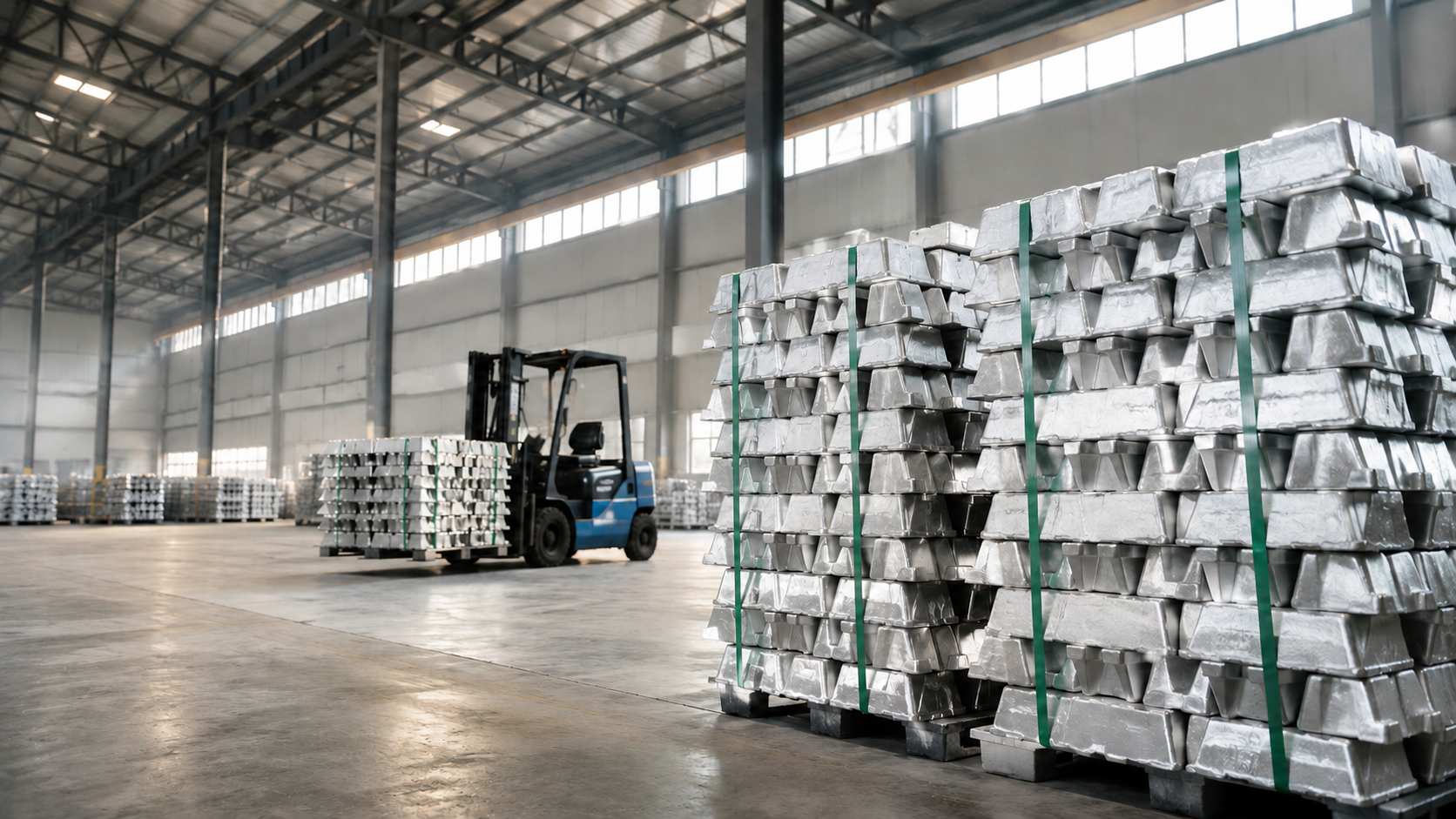
The image used in this article is generated with an AI tool and does not depict any real-time moment
Futures: The most-traded SHFE aluminium 2610 contract closed at RMB 23,960 per tonne, up RMB 125 from yesterday’s settlement price, a gain of 0.52 per cent. It opened at RMB 23,850 per tonne and fluctuated within the range of RMB 23,840–23,965 per tonne. Prices traded above the MA5 (23,812.00), MA10 (23,803.00), MA30 (23,694.00), and MA60 (23,582.00) moving averages. The medium and long-term moving averages remained in a bearish alignment and continued to press lower overall.
{alcircleadd}The drift-higher structure persisted, with the upper high-price range forming key resistance. For the MACD indicator, DIF (68.1622) was below DEA (89.6494), and the MACD green histogram stood at -42.9745, indicating that bearish momentum had eased somewhat. The suggested core trading range for SHFE aluminium was RMB 23,400–24,100 per tonne.
The LME aluminium 3M contract closed at USD 3,233 per tonne, up 0.28 per cent. It opened at USD 3,225 per tonne and fluctuated within the range of USD 3,225.00–USD 3,234 per tonne. Prices traded above the MA5 (3,228.60), MA10 (3,228.60), and MA30 (3,224.62), but below the MA60 (3,243.45). The medium and long-term moving averages were in a bearish alignment and gradually pressed lower.
An overall consolidating repair structure emerged, with the 60-day daily average above forming clear resistance. For the MACD indicator, DIF (-0.6764) was below DEA (1.9718), and the MACD green histogram was -5.2964, indicating that bullish momentum had weakened somewhat, with consolidation and adjustment at lows. The suggested core trading range for LME aluminium was USD 3,150–USD 3,280 per tonne.
Macro front: People familiar with the matter revealed that the Trump administration had repeatedly told mediators that it had no intention of returning to the terms of the memorandum of understanding reached between the US and Iran in June, adding major obstacles to intensive mediation efforts to restart the diplomatic process this week.
Rezai, Secretary of Iran’s Supreme National Security Council, said Iran had prepared a list of conditions to present to the US. At present, vessels had been allowed to temporarily pass through specific channels in the middle of the Strait of Hormuz, but future passage through the strait would be subject to a memorandum of understanding signed with the US.
Rezai, Secretary of Iran’s Supreme National Security Council, said during a meeting with Qatar’s Prime Minister and Foreign Minister Mohammed that Iran did not trust the US because it had repeatedly reneged on diplomacy and negotiations.
The US must first take concrete measures to meet Iran’s conditions, and only then would Iran open the Strait of Hormuz. Cleveland Fed President Hammack reiterated that policymakers should take action now to curb inflation. She added that current interest rates were not enough to cause price pressures to pull back on their own.
At last month’s policy meeting, three officials cast dissenting votes, including Hammack, who advocated a 25-basis-point rate hike. Policymakers ultimately kept the benchmark interest rate unchanged for the fifth consecutive time.
Fundamentals: Markets outside China: Overseas aluminium production resumptions and new capacity continued to ramp up as planned, and damaged capacity in the Middle East was gradually recovering. The market’s expectations that the global aluminium market would shift from tightness to looseness in the longer term persisted, continuously capping upside room for aluminium prices.
However, current LME visible inventory remained at a historically low level of around 250,000 tonnes, and low inventory provided bottom support for LME aluminium. As oil prices pulled back, overseas smelting energy costs edged down on the margin, weakening cost support for aluminium prices. Spot premiums improved only limitedly, and bulls lacked sufficient momentum to keep pushing higher.
China market: On the inventory side, China’s aluminium social inventory continued to destock, falling to the 852,000 tonnes threshold, showing counter-seasonal destocking and providing strong support for aluminium prices. On the demand side, downstream processing enterprises’ operating rate stayed at a neutral level.
With the traditional “September peak season” approaching, the market had expectations for subsequent demand improvement, but downstream front-loaded restocking was limited and participants were still watching for actual peak-season demand to materialize; spot transactions were mainly driven by rigid demand.
Primary aluminium market: Today, the SHFE aluminium 2609 contract’s futures centre moved higher than yesterday, while today’s buying and selling sentiment improved somewhat from yesterday. Spot premiums for SHFE aluminium transactions were flat from yesterday, with today’s main deals at a discount of RMB 20 per tonne to on par with the SHFE aluminium 09 contract. Today, aluminium futures rose for consecutive sessions.
Against the backdrop of elevated aluminium prices, downstream processing enterprises in the central China market showed low buying sentiment, mainly delaying purchases to reduce in-factory inventory. With both premiums and absolute prices staying high, suppliers actively sold, with no clear willingness to hold prices firm, and market prices saw a collapse-style drop. Ultimately, actual transaction prices in the central China market were around a discount of RMB 80-120 per tonne against the SHFE aluminium 09 contract.
Today, aluminium prices edged up, while the spot market was under pressure and weakened. Although inventory continued to decline, the inter-regional arbitrage window opened and northern cargoes were already en route; expectations for arrivals turned marginally more bullish. In addition, under the month-end cash-out demand amid a dual-high pattern of absolute prices and the spot-futures price spread, suppliers increased the pace of price cuts to sell, with offers gradually moving lower and circulation clearly loosening.
Facing high aluminium prices, downstream buyers only maintained the minimum level of rigid demand, with limited purchase willingness; traders were also clearly wary of high prices and had no intention to actively take positions, only buying low-discount cargoes as needed, and overall transactions were poor. Spot transaction prices were concentrated at a premium of RMB 200-240 per tonne against the SHFE aluminium 2609 contract.
Secondary aluminium raw material: Today, SMM A00 spot aluminium prices closed at RMB 23,920 per tonne, up RMB 50 per tonne M-o-M from the previous trading day, while prices in China’s aluminium scrap market were overall steady.
In terms of the price difference between A00 aluminium and aluminium scrap, as of August 27, the price difference between A00 aluminium and mixed aluminium extrusion scrap free of paint in Foshan was about RMB 2,394 per tonne, and the price difference between A00 aluminium and shredded aluminium tense scrap was about RMB 1,173 per tonne, steady W-o-W.
Against the backdrop of a continued rebound in primary aluminium prices, aluminium scrap saw relatively limited fluctuations, and the price transmission mechanism was impeded, mainly constrained by two factors: first, with the traditional peak season about to arrive, downstream demand for secondary aluminium alloy showed no obvious improvement; second, inventories of wrought aluminium alloy scrap raw materials such as doors and windows in Henan and other regions remained high, weakening the upside elasticity of aluminium scrap prices.
In addition, on the supply side, constraints from the “reverse invoicing” policy continued, and the scarcity of compliant, invoiced aluminium scrap provided a floor support for aluminium scrap prices. On the import side, this week the imported shredded aluminium zorba price at Ningbo port was lowered from RMB 21,670 per tonne to RMB 21,370 per tonne (tax included), and at Tianjin port from RMB 21,720 per tonne to RMB 21,420 per tonne (tax included). Recently, the import window improved compared with earlier, traders’ inquiries and purchasing enthusiasm increased, and import supply rose somewhat.
In the short term, as the market is currently at the tail end of the traditional off-season, downstream scrap utilisation enterprises have yet to see a clear recovery in orders, the pre-positioning effect ahead of the peak season is not significant, and scrap utilization enterprises continued to purchase as needed and maintain a low-inventory strategy, with limited acceptance of price increases; some enterprises chose to stay temporarily stable and wait on the sidelines after following the earlier price rise.
On the import side, previously traded cargoes arriving at ports in succession provided some supply replenishment, but the deeper effects of the UAE ban and the EU’s tariff hikes will still limit the ramp-up of high-quality scrap imports.
Secondary aluminium alloy: Spot: Today, overall ADC12 market quotes remained stable, and the SMM ADC12 price held steady at RMB 23,950 per tonne from the previous trading day. Both aluminium prices and futures fluctuated only slightly, with no obvious changes in cost support or demand-side performance; enterprises showed weak willingness to adjust prices, and most producers chose to stay temporarily stable and wait on the sidelines.
End-use demand is still relatively weak, with downstream purchasing mainly driven by rigid demand, and overall market transactions saw limited improvement; meanwhile, raw material costs such as aluminium scrap stayed at a relatively high level, providing some support to ADC12 prices. With no clear changes on either the supply or demand side, ADC12 prices are expected to continue to move sideways in the short term, and market attention remains focused on further fluctuations in aluminium prices and whether end-use demand can see marginal improvement going forward. On the import side, ex-China ADC12 offers temporarily held steady at USD 3,050-3,190 per tonne, and the immediate import loss remained slightly around RMB 900 per tonne.
Overall outlook: Overall, macro front pressure on aluminium prices has strengthened recently. The Jackson Hole annual meeting and Walsh’s debut brought policy uncertainty; the strengthening US dollar index, together with rising expectations of rate hikes, as well as the fading risk premium from US-Iran geopolitical risks and the pullback in oil prices, jointly formed resistance for aluminium prices. However, continued destocking of China inventory and the approaching expectations for the “September peak season” provided strong support on the downside. With bullish and bearish factors intertwined, aluminium prices are expected to continue to consolidate at highs.
Note: This article has been issued by SMM and has been published by AL Circle with its original information without any modifications or edits to the core subject/data.
Responses


A proud
ASI member
AL Circle Private Limited | CIN: U72200WB2017PTC221175
Registered Office: Ecospace Business Park, Block 3A, Unit 401A, New Town, Rajarhat, Kolkata, WB 700160
Corporate Office: Ecospace Business Park, Block 3A, Unit 401A, New Town, Rajarhat, Kolkata, WB 700160
© 2026 AL Circle. All rights reserved. AL Circle is not responsible for content from external sources.