Indonesia revises bauxite pricing, reduces benchmark by 15 per cent with the new formula
Indonesia will implement a revised bauxite pricing mechanism under Kepmen ESDM No. 144.K/MB.01/MMEM.B/2026, starting April 15, lowering benchmark prices while introducing structural changes that better reflect ore quality and moisture. The update replaces the previous framework under Kepmen ESDM No. 268.K/MB.01/MMEM.B/2025, marking a shift from dry-tonne pricing to a wet-tonne basis and incorporating both reactive silica penalties and explicit moisture adjustments.
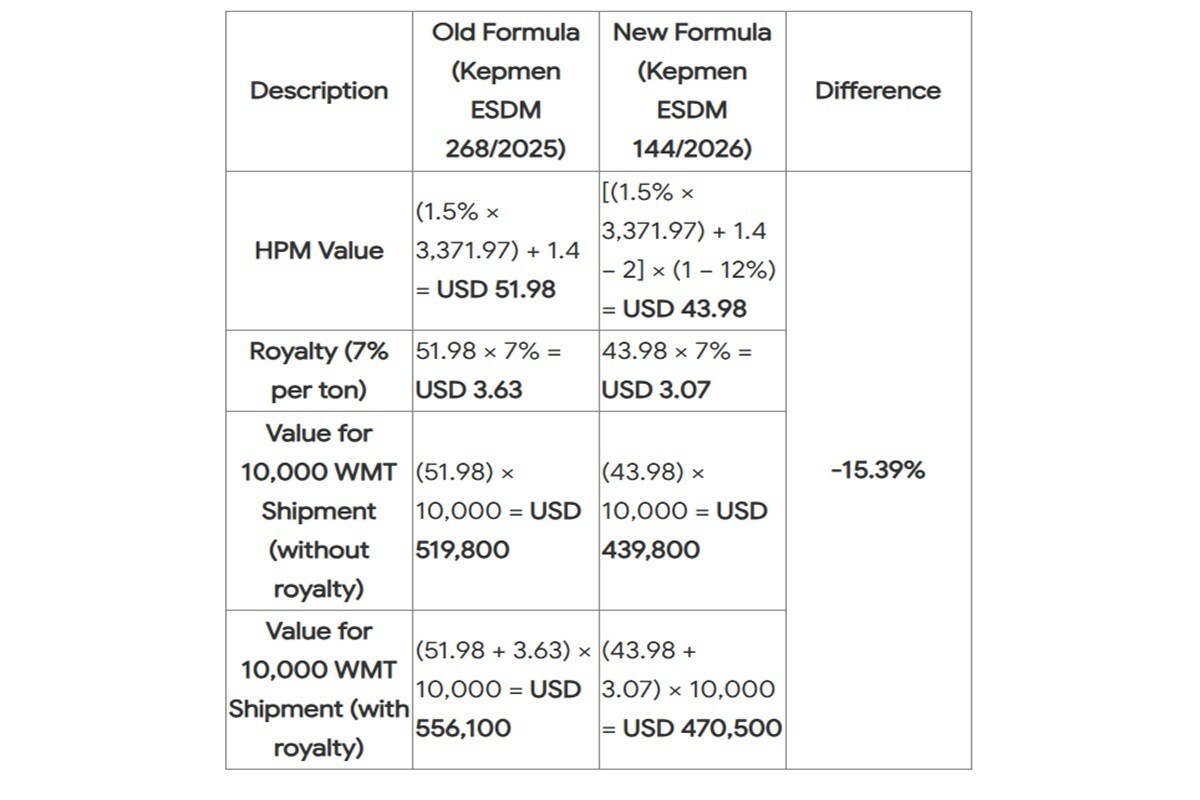
Under the new formula, which applies a (1 − MC) multiplier and a capped deduction for reactive silica, benchmark prices decline by around 15per cent on a comparable basis. For a typical Indonesian bauxite grade of 48per cent alumina, 3per cent reactive silica, and 12per cent moisture, the calculated HPM falls to about USD 44 per tonne, compared with roughly USD 52 per tonne under the previous system. Despite the reduction, the revised benchmark remains above prevailing market levels. Spot prices for Indonesian bauxite are currently assessed at around USD 30–35 per tonne, implying a gap of approximately USD 9–14 per tonne between regulatory benchmarks and actual transaction values adhering to official benchmarks.
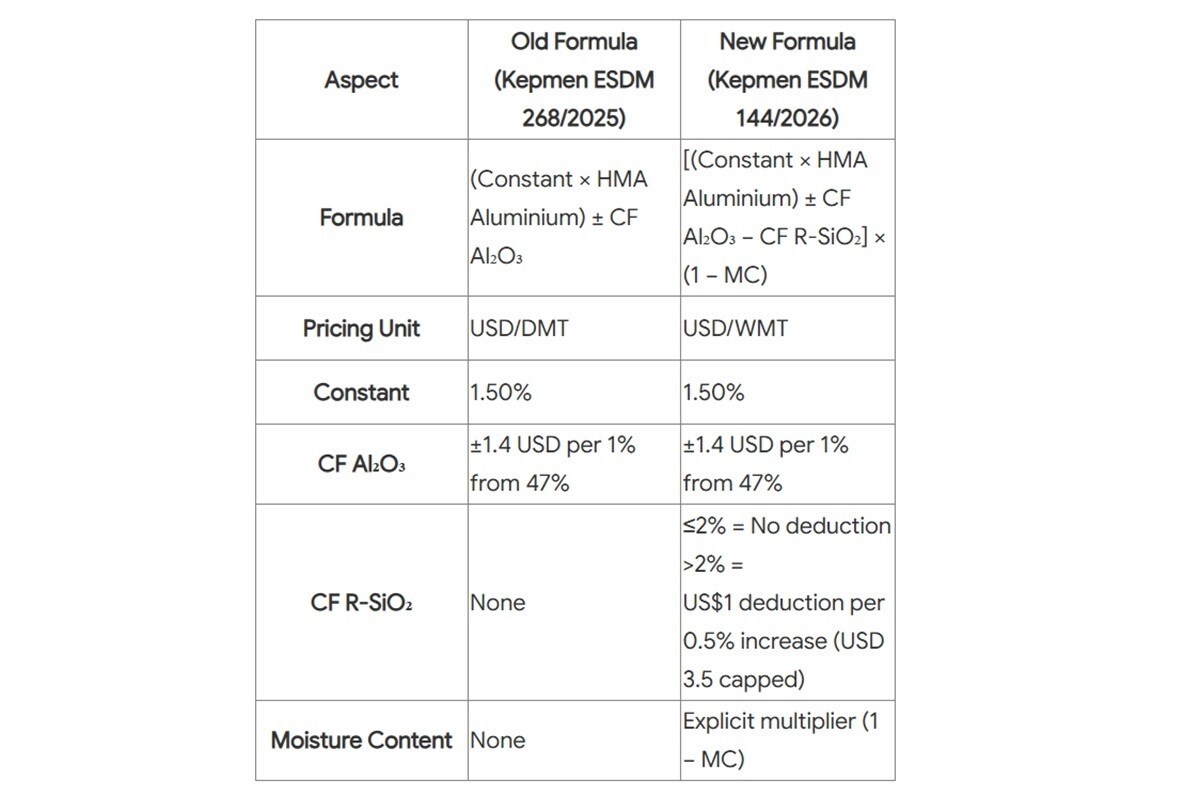
The divergence highlights the continued influence of market fundamentals over formula-based pricing. While the revised mechanism improves transparency, the benchmark remains anchored to aluminium prices through a fixed 1.5per cent coefficient, which keeps base values elevated even after adjustments.
The introduction of an explicit moisture adjustment represents a significant structural change, effectively reducing payable values by 10–15per cent for typical ores and bringing the benchmark closer to traded levels. However, the impact of the newly introduced reactive silica penalty is relatively limited, with deductions capped at USD 3.5 per tonne, reducing its influence on overall pricing. The revised framework is also expected to lower government royalty payments, as non-tax state revenue (PNBP) is calculated as a percentage of HPM. While per-tonne royalty values will decline in line with the benchmark, the gap between HPM and actual transaction prices suggests that fiscal outcomes may still diverge from market realities.
Case Study: (Typical Indonesian Bauxite Grade)
Assumptions:
- Ore Quality: Al₂O₃ = 48 per cent,
- R-SiO₂ = 3 cent,
- Moisture Content (MC) = 12per cent
- HMA Aluminium Price: USUSD 3,371.97 per tonne
Key Takeaways
- Under the new formula, the HPM decreases due to the capped reactive silica (R-SiO₂) penalty and the explicit moisture adjustment.
- The reduction is more pronounced when measured on a consistent wet-tonne basis.
- Royalty (PNBP) paid to the government will also be lower per tonne under the new rules, assuming the same royalty rate.
- Miners with R-SiO₂ ≤ 2per cent will experience a significantly smaller impact.
This update requires miners to provide complete quality data (Al₂O₃, R-SiO₂, and moisture content) in the Certificate of Analysis (COA) and input it into the e-PNBP and MVP systems for accurate royalty calculation and compliance.
Despite the downward revision, industry participants say miners continue to face pressure from operating and fiscal costs. Key components include PNBP royalties and land and building tax (PBB), which affect margins, while transaction prices are often reported below HPM levels in practice. At the same time, higher fuel costs have added pressure to mining and logistics expenses, particularly for remote operations where haulage represents a significant cost component. Overall, the combination of fiscal obligations, input cost inflation, and lower realised pricing continues to weigh on profitability across Indonesia’s bauxite supply chain.
Industry participants expect the revised pricing framework to improve transparency in domestic bauxite valuation, particularly through the inclusion of moisture and reactive silica adjustments. However, they note that actual transaction pricing is likely to continue reflecting negotiated terms between miners and buyers, as well as prevailing alumina market conditions.
Note: This article has been issued by SMM and has been published by AL Circle with its original information without any modifications or edits to the core subject/data.

Ghana’s Nyanahin bauxite lease issue brings policy consistency in focus
Next articleBauxite supply shifts by 2036 as Guinea rises, China depends and new projects reshape global trade
Grow with
AL Circle