您想继续阅读英文文章还
是切换到中文?
是切换到中文?

THINK ALUMINIUM THINK AL CIRCLE

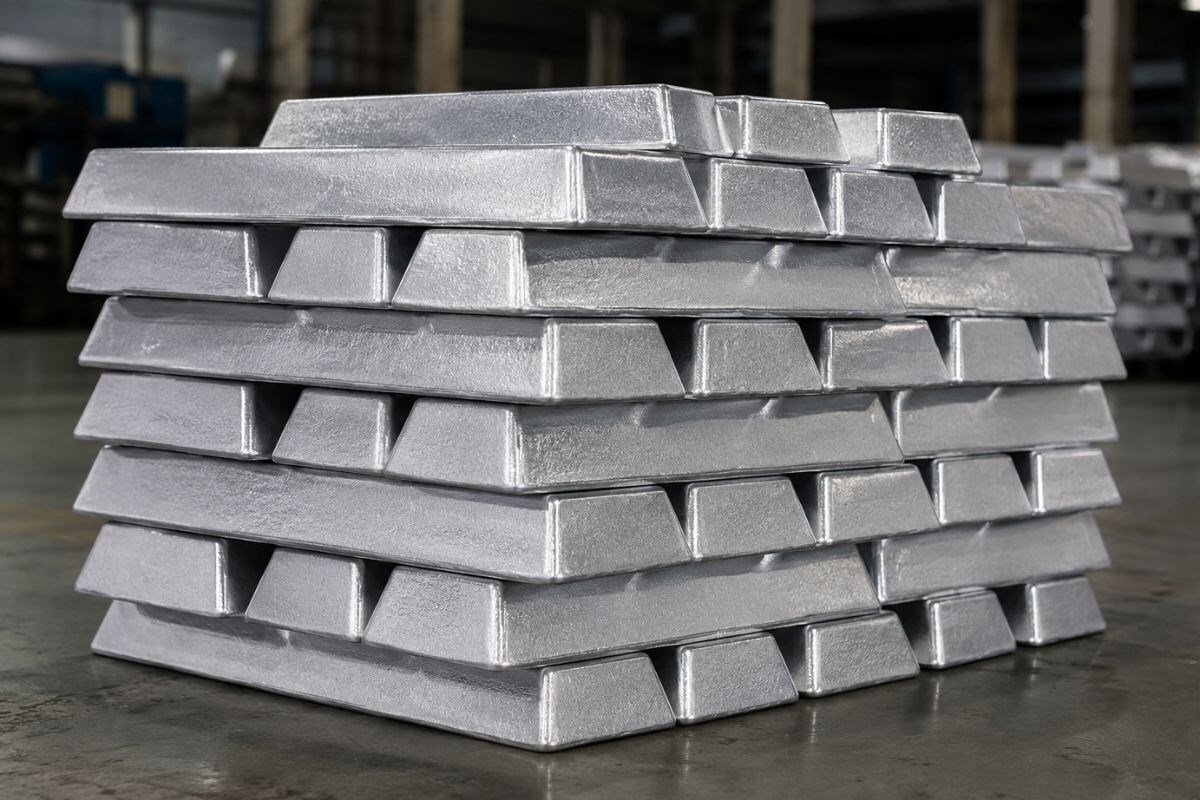
Stock image for referential purposes only
Futures: The most-traded SHFE aluminium contract opened at RMB 23,130 per tonne in the night session on July 9, with a high of RMB 23,220 per tonne, a low of RMB 22,985 per tonne, and closed at RMB 23,105 per tonne, up 0.20 per cent from the previous close. During this period, prices continued their rebound from lows, holding above MA5 (23,058.49), MA10 (22,980.96) and MA20 (22,987.34), but still under pressure below the medium and long-term MAs MA40 (23,248.75) and MA60 (23,494.26).
{alcircleadd}The bearish alignment of medium and long-term MAs remained unchanged, while support at the previous low of 22,250 held firm. Trading volume during this period was 75,000 lots, and open interest was 231,000 lots, up 3,146 lots from the previous session. The futures shifted to bullish position-building, with a rising willingness of buying funds to enter the market. From a technical perspective, on the 4-hour chart, the MACD DIFF (-108.88) stayed above DEA (-206.49), maintaining a golden cross pattern. The red histogram stick value was 195.23, and bullish momentum kept expanding.
On July 9, LME aluminium opened at USD 3,144.5 per tonne, with a high of USD 3,213.5 per tonne, a low of USD 3,123.5 per tonne, and closed at USD 3,210.5 per tonne, up 2.29 per cent from the previous close. Today's price launched a strong rebound from the previous low of 3,040, closing as a bullish candlestick, and broke above the short-term MAs MA5 (3,160.18) and MA10 (3,157.92). However, it remained below the medium and long-term MAs MA20 (3,230.44), MA40 (3,336.12) and MA60 (3,369.37).
The bearish downward alignment of medium and long-term MAs has yet to reverse. Support at the previous low remained solid, and the downtrend has paused for now. The day's trading volume was 24,878 lots, higher than the previous session, while open interest was 601,000 lots, down 1,200 lots from the previous session, indicating a pattern of bears reducing positions and exiting.
From a technical perspective, on the daily chart, the MACD DIFF (-102.06) crossed above DEA (-109.89), forming a golden cross. The histogram flipped from green to red, bearish momentum subsided, and bullish momentum officially commenced, establishing a short-term rebound trend.
Macro front: The ECB's June meeting minutes showed that the bank can no longer ignore the energy shock, as rising energy prices are expected to push medium-term inflation above its 2 per cent target. Last month, the ECB Governing Council unanimously decided to raise the key interest rate to 2.25 per cent, making it the first major central bank to hike rates due to high energy prices caused by the Iran war.
Fed Chairman Walsh Kevin has formed five working groups to conduct a comprehensive review of the Fed's monetary policy operating framework, covering areas such as balance sheet management, policy tools, and the impact of artificial intelligence. The Fed stated that the working groups will operate independently, conduct fact-based research, and present rigorous analysis to the Federal Open Market Committee.
According to CME "FedWatch": The probability of the US Fed keeping interest rates unchanged in July was 74.9 per cent, while the probability of a cumulative 25bp rate hike stood at 25.1 per cent. For September, the probability of unchanged rates was 35.7 per cent, a cumulative 25bp hike stood at 51.1 per cent, and a cumulative 50bp hike was 13.1 per cent.
Fundamentals: In terms of aluminium price spreads, the SHFE/LME price ratio continued to repair. On Thursday, the SHFE/LME aluminium price ratio rebounded to 7.36, up significantly from 7.28 in the previous week. Boosted by aluminium billet processing fees, domestic enterprises showed stronger production willingness, the proportion of liquid aluminium climbed steadily, and market casting ingot volume contracted.
Meanwhile, downstream substitution demand was released, with alloy plants and extrusion plants switching to aluminium ingots to replace aluminium scrap and billets, driving persistent high rigid demand for aluminium ingots, and the subsequent inventory destocking pace is likely to continue. This week, the overall operating rate of industry-leading domestic aluminium processing enterprises remained in a downtrend, edging down 0.7 percentage points W-o-W to 61.9 per cent, as the off-season effect exerted notable constraints.
Primary aluminium market: During the morning session, the trading centre of the SHFE aluminium 2606 contract was lower than the same period of the previous trading day. Weighed by lower aluminium prices, selling sentiment in the market edged down W-o-W from the previous day, with some sellers holding prices firm and holding back from selling.
Overall stockpiling sentiment among downstream buyers stayed high, and their price acceptance improved W-o-W from the previous day. Market transactions were concluded at parity to a premium of RMB 20 per tonne against the SHFE aluminium 07 contract, with mainstream deals at a premium of RMB 10 per tonne. In east China, the selling sentiment index closed at 2.98, down 0.09 W-o-W; the buying sentiment index stood at 3.04, up 0.04 W-o-W. During the morning session, aluminium futures underwent a slight correction.
In central China, downstream processing enterprises were constrained by weak end-user orders and high finished product inventories, leaving buying sentiment subdued. However, as the discount widening trend continued, trading firms engaging in both spot and futures market maintained high buying sentiment, preferring to purchase at deep discounts, while suppliers demonstrated notable willingness to hold prices firm.
Consequently, the actual transaction price range in central China settled around a discount of RMB 120-140 per tonne against the SHFE aluminium 07 contract. The selling sentiment index in central China stood at 2.86, down 0.01 W-o-W; the buying sentiment index came in at 2.15, up 0.02 W-o-W.
Aluminium scrap: Yesterday, SMM A00 spot aluminium prices closed at RMB 22,950 per tonne, a slight correction of RMB 90 per tonne W-o-W from the previous trading day. The overall aluminium scrap market tracked the decline, with some regions adopting a wait-and-see stance and holding steady.
On the price difference between A00 aluminium and aluminium scrap, the spread between A00 aluminium and mixed aluminium extrusion scrap free of paint in Foshan stood at RMB 2,011 per tonne on July 9, while the spread between A00 aluminium and shredded aluminium tense scrap was RMB 697 per tonne, slightly stabilising from historically extreme lows of the previous week, though still at very low levels. As the stricter reverse-invoicing policy provides a floor, the logic that aluminium scrap is more likely to rise than fall remains intact. Supply-side constraints continue to intensify, and the impact of the reverse invoicing policy is deepening further.
News emerged from Shandong that reverse invoicing will be suspended from July, while production cuts and shutdowns among small and medium-sized scrap utilisation enterprises in Anhui, Jiangxi, Hubei and other regions have been spreading. The scarcity of compliant, invoiced aluminium scrap has risen further.
Moreover, on the import side, the earlier inversion in the price spread between Chinese and overseas markets caused a shortage of high-quality overseas cargoes. Due to a 1-3 month shipping lag, port arrivals from June to August remain low. Meanwhile, the UAE's implementation of an aluminium scrap export ban and the EU’s tariff hike policy has further intensified the contraction in overseas aluminium scrap supply. Next week, the aluminium scrap market is expected to continue its narrow-range consolidation pattern characterised by demand suppression and cost support, with the mainstream trading range for shredded aluminium tense scrap (priced based on aluminium content) centering on RMB 19,900-20,500 per tonne.
The pullback in spot primary aluminium prices means limited room for the price difference between A00 aluminium and aluminium scrap to narrow further. The cost advantage of aluminium scrap over primary aluminium is unlikely to disappear in the short term, and demand-side support for aluminium scrap prices persists. If aluminium prices continue to decline thereafter, the substitution effect of primary aluminium for aluminium scrap will accelerate and become more apparent.
Secondary aluminium alloy: Spot market: Yesterday, ADC12 market offers were generally stable, with slight declines in some areas, and wait-and-see sentiment in the market intensified further. Yesterday, aluminium prices and cast aluminium alloy pulled back slightly. Some enterprises did not rush to follow the decline, instead waiting for greater market clarity, and indicated that if the futures market continues to weaken, there is a possibility of catch-up declines later.
Meanwhile, since July, downstream orders have weakened somewhat, and transaction support has been insufficient, exerting some pressure on prices. In addition, recently imports of ADC12 supply have increased, easing earlier expectations of tight domestic supply, which also weakened the market's confidence in holding prices firm. However, against a backdrop where aluminium scrap costs still exhibit some resilience, most enterprises are currently mainly adopting a wait-and-see stance and holding prices steady, and ADC12 prices are expected to continue moving sideways in the short term.
Aluminium market summary: On the macro front, the US-Iran situation has escalated rapidly. The US re-imposed comprehensive oil sanctions on Iran, terminated relevant memorandums of understanding, and launched strikes on over a hundred Iranian military facilities; Iran retaliated immediately, causing a rapid rise in Middle East geopolitical risk premiums.
On the domestic front, positive factors are prominent. The proportion of liquid aluminium continues to rise, and aluminium ingot warehouse withdrawals have hit a four-year high in the past week, with the destocking pace accelerating markedly and providing support for SHFE aluminium at the bottom. Amid the interplay of bullish and bearish factors, the bearish impact of a stronger US dollar and the bullish effect of higher geopolitical risk premiums offset each other. After its earlier oversold decline, LME aluminium's downward momentum has slowed, and in the short term it will mainly consolidate and recover at lows.
Supported by rapid destocking, the domestic market is unlikely to underperform LME aluminium, and the SHFE and LME may see slight divergence, making a sustained one-sided weak trend difficult. Overall, Middle East geopolitical conflicts are pushing up risk premiums, and continued destocking of aluminium ingots in China is supporting aluminium prices to hold up well. However, the continued release of aluminium capacity outside China and the US's strong dollar policy will continue to suppress the upside room for aluminium prices, creating significant pressure on the upside.
Note: This article has been issued by SMM and has been published by AL Circle with its original information without any modifications or edits to the core subject/data.
Responses