您想继续阅读英文文章还
是切换到中文?
是切换到中文?

THINK ALUMINIUM THINK AL CIRCLE

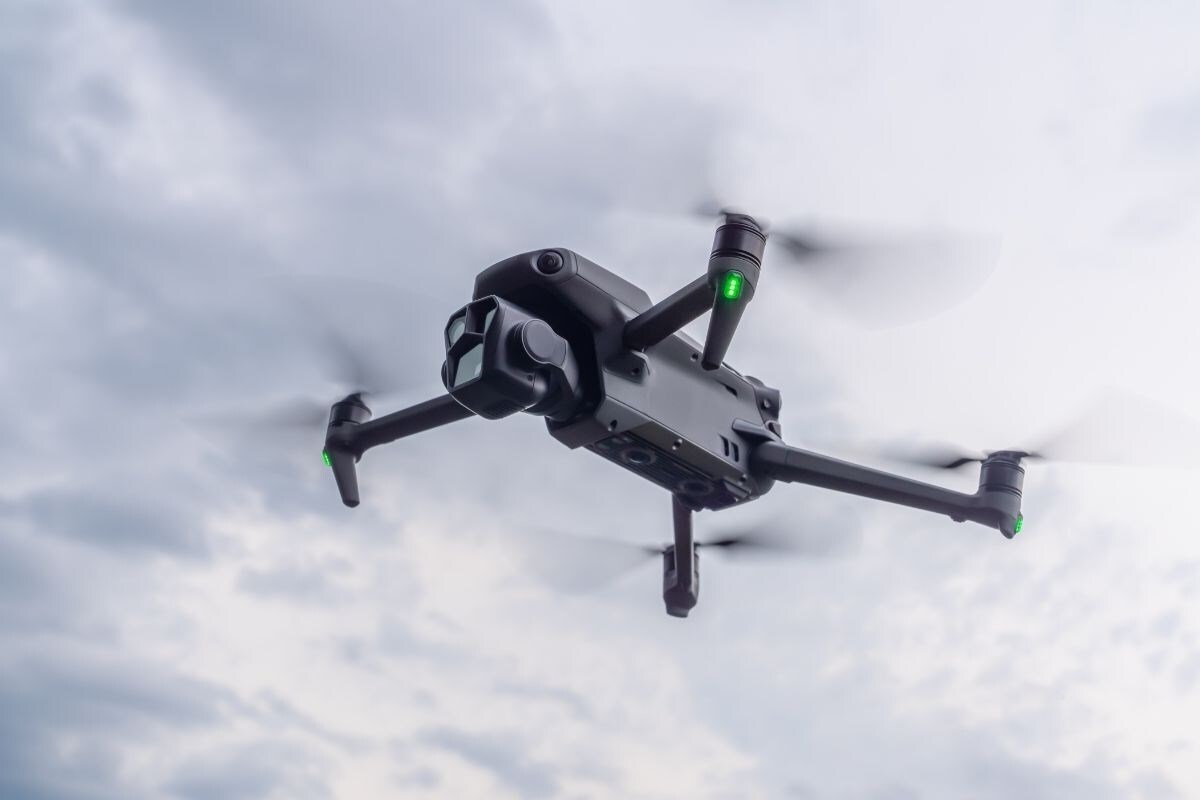
Stock image for referential purposes only
Applications range from predictive equipment maintenance to environmental monitoring. Technology eliminates human presence in some activities in confined spaces and drastically reduces activities at height.
{alcircleadd}Alunorte has achieved important results in several operational areas through its own fleet of drones, of different sizes and specialties. Equipped with advanced sensors, artificial intelligence and other cutting-edge embedded technologies, the equipment is being applied in critical areas, from predictive equipment maintenance and environmental monitoring to business security.
To support the operation of the largest alumina refinery plant in the world, an in-house fleet of 15 drones was acquired and is already in the implementation phase with significant results, after an investment of USD 632,960 (R$3.2 million). Thus, it was possible to eliminate human presence in several activities in confined spaces and drastically reduce activities at height, which is important to maintain, also in 2026, the best occupational safety result in the company's history, which in 2025 was a rate of 1.2 recordable injuries for every 1 million hours worked without high-risk accidents.
Furthermore, in the first three months of the year, drones have already generated a financial return estimated at USD 1.19 million (R$6 million), by increasing the productivity and specialisation of the workforce, assembling scaffolding and eliminating lost production when equipment would be stopped for longer for inspection. This is a major technological change for the refinery with significant gains, even more so considering that the drone application program is in the process of evolving to its fullest.
Explore- Most comprehensive and forward-looking industry-focused report — Global Bauxite & Alumina Market Forecast to 2036: Supply–Demand, Trade Flows & Price Outlook
In an innovative way in the industry, the technologies, which were previously used on a smaller scale, began to be applied by the Special Operations with Drones (SOD) program, expanding its scope, promoting internal training, accelerating innovation and qualifying operators. Currently, Alunorte operates with three pilots and is training 20 more to use them in their respective areas of activity.
"This initiative is aligned with Hydro's vision of leading the sector towards a more sustainable and technological future. Our main focus is to invest in our human capital and in our capacity to innovate, going beyond the simple acquisition of equipment. These are initiatives that aim to enhance and not replace our workforce", said Anderson Martins, Industrial Vice-President of Alunorte.
"We are training people who performed many of these tasks to work as drone operators and data analysts. By empowering our teams with cutting-edge tools, we are building a safer, more efficient and prepared operation for the challenges of the future, reinforcing our commitment to excellence in the aluminium industry", he added.
Discover the applications
The fleet includes everything from drones intended for quick and punctual operations to more robust models with a load capacity of more than 100 kilos, being tested for uses such as washing structures and fighting fires, opening up a range of possibilities for new applications. They fly at altitudes of up to 120 meters, the maximum height permitted by law, and at distances of up to 20 kilometers from the operator. Among the main features is the possibility of filming in high definition (up to 8K), thermal inspections for night viewing and 3D scanning with millimetre precision.
The equipment is extremely important to provide greater protection to solid waste deposit operations. With artificial intelligence technologies already on board, programmed by Alunorte engineers to analyse image patterns, they carry out visual inspections in order to detect possible tears in tarpaulins in drainage basins, providing another layer of protection against leaks. They also monitor the volume of water in these basins to ensure that they remain at adequate levels.
Also read: Aluminium producer Alcoa eyes Ukraine’s Mykolaiv Alumina Plant amid privatisation push
As part of predictive maintenance inspections, drones are used in confined spaces, in tanks, in high areas of structures, chimneys and beams, among others.
In addition to safety gains, this innovation brought major improvements from a productivity perspective, with inspections that took hours being carried out in minutes – an average reduction of 80 per cent in the time allocated to visual inspections. It also increased the quality of these inspections by allowing access to previously inaccessible areas, such as the roof of clarifier tanks, which are similar in size to football stadiums.
The drones also monitor the security of the company's assets, monitoring incidents within the refinery's perimeter. In this aspect, equipment is used that captures high-definition images and has thermal inspection and artificial intelligence resources, identifying people and differentiating them from animals, trees and objects. This tour is carried out uninterruptedly, with two drones flying alternately. This provides greater security for security guards, who now work in a control centre to monitor the images.
The technologies are also being used by the environmental team to carry out forest inventory surveys, capturing images in difficult-to-access areas so that professionals can identify the species present, whether it is original or regenerated vegetation, whether there is vegetation cover, among other information relevant to a sustainable operation. The company invests in the future of technology, establishing partnerships with universities in Pará to develop new sensors and functionalities for drones.
Note: This article has been issued by Hydro and has been published by AL Circle with its original information without any modifications or edits to the core subject/data.

Responses