您想继续阅读英文文章还
是切换到中文?
是切换到中文?

THINK ALUMINIUM THINK AL CIRCLE

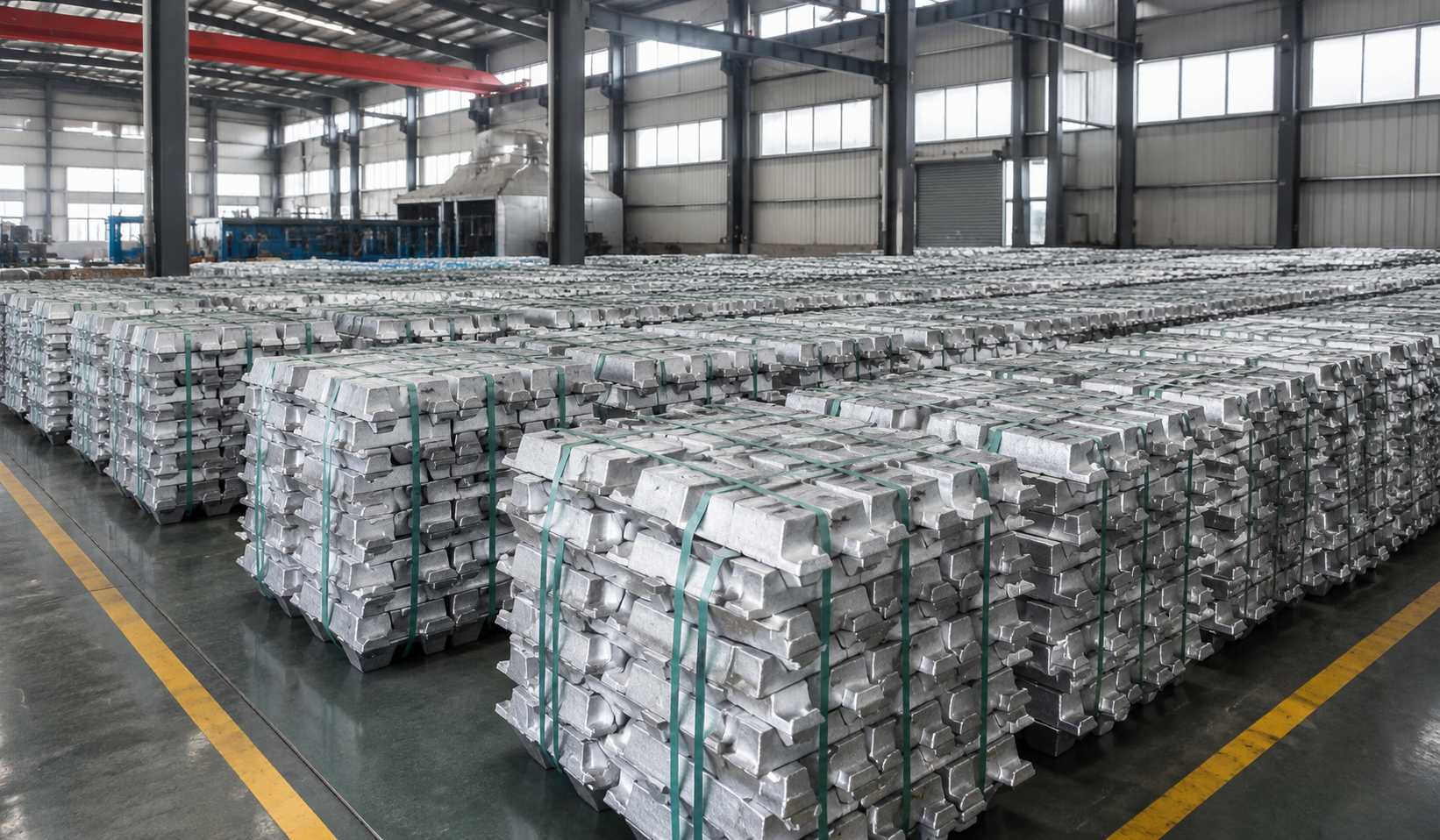
The image used in this article is generated with an AI tool and does not depict any real-time moment
The core pricing logic of the domestic aluminium market has undergone a fundamental shift. By 2026, China's total aluminium production capacity has reached the policy-controlled ceiling. With industry-wide operating rates already elevated and room for further capacity expansion effectively exhausted, the sector has formally exited the era of volume-driven growth.
{alcircleadd}As industrial policies continue to guide the coordinated clustering of aluminium smelting and downstream processing, the traditional analytical framework centred on nationwide aggregate supply-demand dynamics has gradually lost its relevance. The market's core focus has shifted to three key dimensions, that is, the regional supply-demand rebalancing, the reallocation of cross-regional circulating resources, and the substitution of cast ingots by local deep-processing of molten aluminium.
Currently, major production hubs in Southwest and Northwest China are accelerating the integration of the aluminium industry chains. The proportion of direct molten aluminium supply to deep-processing facilities continues to rise across regions, while the scale of domestically tradable commodity aluminium ingots has entered a trend of structural contraction. This reshaping of the supply-demand landscape has directly given rise to the atypical regional price spread structure observed during the 2026 off-season.
Historically, following seasonal patterns, downstream operating rates typically decline during the traditional consumption off-season, leading to synchronised weakening in aluminium prices across all regions, continuous convergence of inter-regional spreads, and price movements entirely dictated by the strength of end-user demand.
Explore primary aluminium suppliers, product listings and trade opportunities on AL Biz
However, in 2026, the domestic aluminium market exhibited distinctly differentiated structural performance during the off-season, with the trends in the three core consumption markets, East China, South China, and Central China, significantly diverging, completely overturning the traditional demand-driven logic of price spreads.
According to Mysteel's daily monitoring, the June-July off-season featured a clear structural pattern characterised by persistent premiums in South China, benchmark-range fluctuations in East China, and deep discounts in Central China. A vertical comparison with the same period in 2024-2025 reveals that during previous off-seasons, the price spread of South China aluminium relative to East China mostly narrowed to a premium of RMB 50 per tonne, and frequently even inverted into discounts during periods of weak demand.
In contrast, the 2026 off-season saw a significant upward shift in South China's prices relative to East China, with the overall spread centre rising by RMB 60-100 per tonne compared to the same period in previous years.
This systemic upward shift in regional price spread is not attributable to short-term capital flows, sentiment, or seasonal disturbances; rather, it stems from a medium-to-long-term industrial structural transformation driven by the sustained increase in the proportion of molten aluminium locally converted in five southwestern provinces, the trend-like sharp reduction in externally sold aluminium ingot volumes, and the ongoing contraction of the national total tradable aluminium ingot supply. A further breakdown of the core reasons behind the supply disruption caused by reduced long-term contract volumes in the Southwest region can be categorised into three dimensions.
First, several core aluminium enterprises in the Southwest region have proactively adjusted their production and sales structures for the second half of 2026, further tilting toward direct molten aluminium supply and compressing cast ingot output. Some companies have directly reduced or even suspended signing of aluminium ingot long-term contracts, further tightening the supply of tradable ingots in the market.
Second, leading aluminium groups have implemented strict internal supply guarantee mechanisms. Under the premise of continuously rising molten aluminium local conversion rates and significantly shrinking proprietary cast ingot volumes, they prioritise securing raw material supply for their in-house deep-processing capacities. The long-term contracts with traders and end-market users have been comprehensively scaled back, existing long-term contracts cannot be renewed, and virtually no quotas are available for new long-term contracts.
Third, leveraging local economic and industrial support policies, the aluminium processing industry cluster in the Sichuan-Chongqing area has expanded rapidly. It not only fully consumes local molten aluminium and ingot resources but also continuously intercepts cross-regional supplies from Xinjiang originally destined for South China, Central China, and returning to the Northwest, further exacerbating the structural mismatch of aluminium ingot circulation resources nationwide.
According to Mysteel's research data as of June 2026, Chongqing's aluminium capacity has achieved 100 per cent local digestion of molten aluminium, with zero external sales of aluminium ingots. All molten aluminium is directly supplied to the local deep-processing industry cluster, making it the first core production area in the Southwest to achieve "zero cast ingot external supply."
Guangxi's local molten aluminium conversion rate has reached 88 per cent, with the vast majority of aluminium capacity earmarked for supporting local downstream lines such as profiles, plates/strips, and high-end aluminium alloys, leaving only a small surplus producing ingots that flow into the national market.
The molten aluminium conversion rates in Sichuan and Guizhou are at medium-to-high levels, with continued commissioning of local deep-processing projects steadily consuming regional primary aluminium resources and significantly squeezing the volume of externally sold cast ingots.
Even in Yunnan, which previously had a relatively lower conversion level in the Southwest, the scale of externally sold molten aluminium cast ingots has shown continuous compression amid the concentrated recent commissioning of numerous aluminium deep-processing projects.
Overall, the Southwest production region has comprehensively formed a new industrial landscape characterised by high local conversion rates of molten aluminium, continuous contraction of commercial ingot sales, and prioritised internal retention of regional resources. This has completely altered its historical market positioning as a core source of nationally circulating aluminium ingots.
Synchronised with the evolution of the Southwest is the Northwest region, where mainstream aluminium enterprises continue to increase investments in processing facilities, constantly raising the proportion of direct molten aluminium supply and proactively compressing cast ingot output. The region's externally saleable ingot production continues to decline, and locally available aluminium ingots can no longer meet the region's processing production.
To bridge this raw material supply gap, Northwest smelters have established a normalised and large-scale operational model of procuring aluminium ingots from Xinjiang for replenishment. Relying on the region's well-developed rail and road logistics networks, Northwest purchases of aluminium ingots from Xinjiang enjoy significant freight cost advantages.
Unlock key insights from leading companies and experts across the aluminium ecosystem with our e-Magazine
Given Xinjiang's concentrated production capacity, stable supply, high product standardisation, and explicit local policy support for cross-regional coordination, sourcing aluminium ingots from Xinjiang in the Northwest has shifted from a seasonal off-season adjustment to a long-term, normalised business strategy. This strategy accommodates regional supply-demand structures while balancing local industrial output and supply chain stability.
Looking ahead, the Northwest will form a new circulation pattern of prioritising local deep processing with molten aluminium, supplementing local shortfalls with Xinjiang's supplies, and internally closing the loop on regional resource digestion, becoming a typical example of an intra-regional circular economy for aluminium resources in China.
In summary, the market logic of China's domestic aluminium industry underwent a profound shift in 2026. The era of relying solely on aggregate supply-demand assessments to determine market trends has ended, officially ushering in a new stage where regional structures dictate market strength, molten aluminium conversion governs spots circulation, and resource interception dominates regional price differentials. The differentiated levels of molten aluminium local conversion across the five southwestern provinces constitute the most fundamental underlying logic behind the current reshaping of the aluminium ingot circulation landscape.
Looking forward, as deep-processing capacities nationwide continue to come online and the proportion of direct molten aluminium supply steadily rises, the total volume of commodity aluminium ingots will steadily contract in the long term. Normalised fluctuations in regional price spreads, normalised cross-regional cargo allocation, and the stabilisation of the Northwest's ingot procurement from Xinjiang will become enduring features of the industry.
The challenges faced by downstream enterprises in South China and Central China in securing stable raw material supplies will be difficult to resolve in the short term, and structural resource shortages will persistently dominate the divergent trends across different regions.
To know the production, demand and consumption forecasts on bauxite and alumina, explore the report "Global Bauxite & Alumina Market Forecast to 2036: Supply–Demand, Trade Flows & Price Outlook"
Note: This news is published under a content and exchange agreement with Mystee
Responses