Central Asia’s aluminium map: One integrated chain, one smelter in search of feedstock and a $12.6B Chinese bet
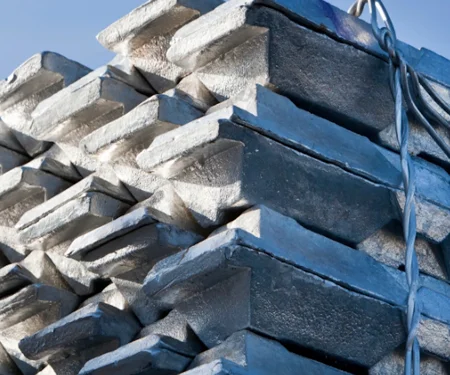
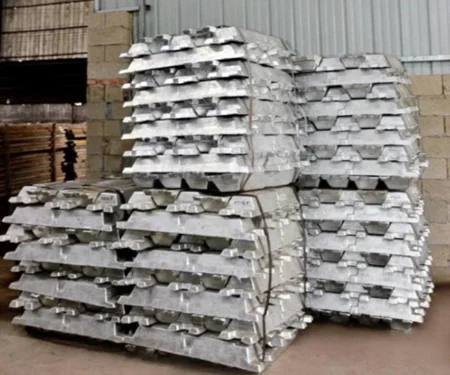
Stock image for referential purposes only
Kazakhstan: The chain that works, and plans to grow
Kazakhstan's aluminium industry is essentially the story of one company in one city. Eurasian Resources Group, in which the Kazakhstani government holds a 40 per cent stake, operates an integrated cluster in Pavlodar that spans from mine to finished metal, making it the only producer in the region with a complete upstream-to-smelter chain.
The raw material base is substantial. Bauxite deposits in the Kostanay and Pavlodar regions yield around 5.5 million tonnes per year, feeding into the Pavlodar Alumina Plant, the only alumina refinery in Central Asia, which produces 1.3 million tonnes of alumina annually. That alumina then moves to the Kazakhstan Aluminium Smelter, where it is processed into approximately 259,700 tonnes of primary aluminium per year, certified by the London Metal Exchange under the A-8 and A-85 grades.
On the export side, the alumina largely flows north to Russia, where Rusal draws on Kazakhstani supply to supplement its own refinery output. For primary aluminium, Turkey, Italy, and Poland are the three principal destinations, with the Netherlands, Bulgaria, Croatia, China, and Uzbekistan rounding out the export mix. Europe accounts for the clear majority of outbound volumes.
The more consequential development is what comes next. China's East Hope Group, one of the world's largest electrolytic aluminium producers, has committed USD 12.6 billion to build a fully integrated aluminium complex in Kazakhstan, spanning bauxite mining, alumina refining, and primary smelting across the Kostanay and Aktobe regions.
The initial phase calls for an alumina refinery with a capacity of 2 million tonnes per year and a primary aluminium smelter producing 1 million tonnes per year, with the project designed around renewable energy and structured as a circular economy industrial park. The Kazakhstani government has formally endorsed the project, and East Hope is currently conducting geological exploration across licence blocks in both regions.
Commercial production for the first phase is tentatively targeted around 2028, though timelines remain contingent on infrastructure, financing, and energy availability. If delivered, the project would more than double Kazakhstan's alumina refining capacity and add a primary aluminium base nearly four times the size of the existing ERG operation.
Tajikistan: Capacity in search of feedstock
Tajikistan's position in the regional chain is structurally different and considerably more constrained. The Tajik Aluminum Company, TALCO, is a wholly state-owned smelter in Tursunzade with a nameplate capacity of 119,500 tonnes per year. In 2024, it produced 82,200 tonnes, putting utilisation at around 69 per cent. That is a functional operation, but one running below its potential for reasons that go beyond market conditions.
The most fundamental issue is that Tajikistan has no domestic bauxite or alumina. Every tonne of alumina that enters TALCO's electrolysis baths comes through tolling arrangements with intermediaries, and the country of origin for that feedstock is not publicly disclosed. Equipment aging compounds the problem: the plant can no longer produce high-grade A-7 aluminium, which limits the price it can realise on international exchanges.
What TALCO does have is a meaningful, if geographically diverse, export book. Turkey, Bulgaria, and Italy are its three primary destinations, with Uzbekistan, Taiwan, South Korea, Kenya, Iran, Spain, and Bahrain also among its reported markets. The near-term development calendar includes a modernisation cooperation program signed with China in May 2024, and a memorandum of understanding with Azerbaijan's Azeraluminium exploring the possibility of Azerbaijani alumina supply to the plant. If it advances, that would give TALCO a named upstream partner for the first time.
The rest of the region
Uzbekistan, Kyrgyzstan, and Turkmenistan have no bauxite, alumina, or primary aluminium production to speak of. Their roles in the chain are peripheral, though not entirely absent.
Uzbekistan is the most commercially relevant of the three as a consuming market. Its economy grew 6.5 per cent in 2024, and a sustained construction and manufacturing expansion has kept aluminium demand on an upward trajectory. The country formally adopted Russian interstate standards for aluminium products in 2024, a step that signals deeper integration with CIS supply chains. Notably, Uzbekistan appears as an export destination for both Kazakhstan and Tajikistan, making it the one market in the region that both producers are actively supplying.
Kyrgyzstan is a smaller version of the same story, an aluminium consumer supplied from across its borders with no upstream infrastructure of its own. Secondary reporting lists Tajikistan and Kazakhstan as its principal sources.
Turkmenistan's connection to the chain is historical rather than commercial. The country once supplied natural gas to TALCO as a fuel input, and delayed deliveries from Ashgabat were cited as a factor in the Tajik smelter's output declines in the mid-2010s. That link has faded, and Turkmenistan plays no active role in the regional market today.
Takeaway
For most of the past decade, Central Asia's aluminium structure has been static: Kazakhstan's ERG cluster producing efficiently into European markets, TALCO selling broadly but below its ceiling, and the rest of the region consuming what its neighbours produce. The East Hope commitment, if it moves from exploration and government endorsement into construction, would fundamentally redraw that picture by adding a Chinese-led, greenfield value chain of a scale the region has not seen. Whether the 2028 timeline holds will be the question worth tracking. Until then, the existing configuration remains intact.
Note: This article has been issued by SMM and has been published by AL Circle with its original information without any modifications or edits to the core subject/data.

Decoding Vedanta’s FY26: Aluminium and energy seal milestone in pre-demerger wave
Next articleVietnam’s first aluminium electrolysis plant set to begin operations this quarter
Grow with
AL Circle