With a growth rate of 2.6%, what happens when China’s aluminium production peaks?
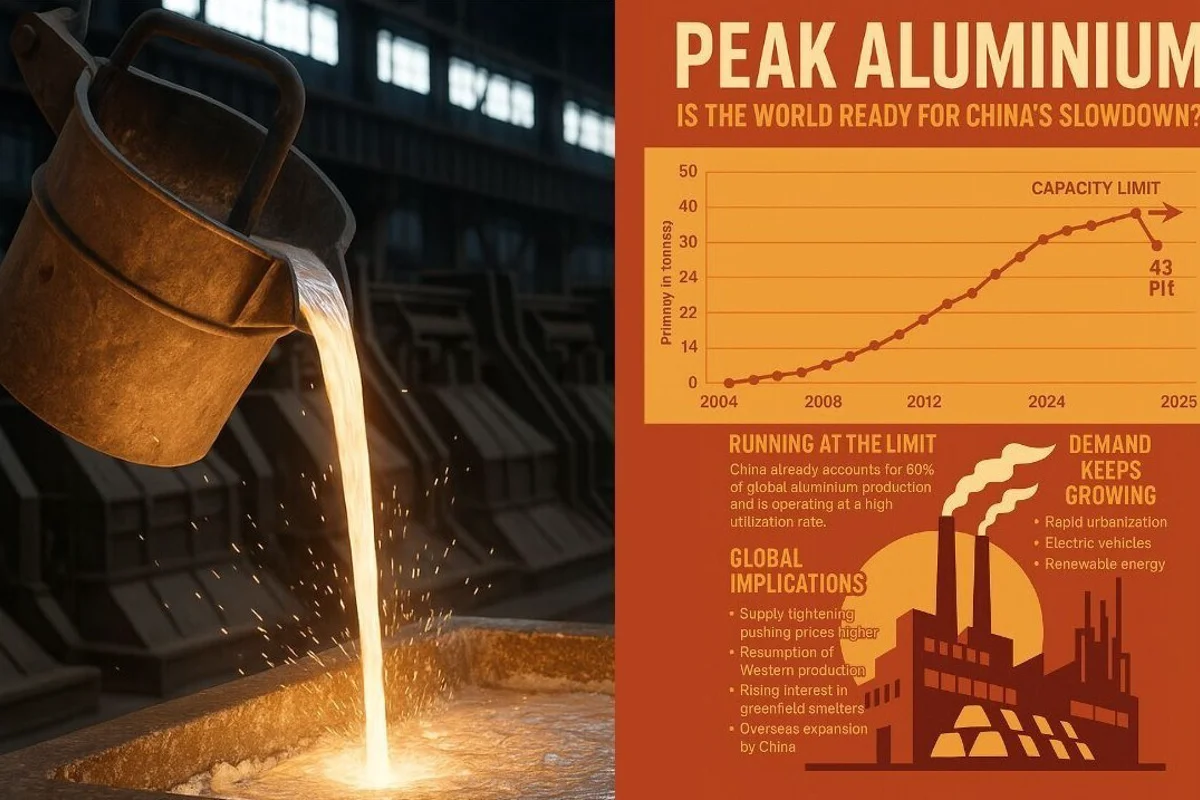
For the past two decades, China has dominated the global aluminium landscape with unparalleled force. From producing just 4 million tonnes in 2004, the country now commands a staggering 43 million tonnes of primary aluminium smelting capacity, accounting for 60 per cent of the world’s total. But now, in 2025, the dragon appears to be nearing its limits. As China approaches its government-imposed production ceiling with a 2.6 per cent growth rate during the first quarter of the calendar year, a monumental shift is on the horizon — one that could recalibrate global supply chains, trade dynamics, and pricing structures.
If China’s aluminium production growth rate progresses in a similar pattern, the national production will reach 44 million tonnes, just one million tonnes away from the set cap. Thus, the aluminium world rightfully asks: What happens when China peaks?
The concept of ‘peak production’ isn’t new. Borrowed from the world of oil economics, it describes the point at which production hits its maximum before an inevitable plateau or decline sets in, not due to lack of demand, but due to constraints like raw material availability, cost pressures, or environmental regulations. For China, all three are now converging.
Unlock full access – sign up for FREE.
Key benefits
Upstream weekly: India doubling down on its ‘zero-for-zero’ push with the US amidst ongoing discussions over a potential BTA
Next articleTrump hints at easing US-China trade tensions, aluminium prices climb
Grow with
AL Circle