Donald Trump proposed 25 per cent tariffs on Canada and Mexico and 10 per cent tariffs on China are set to take effect on Tuesday, February 4, following his executive orders on February 1 directing the administration to impose duties on these three trade partners. As per the report, an additional 25 per cent tariff will be applicable to all imports from Canada and Mexico, except energy resources, which will face a 10 per cent duty instead.
The President's order specifies the tariffs will apply to those products entering the US for consumption or withdrawn from warehouses for consumption on or after 12:01 a.m. Eastern Standard Time on February 4, 2025. Goods already in transit to the United States with scheduled arrival at 12:01 a.m. on February 1 are exempt from the tariffs.
Particularly, for Canada - the largest exporter to the United States - President Donald Trump has declared 25 per cent tariffs on all merchandise goods for consumption. Only energy and energy resources, including crude oil, natural gas, lease condensates, natural gas liquids, refined petroleum products, uranium, coal, biofuels, geothermal heat, the kinetic movement of flowing water, and critical minerals, will be subject to 10 per cent duties.
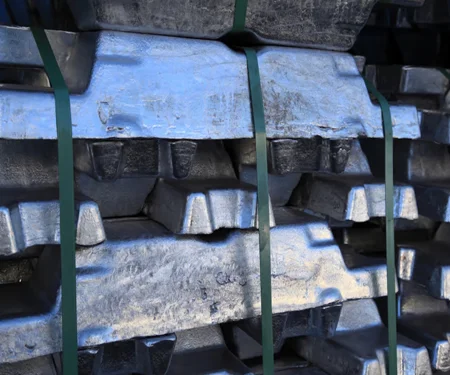
Soon after this news surfaced, the US aluminium industry urged the President to exempt Canadian imports of raw metal from his tariffs, in a bid to protect small and medium-sized domestic manufacturers that depend heavily on imported aluminium for construction, automotive components, and food packaging sectors.
"To ensure that American aluminium wins the future, President Trump should exempt the aluminium metal supply needed for American manufacturers, while continuing to take every possible action at the U.S. border against unfairly traded Chinese aluminium," the Aluminium Association said in a statement Saturday.
According to Morgan Stanley, more than 55 per cent of aluminium in the United States comes from Canada, while the remaining is sourced from various other countries, including Mexico and China.
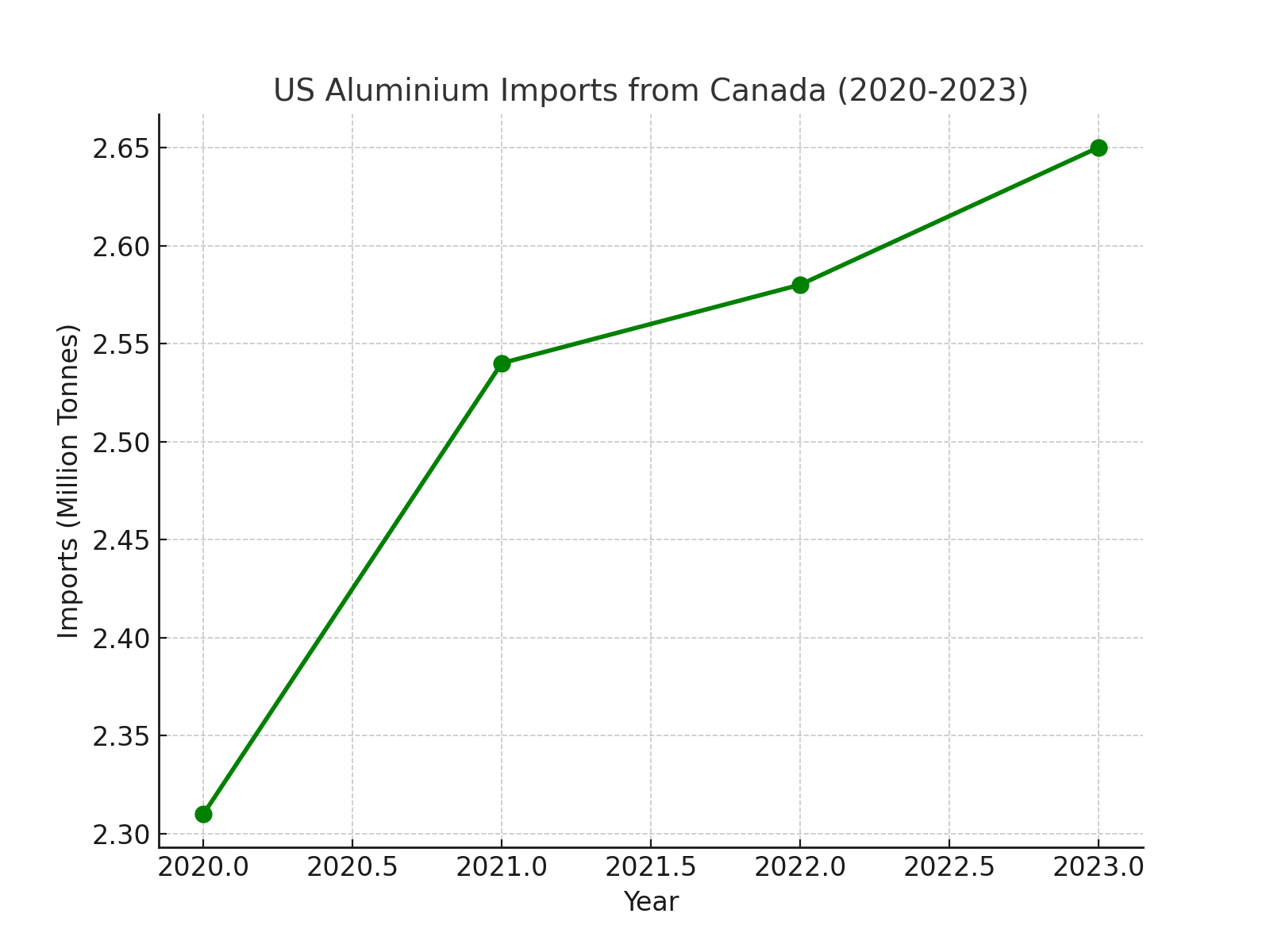
US aluminium imports from Canada
According to the International Trade Administration, the United States imported 2.65 million tonnes of unwrought aluminium, which accounted for about 69 per cent of the United States' total imports of 3.85 million tonnes. Continuing the upward trend since 2020, the United States' unwrought aluminium imports grew by 2.7 per cent in 2023 from its previous year's record of 2.58 million tonnes. By November 2024, the import volume amounted to 2.53 million tonnes, ahead by 5.8 per cent from the prior year's Y-T-D output of 2.42 million tonnes.
In terms of value, it surpassed the previous year, reaching US$7.09 billion (January to November) compared to US$6.9 billion.
If the import volume is compared against 2014, it has increased moderately by 19.4 per cent from 2.22 million tonnes.
Analysis of possible consequences
The first question that comes to mind after learning about the latest tariffs and the United States' aluminium imports from Canada is: where will these 2 million tonnes of unwrought lightweight metal now come from?
Risk management consultant and expert in base metals and the London Metal Exchange, Jorge Eduardo Dyszel, has analysed the situation, expressing concerns that US importers may have to pay the 25% tariff unless they cancel or renegotiate contracts with Canadian suppliers or find alternative sources. He also anticipates a shift in market dynamics as the United States turns to different countries to meet demand while Canada redirects its exports elsewhere.
Additionally, Dyszel warns that the US may face higher premiums for securing aluminium due to fewer available sources. This scenario could lead to a contango curve—an upward-sloping curve that illustrates the relationship between a commodity's futures price and its spot price.
For a deeper dive into the market and price dynamics of aluminium in the United States, watch Jorge's full analysis in this video.
Here's more to what Aluminum Association has to say
Aluminum Association President & CEO Charles Johnson issued the following statement in response to President Trump's tariffs on Canada:
"The United States is a powerhouse in aluminium production and fabrication against global competitors. That strength relies on imports of upstream aluminium, both smelted and scrap, from Canada. The Aluminum Association welcomes President Trump's efforts to secure our borders and support American manufacturing by tackling unfair global trade. During his first term, President Trump was early to recognise the genuine threat that non-market actors pose to US manufacturing industries like ours. This led to more than $10 billion in industry investment since 2016. This investment requires an enormous amount of metal, much of which the US industry must import from within North America. To ensure that American aluminium wins the future, President Trump should exempt the aluminium metal supply needed for American manufacturers, while continuing to take every possible action at the US border against unfairly traded Chinese aluminium. This is consistent with action his administration wisely took during his first term. Then, we should work to keep unfairly traded aluminium out of the region by harmonizing tariffs with our North American trading partners."
Mr Johnson emphasised that aluminium is integral for the United States' industries and economic growth. For manufacturing cars and trucks to fighter jets and tanks to the electric grade, aluminium is used widely and excessively. The aluminium industry as a whole contributes $228 billion in economic output and supports 700,000 jobs, both direct and indirect. So, to sustain this industry's strength, the United States needs to have a steady and predictable supply of aluminium, which primarily comes from its North American trading partners, especially Canada.