US threatens to leave International Energy Agency over net zero policy
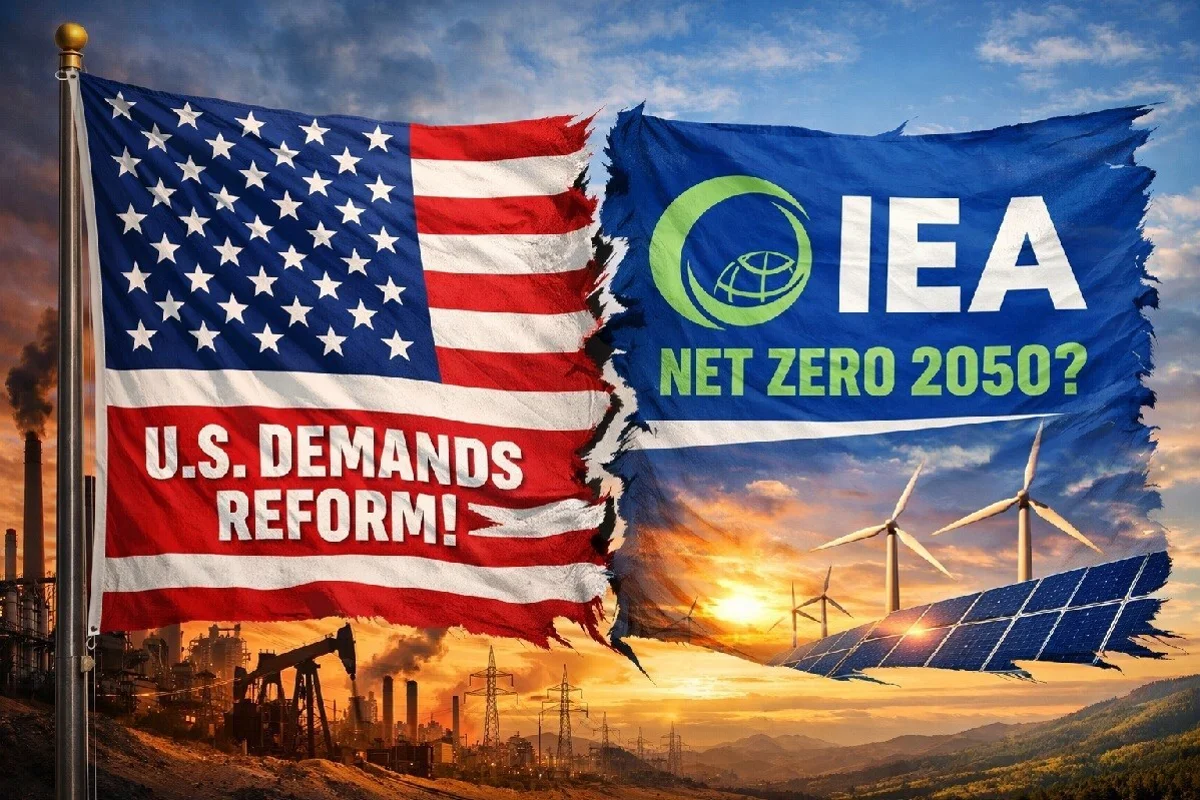
The final day of the International Energy Agency’s ministerial meeting in Paris unfolded against a backdrop of rising tension, as the United States made clear that its continued long-term membership hinges on change. Speaking at the French Institute of International Relations, U.S. Energy Secretary Chris Wright stated that the International Energy Agency would need to reform for the U.S. to remain a long-term member. The message underscored Washington’s dissatisfaction with what it sees as a shift in the agency’s priorities.
To know more about the global primary aluminium industry 2026 outlook, book the report “Global ALuminium Industry Outlook 2026"
Reform or rift?
Wright’s criticism centered on the agency’s work around energy transition and net zero pathways, which he suggested have moved it away from its original mission.
He added, “There has been such a group mentality, 10 years invested in a destructive illusion of net zero by 2050, that the US will use all the pressure we have to get the IEA to eventually, in the next year or so, move away from this agenda,” Wright said, according to Reuters.
Accusing the IEA of behaving like a "climate advocacy organization," Wright urged it to return its focus to "energy security."
Founded in 1974 after the first oil crisis, the Paris-based IEA has long shaped global energy discourse through forward-looking scenarios on renewable deployment and transition pathways. Those projections are widely used across the energy sector. However, since President Donald Trump returned to the White House in January 2025 advocating fossil fuel use and rolling back green rules, the agency has increasingly come under scrutiny from Washington.
Net Zero at the center of the divide
At the center of the disagreement is the concept of “net zero” - the balancing of carbon emitted into the atmosphere and removed from it – formalised in the 2015 Paris Agreement. The United States, India and the European Union were among the polluters that ratified the accord.
Wright dismissed the scenario outright. "We don't need a net-zero scenario, that's ridiculous, that's never going to happen," he continued.
Although he stressed that it is not Washington’s intention to leave the IEA, he acknowledged there is “always a risk” China could gain dominance in the agency if the US were to withdraw.
The warning is consistent with his earlier position. In an interview with Bloomberg last July, Wright said: "We're going to change the way the IEA operates, or we're going to pull out."
The IEA has already shown signs of adjustment. In its latest annual report in November, it reintroduced a scenario based on current trends. It also revised its projection on peak oil demand. While it had previously forecast peak use in the 2030s, it now expects demand to continue growing until the middle of the century.
As the ministerial meeting concludes, the pressure on the agency is huge. The coming months may determine whether reform follows - or whether the divide between Washington and the world’s leading energy watchdog deepens further.
Don’t miss out- Buyers are looking for your products on our B2B platform

India leverages e-waste to reduce critical mineral import dependence
Next articleACME signs a PPA deal with SECI for a 190 MW wind-solar hybrid project
Grow with
AL Circle